[pageLogInLogOut]

#INDEX 20

Towards sustainable nonwovens
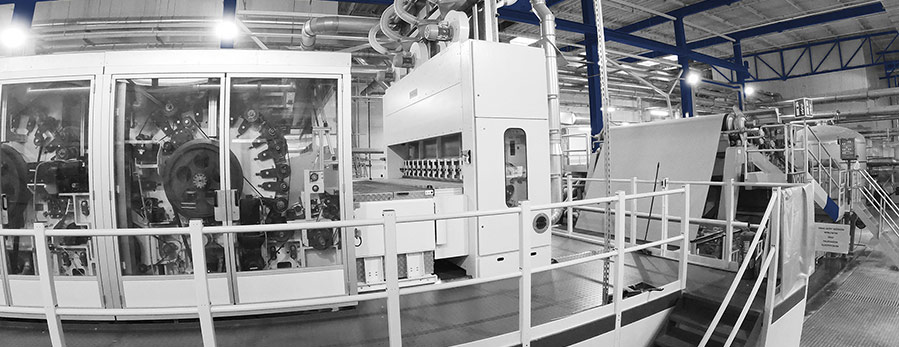
On display at INDEX: composite nonwovens from the first CP line world-wide © 2021 Truetzschler
At this year’s INDEX from October 19th to October 22nd, Truetzschler Nonwovens, Truetzschler Card Clothing and Voith introduce new solutions for manufacturing a broad range of sustainable nonwovens for wipes, hygiene or medical textiles at booth 2327.

Plastic-free initiatives worldwide affect everyone: consumers, product developers, nonwoven producers and finally nonwoven machinery suppliers.

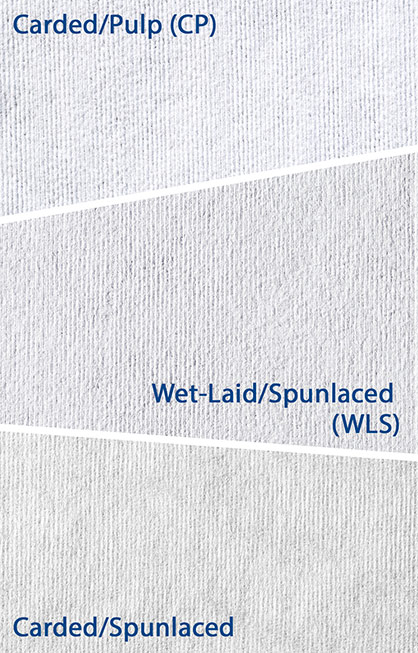
Truetzschler Nonwovens and Voith address the quest for more sustainable and affordable nonwovens in the wipes segment by two proven technologies for manufacturing pulp-based nonwovens. Firstly, WLS (Wet-Laid/Spunlaced) lines. More than a handful are in service worldwide and mainly target the flushable wipes market. At INDEX we’ll introduce our latest nextLevel/WLS baby and body wipes, a joint development by Voith and Truetzschler.

The second focus is on carded/pulp (CP) products. A CP line – including a TWF-NCT card placed between the HydroFormer and the AquaJet is already running to full capacity at customer site. Various CP materials, including innovative nextLevel/CP wipes, will be on display at the booth and invite visitors to discuss characteristics, benefits, line concepts and equipment.

When talking sustainable nonwovens, solutions for efficiently manufacturing biodegradable nonwovens from virgin cotton fibers, comber noils and viscose/lyocell fibers must not be missing. Visitors can look forward to directly comparing cotton nonwovens to a broad range of cellulose-based material.

Truetzschler Card Clothing, our in-house competence center with respect to card clothings and comprehensive service, presents its latest development, the Z wire for high-speed roller cards. A new geometry minimizes fiber fly and allows for better carding and more stable web forming.
© 2021 Truetzschler
© 2021 Truetzschler


More News from Truetzschler GmbH & Co. KG

#Spinning

Perfect quality through collaboration: Machinery from Trützschler, Toyota and Murata at Zirve Tekstil

In today’s textile industry, excellence is not achieved by chance – it’s the result of deliberate decisions, technical expertise, and the courage to go beyond conventional paths. The Turkish company Zirve Tekstil has done just that: by combining the best technologies from Trützschler, Toyota and Murata, they’ve created a production setup that delivers outstanding yarn quality – recognized worldwide.

#Spinning

Details matter: How Trützschler cylinder wires boost efficiency in Pakistan’s spinning sector

Pakistan’s textile industry, especially its spinning sector, is the backbone of the national economy and a vibrant hub of innovation. Today’s spinning mills face growing demands for efficiency, quality, and sustainability. From the serene northern valleys to the vibrant port city of Karachi in the south, mills like Suraj Cotton Mills, Liberty, and Nishat Chunian are turning to advanced solutions.

#ITMA Asia + CITME Singapore 2025

T-CAN – Revolutionizing can transport

In virtually all spinning mills, transporting sliver cans is still done manually. Rising labor costs, lack of operators and increasing quality requirements make this a growing challenge. With T-CAN, Trützschler introduces a practical solution: a fully automated can transport system that will be presented live at ITMA ASIA 2025 in Singapore.

#Spinning

Pre-Cleaner CL-X: The future of cotton cleaning

What if the future of cotton cleaning was already here – setting a new standard for cleaning efficiency, productivity and energy savings? That future has a name: CL-X. Since its market launch in 2022, the Pre-Cleaner CL-X has become a true bestseller, proving its value in several hundred customer applications worldwide. Now, new results from Türkiye demonstrate again how the Pre-Cleaner CL-X outperforms the competition.

More News on INDEX 20

Latest News

#Techtextil 2026

Performance Apparels: Functional textiles drive innovation at Techtextil 2026

From high-performance fibres and advanced membranes to smart textiles and sustainable material concepts – functional apparel is becoming one of the most dynamic innovation fields in technical textiles. At Techtextil 2026, exhibitors demonstrate how new materials, finishing technologies and digital functions are shaping the next generation of protective, workwear and outdoor systems.

#Textile chemistry

A flagship for chemical production: BASF inaugurates world-scale Verbund site in China

BASF today (March 26, 2026) celebrated the official inauguration of its newly built, world-scale Verbund site in Zhanjiang, Guangdong Province in southern China. Covering an area of around four square kilometers, it is more than a major BASF project in the chemical growth market of China. “Zhanjiang shows what the future of chemistry looks like: efficient, digital and sustainable by design. The site showcases a smart integrated Verbund structure on an industrial scale,” said Dr. Markus Kamieth, CEO of BASF, at the ceremony attended by representatives from government, customers, business partners and employees.

#Nonwovens

VEOCEL™ Lyocell production expands to Asia – Launching a new chapter for nonwovens in the region

VEOCEL™, Lenzing's flagship specialty nonwovens brand, expands production at its Thai plant in Prachinburi. This is the first-ever production of its nonwoven-grade lyocell fibers in Asia. Built in 2022 with a 100,000-ton annual production capacity, the facility - previously focused on fibers for textile applications - now can directly meet the demand for VEOCEL™’s biodegradable¹, wood-based lyocell fibers for nonwovens products. These fibers are an essential ingredient for high-quality nonwovens products, ranging from baby wipes to facial sheet masks and everyday personal hygiene items.

#Research & Development

Hof University develops sustainable textile coating for the fashion of tomorrow from mushrooms

Clothing is often treated as disposable: T-shirts for events, general merchandise, or short-term campaigns frequently end up in the trash after only a few uses. This is particularly problematic given that their production still largely relies on fossil-based materials. This is precisely where a new research project at Hof University of Applied Sciences comes in.

TOP