[pageLogInLogOut]

#Research & Development

Kansai Univ. and Teijin develop piezoelectric wearable sensors featuring fashionable stitch designs
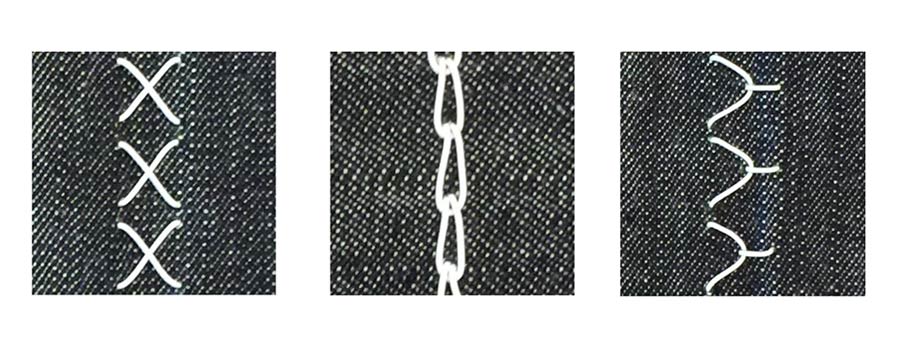
Left: Cross-stitch (bending) / Middle: Chain-stitch (elongation and contraction, twisting and bending) / Right: Fly-stitch (twisting)
Kansai University and Teijin Frontier Co., Ltd., the Teijin Group’s fiber - product converting company, announced today that Professor Yoshiro Tajitsu of Kansai University’s Faculty of Engineering Science and Teijin Frontier have developed e-stitch, a series of fashionable piezoelectric wearable sensors with stitch designs that measure body motions such as extension, contraction, bending and twisting.

Soft, flexible e-stitch sensors are largely unrestricted in terms of fabric types and embroidery patterns, allowing them to be produced in highly fashionable designs.

The new series is based on piezoelectric kumihimo wearable sensors that Kansai University and Teijin Limited announced in January 2017. For demonstration purposes, those sensors were incorporated in Japanese-style braided cords, known as kumihimo. The technologies embodied in soft, flexible e-stitch sensors represent a break from preconceived ideas about wearable sensors because they offer new levels of sensing convenience and fashion. 

Kansai University and Teijin Frontier will exhibit their e-stitch sensors and examples of their application at The 4th Wearable Expo (booth No. W15-5, West Hall), the world’s largest exhibition of wearable devices and products, which will take place at Tokyo Big Site from January 17 to 19. The booth will showcase samples of e-stitch sensors featuring traditional designs that have been incorporated in ladies’ modern denim wear made by Japanese designer Homay, the producer of Kyoto Denim clothing. Samples of e-stitch sensors incorporated in pet wear and athletic-shoe insoles also will be displayed. 

Going forward, Kansai University and the Teijin Group will continue to explore the potential of polylactic-acid (PLA). Through industry-academia collaborations, they aim to create highly added-value sensing technologies for augmented-reality applications in the Internet of Things.

Piezoelectricity is the generation of electric charges by certain dielectric materials in response to mechanical stress. Piezoelectricity also can be used to apply electric voltage to produce mechanical strain in materials. Both effects can be measured, enabling piezoelectric materials to be used for both sensors and actuators.   

Kansai University and Teijin have been jointly developing eco-conscious PLA piezoelectric materials for a number of years. They introduced a flexible piezoelectric film by alternately laminating poly-L-lactide (PLLA) and the optical isomer poly-D-lactide (PDLA) in 2012, PLA fiber- and carbon-fiber-based piezoelectric fabrics in 2015, piezoelectric roll for load-dependent voltage generation and attenuation in 2016, and piezoelectric kumihimo wearable sensors that detect body motions such as elongation and contraction, bending and extension, and twisting in 2017.
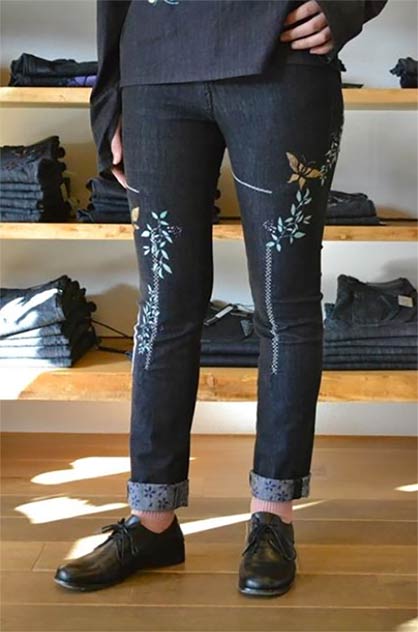

 

e-stitch sensors used in ladies’ wear (c) 2018 Teijin


More News from Teijin Aramid

#Yarn & Fiber

Teijin Aramid: Taiichi Machida to succeed Peter ter Horst as CEO

Peter ter Horst will step down as Chief Executive Officer at the end of 2025, after 19 years of dedicated service. Effective October 1, 2025, Taiichi Machida will take over as CEO.

#Yarn & Fiber

Teijin announces availability of DPP-compliant products aligned with Europe’s ESPR Environmental Regulation

Teijin Limited announced today that it has started rolling out initiatives to enable aramid fibers and carbon fibers to be accompanied by Digital Product Passport (DPP) technology, which enhances supply chain transparency by verifying the origins of materials and supporting sustainability claims. The company is using the supply chain traceability system from Netherlands-based Circularise B.V., in which Teijin has invested since November 2024, to develop DPPs for each product.

#Composites

Teijin Carbon showcases new eco-friendly Tenax Next™ R2S 513 6mm short carbon fiber at JEC World 2025

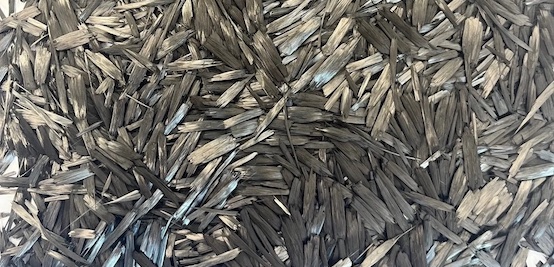
Teijin Carbon, a leading manufacturer of carbon fiber products, is presenting its latest development in sustainable materials at JEC World 2025 (hall 6, G22). New Tenax Next™ R2S 513 6mm is a short carbon fiber product in rice-shaped form for reinforcing thermoplastic compounds that not only offers exceptional performance characteristics but also reinforces the company’s commitment to environmental responsibility and circularity.

#Recycling / Circular Economy

Teijin to invest in Circularise B.V. and adopt its supply chain traceability platform to promote the Circular Economy

Teijin Limited announced today that it will invest in Circularise B.V., a company based in The Hague, Netherlands, which develops product traceability management systems using blockchain technology. Teijin will also implement Circularise’s software to improve visibility into its global supply chain. Circularise’s proprietary “Smart Questioning”(*) solution, which utilizes Zero-Knowledge Proof (ZKP) technology, provides both anonymity and transparency to ensure a highly reliable product traceability system.

More News on Research & Development

#Research & Development

GenuTrace client advisory: Is your cotton supply chain UFLPA ready?

U.S. Customs and Border Protection has released updated operational guidance (CBP Publication No. 5560-0526) expanding its forced labor enforcement framework. The guidance supersedes the original 2022 UFLPA Operational Guidance and now covers all forced labor enforcement authorities — UFLPA, CAATSA, and WROs/Findings — in a single unified document. For cotton importers, the enforcement posture has not softened. It has become more structured, more documented, and more demanding. Learn more about UFLPA.

#Research & Development

TERNAfil wins first place at PitchMiUp Night 2026 in Minden

The RWTH spin-off TERNAfil has developed MAXCarbon, a new high-performance hybrid fibre that combines the mechanical performance of carbon with the temperature and corrosion resistance of ceramic materials. For this development, TERNAfil was awarded first prize at the PitchMiUp Night in Minden on 21 May 2026.

#Research & Development

Carbon-ceramic hybrid fibre proves its worth – NRW Minister for Science Mona Neubaur congratulates ITA start-up TERNAfil

MAXCarbon technology, a novel carbon-ceramic hybrid fibre developed by ITA spin-off TERNAfil, secured third place at the HIGH-TECH.NRW Demo Day on the TÜV NORD campus in Essen. The technology combines the strength of carbon fibres with the temperature and corrosion resistance of ceramic materials. Mona Neubaur, Minister for Science in North Rhine-Westphalia, congratulated the team on their success and on winning prize money of 4,000 euros.

#Research & Development

“Production is a product”

From technical textiles and AI-driven robotics to the limitations of textile circularity: Professor Dr Thomas Gries looks back on more than two decades of development at ITA Aachen. In the interview, he explains why production technology remains a decisive success factor, discusses international collaborations and innovation ecosystems, and shares his views on the transformation of production landscapes and the challenges facing an increasingly regulated industry.

Latest News

#Natural Fibers

Cashmere specialist joins AbTF Board of Trustees

The Aid by Trade Foundation (AbTF) is pleased to welcome Brian Yu, the chief executive officer of the Artwell Group, to its board of trustees. As CEO, Brian Yu developed Artwell into the world’s largest supplier of responsibly produced cashmere knitwear.

#Recycling / Circular Economy

HKRITA signs MoU with Jeanologia and Looptworks to establish the Green Machine Circular Textile Ecosystem

The Hong Kong Research Institute of Textiles and Apparel (HKRITA) yesterday officially signed a landmark Memorandum of Understanding (MoU) with two key global partners, Jeanologia and Looptworks, to establish the Green Machine Circular Textile Ecosystem – a first-of-its-kind collaboration to accelerate the large-scale recycling of blended textiles.

#Spinning

Object Carpet tests production of rPET BCF yarn on Neumag BCF line

In a joint project with Object Carpet GmbH, Denkendorf; the Institute for Textile Technology (ITA), Augsburg; and Next Generation Recyclingmaschinen GmbH (NGR), Feldkirchen, Austria, Barmag investigated the processing of recycled polyester for BCF yarn. The goal was to evaluate the fundamental suitability of 100% recycled carpet material for reuse in carpet yarn production to create a closed-loop system in carpet manufacturing. To date, commercial rPET BCF processes have been based solely on rPET from bottle pellets.

#Composites

MEL Composites supports ELA Aviation with advanced composite materials

MEL Composites is supplying advanced composite materials and process consumables to ELA Aviation for the production of its next-generation gyroplanes. The collaboration underlines MEL Composites’ growing role in advanced aerospace mobility, providing lightweight materials designed to improve aircraft performance, manufacturing efficiency and structural reliability.

TOP