[pageLogInLogOut]
You can feel it's Benninger!

#Dyeing, Drying, Finishing

Inditex and Jeanologia develop Air Fiber Washer, the first industrial air system designed to reduce microfiber shedding in textiles
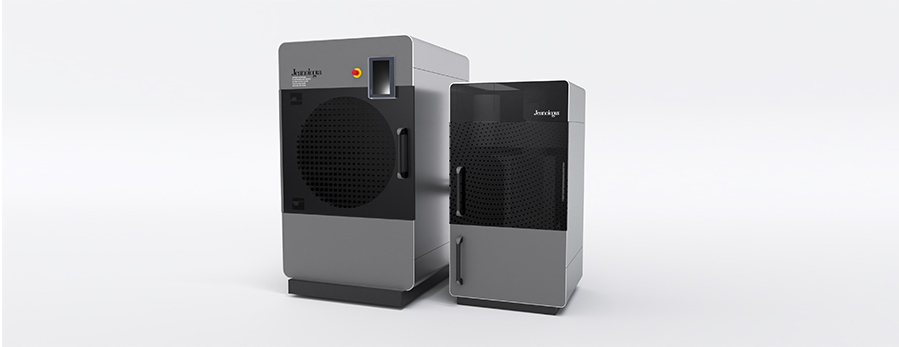
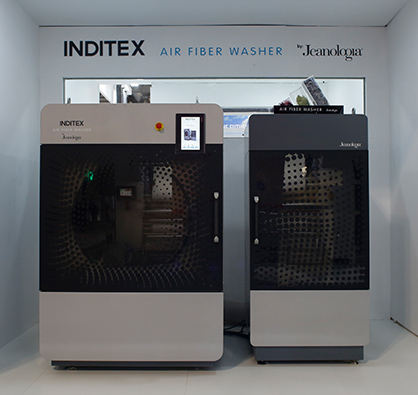
Air Fiber Washer © 2023 Jeanologia
Inditex and Jeanologia have jointly developed Air Fiber Washer, the first industrial air system designed to extract microfibers during garment fabrication and thus reduce subsequent shedding in domestic laundering.

• Air Fiber Washer extracts up to 60% of microfibers during garment manufacturing by using dynamic airflow in combination with microfiltration to capture microfibers.

• Each industrial Air Fiber Washer machine will allow for the collection of up to 325 kg of microfibers per year for potential repurposing.

• This technology will be shared throughout the industry without any as part of both companies' commitment to mitigate the release of microfibers.


Microfibers are small particles with a length of less than 15 millimeters that are shed from textiles, especially during initial domestic washes. This is one of the great challenges for the textile industry due to existing limitations in current industrial capacities for water treatment.

Air Fiber Washer - which will be presented 8-14 June at the ITMA international textile technology fair in Milan - was created with the aim of reducing the release of microfibers in initial washes thanks to a new industrial pretreatment that effectively removes these particles.

With innovative technology, this new development makes it possible to reduce microfiber shedding by up to 60% through the use of air, without employing water or thermal energy and without compromising aspects such as fabric quality. Its dynamic air flow extracts the microfibers from the garments and collects them in a containment bag for potential recycling, moving us closer towards a circular industry with zero waste. Each Air Fiber Washer will collect up to 325 kg of microfibers per year, depending on the type of fabric, and machine conditions such as loading and movement.


A technology placed at the entire textile industry’s disposal

This technology will be shared with the industry with no strings attached, as part of the effort of both companies to mitigate microfiber shedding.

Enrique Silla, President of Jeanologia, emphasized that the goal of Jeanologia, a leading company in the development of eco-efficient technologies, is to offer cost-neutral technological solutions to manufacturers, brands and retailers so that they can act immediately.

"Working with Inditex is a great experience and a source of pride. This initiative is just the first step in the mission we have set for ourselves to minimize the impact of microfiber shedding in textile manufacturing and in the product life cycle," Silla said.

Javier Losada, General Director of Sustainability at Inditex, emphasized that "we must promote innovative solutions that allow us to respond to the challenges of our industry, such as microfiber shedding. This project with Jeanologia is an example of how we can collaborate with other industries to limit our impact on resources such as water right from the manufacturing stage.”

INDITEX

Inditex is a global fashion retail group, comprising seven brands (Zara, Pull&Bear, Massimo Dutti, Bershka, Stradivarius, Oysho and Zara Home) with a presence in over 200 markets. Its business model is focused on satisfying customer demand in a sustainable way. Inditex is committed to achieving climate neutrality by 2040.

Jeanologia: working for the world for over 25 years

Since 1994 their mission has been to create an ethical, sustainable and eco-efficient industry, marking a new era through sustainability, digitalization and automation.

Its MissionZero program transforms the way jeans are made to eliminate 100% of the discharge generated in the manufacture and finishing of Blue Jeans, from the fabric to the final garment.


The company is leading the transformation of the industry with its disruptive technologies: laser, G2 ozone, e-Flow, SmartBoxes, Colorbox and H2 Zero, capable of increasing productivity, reducing costs, water and energy consumption, and eliminating harmful emissions and discharges, guaranteeing zero pollution.
Air Fiber Washer © 2023 Jeanologia


More News from TEXDATA International

#Texprocess 2026

Texprocess 2026: Automation, digitalisation and AI redefine textile processing

Making investment decisions in textile processing has become significantly more demanding. Increasing energy costs, a shortage of skilled labour and ongoing geopolitical uncertainties are compelling companies to focus on technologies that deliver clear gains in efficiency and process reliability. This applies equally to apparel manufacturing and to the processing of technical textiles and high-performance materials. As a result, modernisation initiatives are assessed more carefully – even as the need to upgrade production systems continues to intensify.

#Techtextil 2026

Techtextil 2026: Between innovation pressure & market reality

From 21 to 24 April 2026, Techtextil in Frankfurt am Main will once again become the central meeting point for the international technical textiles and nonwovens industry. Running in parallel, Texprocess will focus on the industrial implementation of textile processing technologies as the leading platform in this field. Together, the two trade fairs form a closely integrated presentation and working platform along the entire textile value chain – from material development to finished applications.

#Techtextil 2026

Between geopolitical pressure and industrial resilience

In this interview, Dr. Janpeter Horn (VDMA) discusses the current challenges facing textile machinery manufacturers, shaped by geopolitical tensions, regulatory developments and subdued investment. He also outlines why innovation strength, integrated solutions and strategic positioning remain key to global competitiveness.

#Texprocess 2026

Between investment restraint and modernization pressure

Texprocess 2026 takes place in a complex market environment shaped by uncertainty and innovation pressure. In this interview, Elgar Straub (VDMA) explains why the trade fair is particularly relevant this year and which technologies are driving efficiency and competitiveness.

More News on Dyeing, Drying, Finishing

#Dyeing, Drying, Finishing

Smart Quality Control for Technical Textiles

In the end, what matters is the result: a filter that performs reliably, a membrane that remains stable in storm conditions, a composite material with precisely defined properties. But the path to achieving this is demanding. In the production of technical textiles, numerous parameters interact – and even the smallest deviations can have major consequences.

#ITM 2026

The address for environmentally friendly dyeing and finishing systems: ITM 2026

Dyeing and finishing technologies, one of the most critical and value-added areas of the textile sector, have gained strong growth momentum on a global scale. Technologies that are pioneers of this transformation focused on sustainability, quality and efficiency will meet with sector professionals at the ITM 2026 International Textile Machinery Exhibition. Dyeing and Finishing Hall (11–12) will host the latest technologies that increase efficiency, optimize resource use and reduce environmental impact in textile finishing processes.

#Techtextil 2026

iNTERSPARE presents latest developments and upgrade solutions for technical textile finishing at Techtextil

iNTERSPARE Textilmaschinen GmbH will present its latest solutions for technical textile finishing at Techtextil 2026 in Frankfurt (VDMA joint stand, Hall 12 / Stand C55A). The focus will be on further developments within the Krantz, Artos and Babcock (BTM) product lines, in particular the Krantz K30 stenter as well as the reintroduction of the Artos Vari-Flex foulard. The presentation will be complemented by modular solutions for upgrading existing installations and new approaches in automation and digitalization.

Latest News

#Recycling / Circular Economy

Europe’s textile future at a turning point: New 2030 Circularity Blueprint aims to scale recycling and unlock investment opportunities

The EU textile system is at a critical crossroads. Today, less than 1% of discarded garments are recycled into new garments, despite EU-wide obligations for separate collection. In response, Global Fashion Agenda (GFA) is launching the 2030 Circularity Blueprint, in partnership with ReHubs. This ambitious initiative is designed to support the transformation of the EU textile ecosystem to advance textile-to-textile recycling and drive the transition to a circular economy.

#Research & Development

Regional hemp bast for lightweight construction profiles

The cultivation of fibre hemp for the production of ropes and clothing has a long tradition in Saxony. Due to its excellent fibre properties, it is also suitable as a renewable raw material for reinforcement in fibre composites. At the STFI and IWU in Chemnitz, the CannaPul project is cur- rently investigating how a regional value chain for hemp-based lightweight construction profiles can be established. To this end, the technical processing of hemp fibres into continuous fibre strands and their embedding in a suitable bio-based matrix are being investigated.

#Digital Printing

Kornit Digital launches Konnections 365

Kornit Digital (NASDAQ: KRNT) (“Kornit” or the “Company”), a global pioneer in sustainable, on-demand digital fashion and textile production today announced the launch of Konnections 365 - a year-round movement designed for the people moving the apparel, print, and retail industries forward. The strategy is built on the overwhelming success of Konnections 2026 held in Hollywood, Florida, featuring more than 500 customers, partners, and collaborators who together are driving the future of apparel and textiles.

#Techtextil 2026

Techtextil 2026: KARL MAYER impresses as an innovative sector partner

KARL MAYER looks back with satisfaction on its participation in Techtextil 2026. From April 21 to 24, the international industry leader used the trade show in Frankfurt to meet with numerous key customers at its booth and, at the same time, establish many new contacts. Most visitors came from Germany, followed by major markets such as Poland, the United Kingdom, Turkey, France, and Portugal.

TOP