#ITA Virtual Trade Show
Thies presents "Be the Change" machines at virtual trade show
Thies concentrates on sustainable product solutions and focuses on the development of innovative, intelligent and integrated concepts for yarn and fabric dyeing. Founded in 1892, the family company consequently presents many years of commercial, product and applications experience under the motto “BE THE CHANGE”.
Selected product highlights are:
iCone
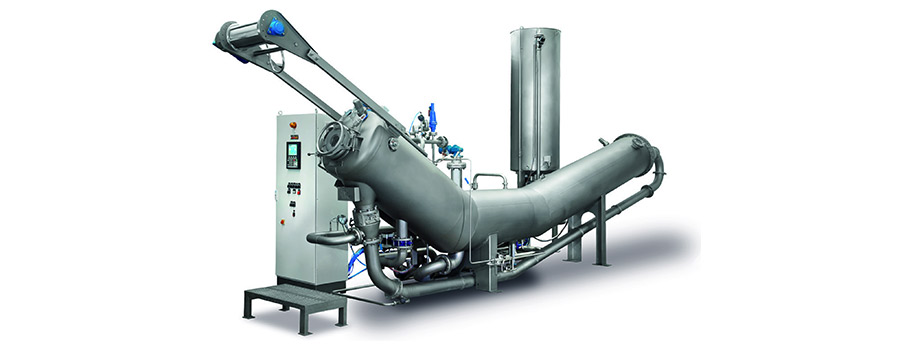
The yarn dyeing machine iCone is ideal for bleaching and dyeing fibres in different forms like packages, warp beams, combed tops or flock. With the help of modern flow analysis tools, the pipe systems, the pumps and their impellers have been optimized, reducing pressure losses and power consumption. The iCone offers the ability to dye in a traditional manner by using reciprocating liquor circulation. However, it can also be operated with one flow direction and an ultra-short liquor ratio starting at 1: 3.6. The machine is very flexible and matches diverse requirements. The delivery spectrum of the iCone is complemented by the very latest, user-friendly control system. Its “green functions” provide standardized programs for exploiting the optimization potential of different process steps. The iCone can be integrated into existing dyeing facilities without problems. On customer request, the iCone machines can be designed for the operation with existing material carriers and correspondingly for the adaption to existing dryers.
iMaster H2O
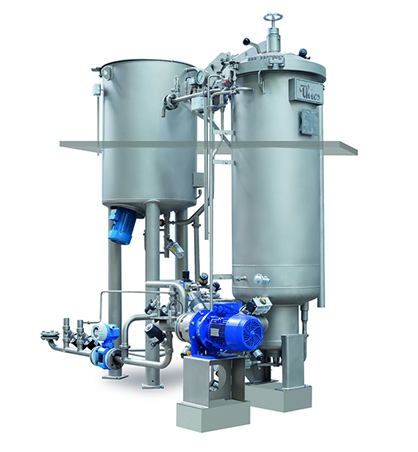
The latest version of the well-established and successful iMaster H2O incorporates various new detail improvements. Many of them were developed in response to suggestions from customers respectively end- users. The iMaster mini belongs to the iMaster family. It is a fully-equipped variant of the iMaster H2O with a loading capacity of 20-80 kg for small production runs and laboratory work. The main advantage is to operate the iMaster mini with the same (parameter) settings as the iMaster H2O production machine. The earlier testing and optimization phase using the iMaster mini has shown that new kinds of fabrics, recipes and processes can be incorporated in the production sequence more effectively and more cost-efficiently.
For the treatment of light to medium-weight terry articles, Thies recommends the iMaster F machine. It has loading capacities of up to 400 kg per chamber.
soft-TRD SIII
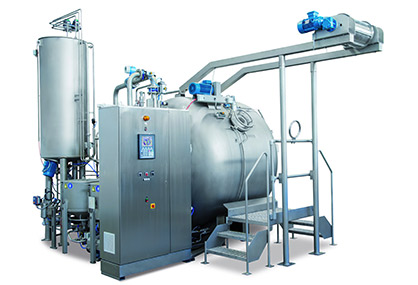
The soft-TRD SIII combines perfect fabric running properties with the latest short liquor ratio technology. With liquor ratios starting at 1:5, a variety of sensitive fabrics can be treated gently. The soft-TRD SIII is ideal for finishing polyester fabrics due to the high-performance (kier) temperature regulation.
Dosing- and dispensing systems
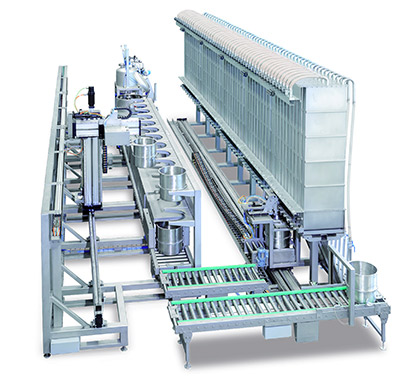
For reducing error rates and increasing reproducibility, the automation of the chemical and auxiliaries supply is mandatory. The MPS product family offers a complete solution for fully automated supply of a finishing plant with chemicals, dyes and auxiliaries:
- The MPS-L (liquids) automates the transport of all liquid chemicals typically used in a dye house to the designated destinations in the defined quantities.
- The MPS-D (dissolving) is used primarily for dissolving dyes.
- The MPS Colourmatic automates and controls the dissolving and supply of powdered dyes. The fully automatic version of the MPS Colourmatic controls the storage, weighing, dissolving and provision of the dyes.
- The MPS-S (solids) transfers the solids used in the dye house, such as Glauber’s salt or sodium carbonate, to the dyeing plants automatically.
- The MPS-G (gravimetric) offers flexibility, reliability and automation all in a single module. It combines the functions of the systems MPS-L, MPS-D and MPS-S.
The entire Thies team welcomes you to our virtual booth!