[pageLogInLogOut]

#Dyeing, Drying, Finishing

New technology in a proven system
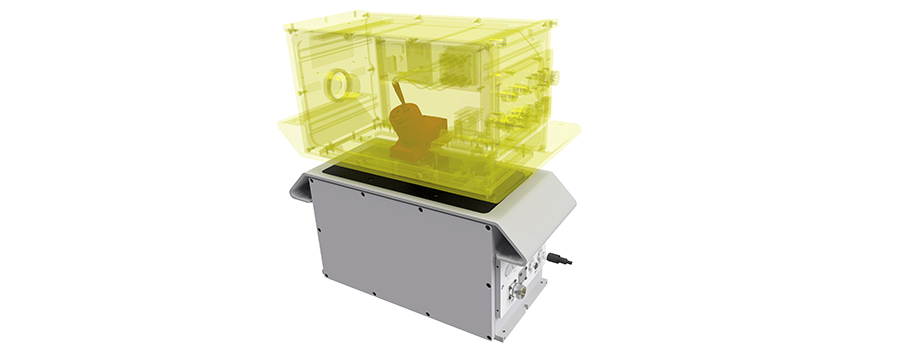
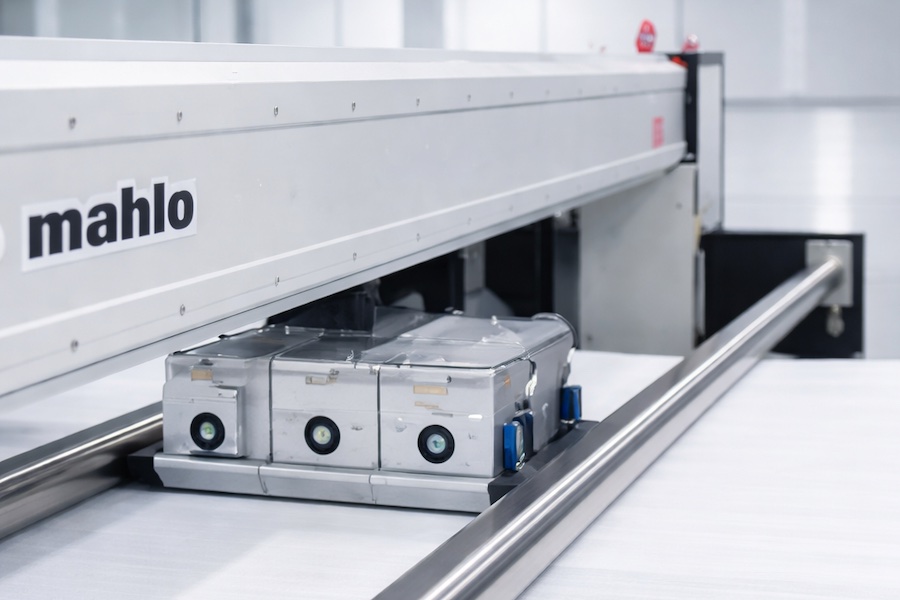
Sensor Infralot IMF-T (c) 2020 Mahlo
Basis weight and residual moisture values are important parameters in the production of nonwoven articles, paper, films, composites and more. Optimal values contribute significantly to the quality of the products and efficient production. The measurement of moisture and basis weight is therefore a decisive aspect during the manufacturing process. The new Mahlo technology in the Infralot IMF infrared sensor enables precise results in even more applications.

There are several reasons why determining these two parameters is so important: Every product, regardless of the sector, has to meet certain requirements that have been previously defined to ensure proper functioning. If the real values do not correspond to these specifications, this can affect the performance. If, for example, a filter mat is too thin in pond systems, it does not catch enough dirt particles and reduces the water quality. Incorrect residual moisture values not only affect the product quality but also the energy consumption in the entire line. For example, if Spunlace nonwo- vens are overdried, this results in unnecessary waste of energy – with negative consequences for the environment and the manufacturer's wallet.

New sensor variant for even more applications

To measure and control basis weight and moisture even more reliably, Mahlo has added a new sensor variant to its proven Qualiscan QMS-12 quality measurement system. The Infralot IMF uses near infrared technology to determine the two essential values. For the first time, the sensor is available as the Infralot IMF-T version in the transmission process, which is used for thick materials and thus covers an even wider range of applications than before. The previously proven reflection method of the Infralot IMF-R has been updated to the latest state of the art. 
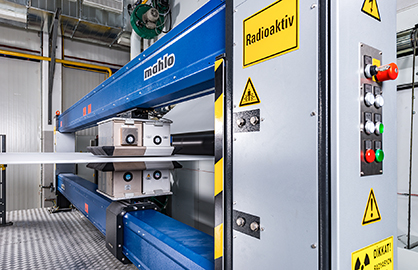
Measuring of basis weight and moisture with Infralot IMF and Beta sensor on spunlace nonwoven (c) 2020 Mahlo


Principle of operation

Water and materials such as cotton, PET or paper absorb light in the near infrared range. They are distinguished by different spectral ranges and can thus be differentiated. By measuring the reflected or transmitted light energy by means of optical evalu- ation, the Infralot IMF determines the moisture content and basis weight of the products. The NIR sensors of the Infralot IMF series are based on a classic filter measuring principle.


However, this is updated with the very latest optical components and in accordance with the most recent trends in optical measuring technology. With conventional filter wheel systems, the wavelengths for dry (reference) and wet conditions are measured with a time delay. This can lead to measurement inaccuracies, which are particularly disadvantageous for inhomogeneous products such as thin non- wovens.

No filter wheel

Mahlo's new simultaneous filter measures all wavelengths simultaneously and at the same spot without rotating filter wheel. Instead, the light is distributed simultaneously to six detectors. This eliminates measurement inaccuracies and allows true same-spot measurement of reference and absorption resonances.

Variants suitable for requirement

The variant used depends on the application. With the double-sided transmission sensor Infralot IMF-T product can be measured with penetrating infrared radiation. Transmission measurement is especially needed for thicker materials and when the overall composition of the material is of interest. Measurement for nonwovens is pos- sible with a basis weight between 10 - 500 g/m2. For paper, moisture can be deter- mined between 0 to 20%, basis weight up to 250 g/m2.

Measurement with IR reflection is used primarily to determine the top layer or coating without measuring the underlying substrate material. The measuring tolerance of the basis weight is between 10 and 60 g/m2 for nonwovens. In paper coating, all polymers, adhesives, resins and water-based coatings can be determined.

Product highlights

  • Non-radioactive
  • Static simultaneous filter – simultaneous measurement of all wavelengths
  • Smart sensor with microprocessor?
  • High spectral resolution
  • Insensitive to product flutter and soiling 


More News from Mahlo GmbH + Co. KG

#Dyeing, Drying, Finishing

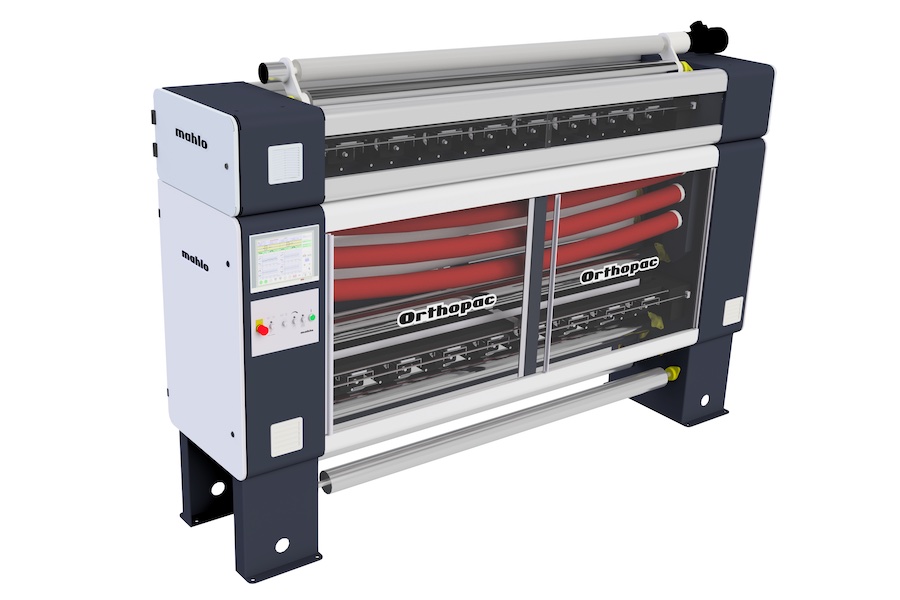
Orthopac RVMC-20 plus: German Engineering for Smarter Weft Straightening

In times of rising cost pressure and growing quality demands, textile producers worldwide are searching for solutions that combine precision, efficiency, and sustainability. With its latest innovation, the Orthopac RVMC-20 plus, Mahlo once again demonstrates the strength of German engineering: improving proven technology to meet today’s challenges.

#Dyeing, Drying, Finishing

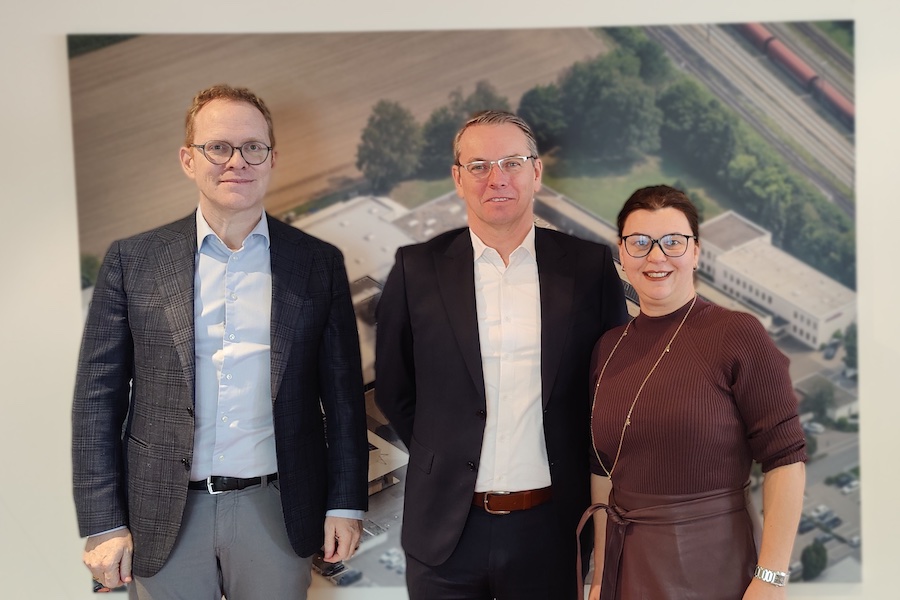
Stefan Moll becomes new CEO of the machinery manufacturer

Starting January 1, 2026, Stefan Moll will take over the management of Mahlo GmbH + Co. KG, the world’s leading provider of measurement and control technology for web-shaped materials. With this move, Mahlo is focusing on the long-term safeguarding of its market position and technological leadership. The current CEO, Rainer Mestermann, will leave the company after 14 years as part of a planned succession arrangement.

#Dyeing, Drying, Finishing

Knitex Industries Ltd. (Mondol Group) invests in advanced Mahlo technology

Bangladesh’s Knittex Industries Ltd. is known for its commitment to top-quality knitwear and responsible produc-tion. To further enhance fabric quality, the company has invested in a Mahlo Orthopac RVMC-15 weft straightener. Installed by Tootal Quality Resources, the system ensures perfect fabric alignment and supports Knittex’s goal of continuous improvement.

#ITMA Asia + CITME Singapore 2025

Intelligent technologies for sustainable textile production

From October 28 to 31, 2025, the international textile industry will gather at ITMA Asia in Singapore – and Mahlo will be present as part of the "German Pavilion Finishing" with innovative solutions for process optimization. Under the motto “More efficient. More precise. More sustainable.”, the Bavarian family-owned company will present forward-looking technologies for resource-efficient and quality-oriented textile production at booth H7-A103.

More News on Dyeing, Drying, Finishing

#Dyeing, Drying, Finishing

BW Converting expands Southeast Asian presence with new agency partnerships in Vietnam and Indonesia

BW Converting is strengthening its presence in Southeast Asia through new agency partnerships in Vietnam and Indonesia, reinforcing the company’s commitment to supporting textile manufacturers across the region. The expansion comes as BW Converting prepares to exhibit at SaigonTex 2026 (April 8–11, Saigon Exhibition and Convention Center, Ho Chi Minh City, Vietnam) and INDO INTERTEX 2026 (April 15–18, Jakarta International Expo, Indonesia).

#Dyeing, Drying, Finishing

Monforts unveils interactive digital platform for textile finishers

Monforts has launched a new digital platform designed to give textile manufacturers faster, more intuitive access to the company’s finishing technologies, technical expertise and aftersales support worldwide.

#Techtextil 2026

Monforts to showcase advanced coating solutions at Techtextil 2026

Over the past few years Monforts has significantly advanced its technologies for coating, with the successive introductions of the MontexCoat, coaTTex and VertiDry systems combining flexibility, precision and energy efficiency for the technical textiles market.

#Dyeing, Drying, Finishing

Precision jet dyeing moves towards industrial scale as Alchemie partners with Acatel

BTMA member Alchemie Technology, the pioneer of precision jet dyeing solutions based in Cambridge, UK, is partnering with Acatel, the Portuguese leader in sustainable textile manufacturing. The two companies will work together to validate and optimise Alchemie’s Endeavour system for knitted cellulosic fabrics.

Latest News

#Techtextil 2026

DIENES at Techtextil 2026: Flexible pilot lines for bio-based fiber development

The growing relevance of bio-based materials in technical textiles is accompanied by increasing demands for reproducibility, high-quality data, and scalable process routes. Especially when working with cellulose and its derivatives, chitosan, lignin-based approaches, or bio-based PAN as a carbon-fiber precursor, R&D teams face variable feedstock quality, tighter process windows, and the need for reliable comparability across trials. This calls for flexible, data-driven experimental setups that can be reconfigured efficiently when recipes, solvents, and raw-material batches change.

#Texprocess 2026

Gunold showcases embroidery product range and services at Texprocess

At Texprocess 2026, GUNOLD will present numerous hands-on examples related to embroidery in Hall 8, Booth E20. The focus is on creative embroidery designs as well as the extensive product range of threads, nonwovens, and accessories for embroidery and embellishment. “Trade visitors can once again look forward to many new and creative embroidery designs. Of course, we will also showcase the matching products required to bring these ideas to life,” announces Marketing Manager Stephan Gunold.

#Nonwovens

EDANA and more than 70 industry organisations call for consistent exemptions in EU packaging regulation

EDANA, together with more than 70 industry associations and organisations, has issued a joint statement commenting on the European Commission’s Delegated Act under Article 29 of the Packaging and Packaging Waste Regulation (PPWR).

#Raw Materials

A Powerful Opening: Global thought leaders launch the International Cotton Conference Bremen

The International Cotton Conference Bremen will open on 25 March 2026 in the Parliament building of the Free Hanseatic City of Bremen with a keynote session of exceptional calibre. Distinguished international experts will set the stage for the conference by offering incisive perspectives on the most pressing challenges and the defining trends shaping the future of the global cotton trade. Their insights will span a broad spectrum — from geopolitically driven disruptions affecting global supply chains to the opportunities emerging from innovation-led agriculture capable of supporting a growing world population. Together, these opening keynotes will frame the dialogue of the conference, highlighting both the complexity of today’s market environment and the pathways toward a resilient and forward-looking cotton sector.

TOP