[pageLogInLogOut]

#Dyeing, Drying, Finishing

KARL MAYER’s PRODYE-R rope dyeing unit is setting new standards in everyday production
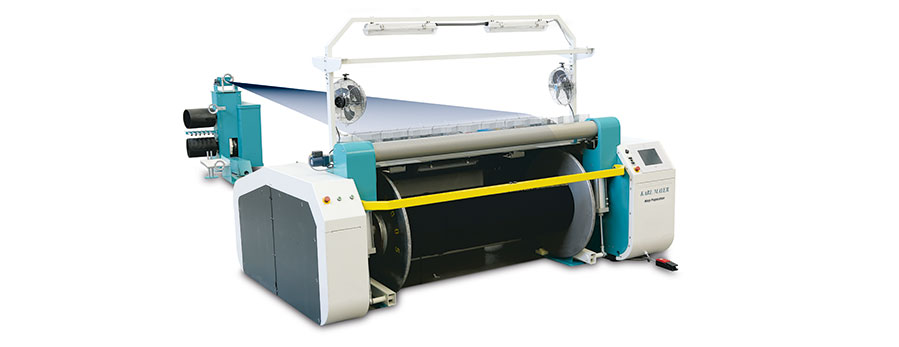
KARL MAYER’s LONG CHAIN BEAMER (c) 2019 KARL MAYER
KARL MAYER belongs to the top manufacturers of indigo dyeing equipment worldwide. With its PRODYE-S slasher dyeing unit, this company has already become firmly established as leading provider in the high-fashion denim sector; with its PRODYE-R for the rope dyeing process, the company is on the way to the top of the market also in the genuine/standard segment.

Only in April 2019, a renowned denim manufacturer put a PRODYE-R in operation, thus, marking an important milestone. The machine impresses by its performance in the powerful denim player’s everyday production. The PRODYE-R scores with respect to comparable machines with a high speed during the opening of the yarn ropes after dyeing – the so-called rebeaming – and also with a reduced number of the required dye boxes. This opens up far-reaching efficiency and savings potential. Among other things, significantly fewer chemicals, e.g. around 20 % less hydrogen sulphide, are required. The rebeaming process is 15 % to 20 % faster. In addition, the PRODYE-R requires a significantly shorter dyeing section. Enzo Paoli, the Managing Director of KARL MAYER ROTAL, KARL MAYER’s center of excellence for denim, expects fresh impetus for further business transactions. 

More efficiency, fewer dye boxes

The PRODYE-R has only 8 to 9 instead of 12 dye units, but reaches colour depths of up to 5.5 %. Also thanks to the fluted rollers in the sky oxidation the indigo dyestuff is extremely solid physically bonded, and the colour shade is bright. Due to the shorter dye section, it is possible to reduce the total volume of the indigo dye bath by more than 25 % and also to reduce the energy consumption. The result is a marked drop in costs. This is based on targeted technical optimizations regarding the feeding of the dye liquor and the rope guiding through the bath. Besides, the special recirculation of the dye liquor requires less chemicals such as caustic soda; and by means of the special ECO wash box design it is possible to reduce water consumption by roughly 30 %.

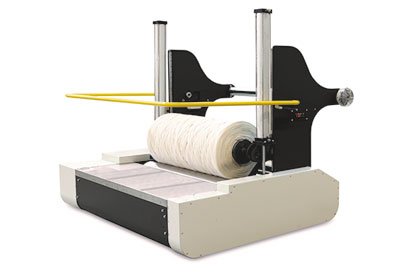
Loading and doffing device of the BALL WARPER (c) 2019 KARL MAYER


KARL MAYER’s BALL WARPER (c) 2019 KARL MAYER


 Homogeneous ropes, high rebeaming speeds

The rebeaming process of the PRODYE-R convinces by its speed. The possible time saving compared to conventional similar plants is 15 % to 20 %, which can be used for reducing the required number of LONG CHAIN BEAMERS. An important prerequisite for this fact, however, are technical solutions that ensure a homogeneous buildup of the ropes during their passage through the machine. Ropes consisting of threads that stick together considerably, can only be separated slowly after dyeing. Otherwise, it comes to yarn breakages, which have to be repaired by knotting, resulting in inferior quality and efficiency losses during weaving. Special attention is paid to a uniform rope structure already during the feeding of the material to the machine. The BALL WARPER draws the yarns from the bobbins, brings the threads together to form a rope, and winds up the rope in cross lapping to a ball. During this cycle, the computer-controlled system ensures an operation that is gentle to the material, with a constant, smooth run. Afterwards the ropes are removed from the balls, and guided through the dye section. During this procedure, a perfect tension control by load cells facility that is adapted to the material, ensures that the compact, uniform structure of the ropes is not adversely affected. In the dryer section the conventional belts were replaced by motors to ensure a perfect tension control, keeping the right elasticity of the yarn. At the exit of the dryer, a coiler with circular motion ensures a uniform storage/stacking of the ropes in cans. This step also contains design know-how. Coilers with linear bars replace the commonly used mechanic gear coilers, offering highest flexibility instead of long reaction time. Within a very short period, it is possible to adjust the rope twist to different machine speeds and rope weights. The result: yarn compound structures without threads sticking together, that can be separated at high speeds, and that can be wound onto a warp beam.

More News from Karl Mayer Textilmaschinen AG

More News on Dyeing, Drying, Finishing

#Techtextil 2026

Smart sensors, smart savings - Reducing energy and cost in textile finishing

As energy prices, sustainability requirements and quality expectations continue to rise, manufacturers of technical textiles face increasing pressure to optimize efficiency while ensuring process reliability. At the same time, skilled labor shortages require production systems that are intuitive, automated and easy to manage. PLEVA addresses these challenges with robust, maintenance-friendly sensor technologies combined with intelligent process control.

#Dyeing, Drying, Finishing

Navis TubeTex and Fibroline announce upcoming Innovation Days

Navis TubeTex and Fibroline LLC announced their upcoming Innovation Days, a collaborative 3-day event designed to showcase advancements in product development technologies, and next-generation sustainable manufacturing solutions.

#Dyeing, Drying, Finishing

BW Converting expands Southeast Asian presence with new agency partnerships in Vietnam and Indonesia

BW Converting is strengthening its presence in Southeast Asia through new agency partnerships in Vietnam and Indonesia, reinforcing the company’s commitment to supporting textile manufacturers across the region. The expansion comes as BW Converting prepares to exhibit at SaigonTex 2026 (April 8–11, Saigon Exhibition and Convention Center, Ho Chi Minh City, Vietnam) and INDO INTERTEX 2026 (April 15–18, Jakarta International Expo, Indonesia).

#Dyeing, Drying, Finishing

Monforts unveils interactive digital platform for textile finishers

Monforts has launched a new digital platform designed to give textile manufacturers faster, more intuitive access to the company’s finishing technologies, technical expertise and aftersales support worldwide.

Latest News

#Techtextil 2026

Gebr. Otto highlights versatility at Techtextil with regional supply chains, yarn innovations and new hygiene segment

At this year’s Techtextil, Gebr. Otto places its versatility at the center of its presentation. In addition to spinning, twisting and dyeing – traditionally focused on fine cotton – textile processors will also find a competent development partner for technical specialty solutions. The Dietenheim-based spinning mill has now built up a decade of experience in the production of technical yarns, particularly from aramids. A new hygiene segment has also been established, where yarns for medical and hygiene products are currently being produced. In the future, this department could also develop textile products for the food sector. Gebr. Otto will once again be present at the BW-i joint stand, booth D81, hall 12.1. What is wound onto the spool is determined by the customer: Gebr. Otto develops according to specific customer requirements and transforms its own ideas into yarn innovations.

#Europe

Commission presents proposal for EU Inc. - unlocking the full potential of the Single Market for Europe's entrepreneurs

Today, the European Commission presented its proposal for EU Inc., a new single set of corporate rules, building the cornerstone and starting point for the EU's 28th regime. EU Inc. is an optional, digital-by-default European corporate framework. It will make it easier for businesses to start, operate and grow across the EU – incentivising them to stay in Europe, and encourage those who once looked elsewhere to return.

#Man-Made Fibers

OnceMore® from Södra brings end-to-end traceability for circular Man-made Cellulosic Fibers (MMCF) using TextileGenesis

OnceMore® from Södra, the world’s first large-scale process for recycling blended fabrics into high‐quality dissolving pulp, will begin using TextileGenesis, a Lectra company, to strengthen traceability from raw material to retail across the value chain. OnceMore® produces dissolving pulp made from blended textile waste and wood sourced from responsibly managed Swedish forests. By integrating TextileGenesis, OnceMore® supports the growing need for verified data and secure, transparent tracking throughout increasingly complex supply chain.

#Sustainability

Experts publish APAC policy priorities

Cascale today announced the publication of its APAC Policy Priorities Paper, developed by the Asia-Pacific (APAC) Policy Member Expert Team (MET) to identify key regional sustainability challenges and provide practical, aligned recommendations for policymakers and industry stakeholders across Asia-Pacific.

TOP