[pageLogInLogOut]

#Digital Printing

Mimaki’s drives sustainable, circular textile production forward with new innovations at ITMA
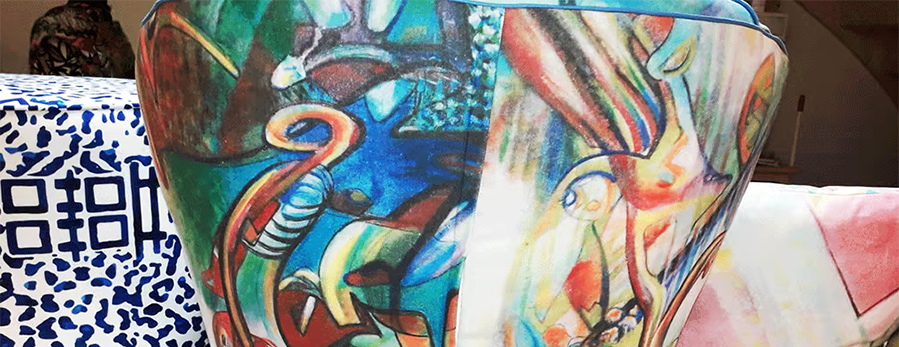
© 2023 Mimaki
Mimaki Europe, a leading provider of industrial inkjet printers, cutting plotters, and 3D printers, has announced the introduction of two revolutionary technologies at ITMA 2023: a Textile Pigment Transfer Printing System and the Neo-Chromato Process. These innovations are showcased for the first time, and ahead of commercial availability, at the exhibition in Milan, Italy, solidifying Mimaki’s commitment to sustainable and environmentally friendly solutions in the textile printing industry.

Introducing Mimaki’s New Textile Pigment Transfer Printing System – addressing the need for eco-conscious textile printing

“Traditionally, the dyeing process for natural fibres generates an alarming amount of wastewater – around 2 billion tonnes every day in the pre- and post- dyeing processes worldwide(1) – and contributes greatly to CO2 emissions,” said Arjen Evertse, General Manager Sales, Mimaki Europe. “In addition, the dyeing process is complicated in terms of equipment structure and process and often, overseas transportation of textile products from the main textile-producing countries also emits CO2. The Textile Pigment Transfer Printing System minimises water usage and simplifies the printing workflow. Additionally, its compact size and affordability allow small lot textile production to be implemented locally, leading to significantly reduced environmental impact.”
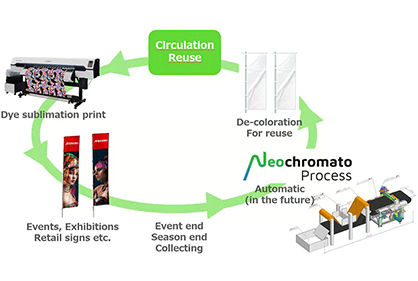
The process cycle of Neo-Chromato © 2023 Mimaki


The transfer printing method is more sustainable than both analogue and digital textile dye printing methods with zero water consumption and substantially lower CO2 emissions. The system, demonstrated on the Mimaki stand (H7-C304), comprises three essential elements: the Textile Pigment Ink, the Transfer System and the Textile Pigment Transfer paper, Texcol®.

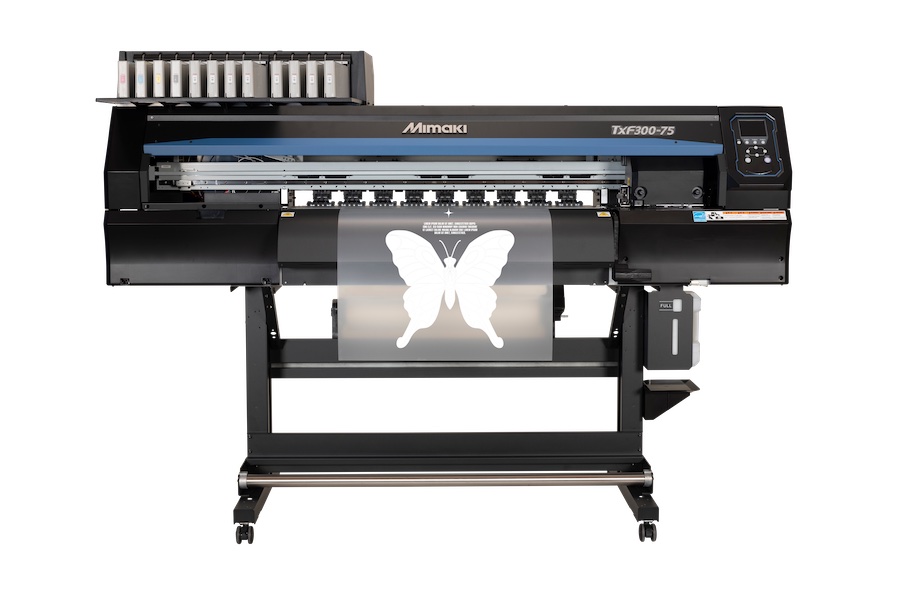
Texcol® is a revolutionary transfer paper pioneered by Dutch paper manufacturer, Coldenhove that allows for transferring a digital print using an environmentally friendly 3-step transfer process to create a vibrant application on a wide range of materials, including natural fibres. The design is initially printed onto the paper using a customised TS330-1600 – Mimaki’s high-volume, high-quality dye sublimation printer – and Mimaki’s new pigment inks developed for the process. The module that adapts the TS330-1600 will be available as an option for existing and new Mimaki customers in Q3 2023 but is being previewed on the Mimaki stand at ITMA, giving visitors to the show an exclusive preview into how this highly productive Mimaki printer can be transformed into Mimaki’s most sustainable solution for apparel, house textiles, and soft signage yet.

Mimaki’s new Textile Pigment Ink is undergoing bluesign certification before commercial availability. bluesign is a renowned certification programme that ensures the highest levels of safety, environmental friendliness, and sustainability within the textile and apparel industry.

As the final stage, the Texcol® paper undergoes a one-step waterless process, through an entry-level calendar machine onto the textile of choice.


Another Mimaki world first – Cyclical textile technology

Mimaki is also debuting its new, unique Neo-Chromato Process, which revolutionises the reuse of coloured polyester textiles.

Arjen continues, “The increasing awareness of sustainability has led to a significant disposal issue within the textile industry, with polyester textiles accounting for approximately 60% of 92 million tonnes of wasted textile materials worldwide(1). Of this enormous amount of polyester waste, currently around only 15% is recycled. Mimaki’s Neo-Chromato Process tackles this issue head on by utilizing a discolouring technology for dye sublimation inks. This process not only eliminates the need for polyester waste incineration but also reduces the energy consumption associated with textile recycling.”
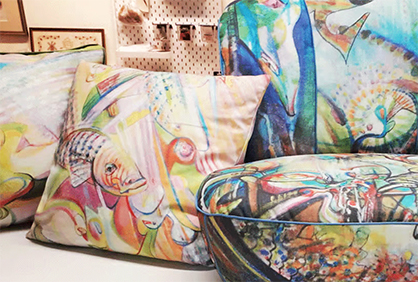
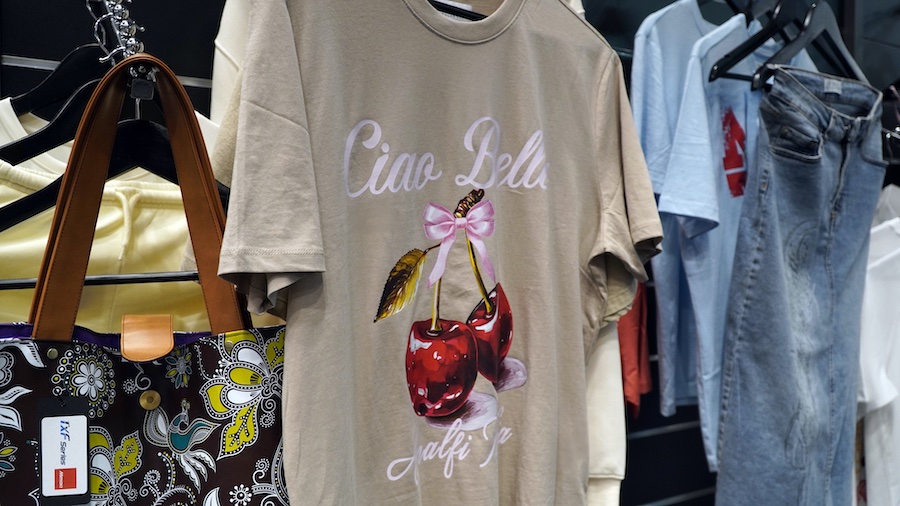
Textile applications created with Texcol® paper from Coldenhove © 2023 Mimaki


By decolourising polyester textiles that have been dyed using dye sublimation technologies, this innovative process allows materials to be re-printed or dyed immediately, contributing to a smaller circular economy. There is no limit to how many times reused polyester can be treated with the Neo-Chromato Process and the process itself minimises water usage and pollution by enabling the disposal of the absorbent paper and decolouring solvents used in the process as burnable waste.

“It is the responsibility of everyone here at ITMA and within the wider textile industry to enable a more sustainable future. Mimaki is actively collaborating with retail and apparel brands to explore the full potential of our latest sustainable technologies. While these latest innovations will enable significant steps forward in sustainable textile production, we also continue to focus on bringing new innovations to market that support the pressing needs of our customers, designers, brands, and importantly, the planet,” concludes Arjen.

(1) Based on Mimaki’s own research.

More News from Mimaki Europe B.V.

#Digital Printing

Keeping print inclusive: Empowering women in the print industry

Across all industries, cultivating a diverse and inclusive workplace is increasingly recognised as valuable and essential to long-term success. However, despite the print industry’s significant advancements in technology and innovation, visible representation of women remains limited. As the sector grapples with low recruitment, it’s important to challenge outdated perceptions. Creating real change, however, requires collective effort - no single company can do it alone.

#Digital Printing

Express Print boosts production using an expanded fleet of Mimaki technologies

Express Print, a fast-growing Bulgarian provider of visual communication and soft signage solutions, has significantly enhanced its production workflow with a comprehensive portfolio of Mimaki digital printing systems. Based in Varna and active for more than 10 years, the company maintains a strong focus on the advertising sector. Over the years, it has steadily expanded its operations, driven by a clear vision to bring the full spectrum of large-format printing services in-house, avoiding outsourcing and ensuring complete control over production quality.

#Digital Printing

Erreà upgrades sportswear printing operations with seven high-performance Mimaki digital textile printers

Mimaki Europe, a leading manufacturer of industrial inkjet printers and cutting systems, has supported renowned Italian sportswear brand, Erreà in upgrading its digital textile printing operations with the installation of seven high-performance Mimaki systems. The new installation includes three Tiger600-1800TS industrial dye-sublimation printers and four TS330-1600 solutions, replacing a previous fleet of 28 digital printers. This major upgrade marks a significant step forward in Erreà’s production strategy, enabling the company to streamline its printing infrastructure while improving efficiency, colour consistency and overall production control.

#Digital Printing

Maximising print efficiency exploring ink saving features for modern print production

In today’s print industry, balancing quality, efficiency, and environmental responsibility is a growing priority. With increasing pressure on margins and sustainability, solutions that streamline production without sacrificing results are more relevant than ever.

More News on Digital Printing

#Digital Printing

FESPA confirms participation from leading exhibiting suppliers and brands for inaugural textile event

FESPA has confirmed a strong exhibitor line-up for its inaugural Textile show, a dedicated new event that will run as part of FESPA 2026, alongside co-located events: Global Print Expo, Personalisation Experience, European Sign Expo, WrapFest and the brand-new Corrugated.

#Digital Printing

UK Manufacturer Basic Prints commits to digital-first production model with dual investment in Kornit Digital’s Apollo

Kornit Digital, a global leader in sustainable, on-demand digital fashion and textile production technologies, today announced that UK clothing manufacturer Basic Prints has expanded its digital production capacity with a second Kornit Apollo Direct-to-Garment (DTG) system. This marks a strategic shift supporting Basic Prints’ digital-first manufacturing model.

#Digital Printing

Hybris Productions scales licensed apparel production moving from screen to digital with Kornit Digital

Kornit Digital, a global pioneer in sustainable, on-demand digital fashion and textile production technologies, today announced that Hybris Productions has adopted Kornit’s direct-to-garment (DTG) digital production technology to scale licensed apparel manufacturing with greater speed, design flexibility, and on-demand production capabilities supporting retail and e-commerce growth.

#Digital Printing

Epson launches SureColor G9000: high-production Direct-To-Film printer delivering greater productivity and reliability

Epson today announces the launch of the SureColor G9000, a new high-production Direct-To-Film (DTFilm) printer designed to meet growing global demand for flexible and efficient textile transfer printing. Expanding Epson’s DTFilm line-up alongside the SC-G6000, the SC-G9000 introduces enhanced speed, reliability and ease of maintenance for commercial garment decorators and textile producers.

Latest News

#Raw Materials

Lenzing Group positions bio‑based materials as a strategic asset for Europe’s economic security

The Lenzing Group, a leading supplier of regenerated cellulose fibers for the textile and nonwovens industries, hosted a high‑level roundtable in Brussels to discuss how bio‑based materials can strengthen Europe’s economic security and support the shift toward a fossil‑free future. Organized in cooperation with Euractiv, the event brought together representatives of the European Commission, the UK Mission to the EU, academia, civil society, and industry.

#Natural Fibers

Beyond Cotton: Natural Fibres in the Spotlight at the Bremen Cotton Conference - Branded by DNFI

Climate targets, fragile supply chains, and rising regulatory requirements are fundamentally changing the perspective of the textile industry - the focus is increasingly shifting toward the base material. Not only cotton, but natural fibres are gaining significant importance: they stand out not only because of their outstanding functional properties, but also because they make a valuable contribution to the bioeconomy and responsible product development.

#Textiles & Apparel / Garment

Coats to showcase innovative reinforcement and filler materials for leather goods and accessories at APLF 2026

Coats, a world-class Tier 2 manufacturer and trusted partner for the apparel and footwear industries, will be promoting four advanced materials from its ‘Lifestyle Solutions’ portfolio at APLF 2026 in Hong Kong in March. Each innovation has been specifically engineered to help luxury and premium brands elevate the craft, durability, sustainability and creative expression required in the manufacturing of handbags, purses, and other high-end designer accessories.

#Textiles & Apparel / Garment

Design, innovation and sustainability propel VIATT 2026’s expanding role in ASEAN textile sourcing

At its third edition, the Vietnam International Trade Fair for Apparel, Textiles, and Textile Technologies (VIATT) further reinforced its role as a key sourcing and business platform for ASEAN’s textile industry. The three-day fair welcomed over 17,000 visits from 54 countries and regions, and featured over 460 exhibitors from 21 countries and regions across 18,000 sqm. The 2026 edition was marked by the introduction of new international pavilions and zones, broadening the fair’s sourcing scope across new geographies and product categories. The fringe programme, headlined by the debut Trend Forum, further distinguished VIATT as the region’s most integrated textile trade platform – uniquely spanning the entire value chain.

TOP