[pageLogInLogOut]

#Digital Printing

Makroser Tekstil’s carpet production soars with a Mimaki TS300P-1800
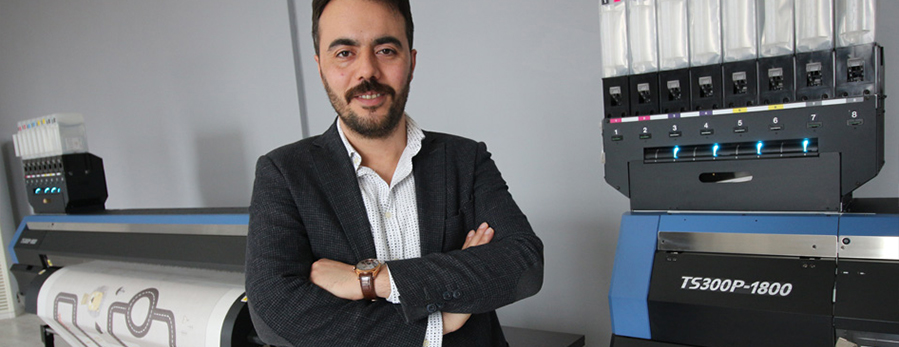
Talha Güldeste, Founder of Makroser Tekstil, in front of the Mimaki TS300P-1800. © 2022 Mimaki
Turkish company, Makroser Tekstil specialises in manufacturing digitally printed carpets and over the years has become one of the leading suppliers in the sector. Utilising Mimaki’s high-performance TS300P-1800 sublimation transfer printer since 2020, the company has optimised their production potential to meet increasing customer expectations in this growing digital textile carpet market.

Makroser Tekstil has become one of the leading brands in the carpet market with its expanding digital product range and increasing production capacity. Established in Istanbul at the end of 2016, Makroser Tekstil serves as a raw material supplier in the supply chain, a manufacturer of carpets and home textiles and carries out studies for the development of the digital printed carpet industry. The company invested in a Mimaki TS300P-1800 sublimation transfer printer in August 2020 and with it gained a significant competitive advantage in the digital printed carpet business.

Alongside carpets, the company also offers other solutions to the carpet industry by producing backing and other materials. Makroser Tekstil’s co-founder, Talha Güldeste explained, “As a company of 250 employees, we have positioned ourselves as a comprehensive manufacturer in the supply chain. We started to produce intermediate goods and materials that we use in the production of digitally printed carpets ourselves, and then sell them on to other carpet manufacturers.”

Acting as both a seller and a supplier, Makroser Tekstil has an approximate monthly output of 150,000 square meters of final product and sells about 70-80,000 square meters of intermediate goods per month. “Our market has four main pillars, including chain market groups, export, e-commerce and our own retail network. We have gained serious momentum in the sales of our final products in recent years, and we attach great importance to our sales and marketing processes, in addition to production, so to increase our profitability. We are currently exporting 35-40% of our production, and our branding and e-commerce activities show that we are making significant improvements,” said Güldeste.

A new era of carpet production

Talha Güldeste’s area of expertise is in digitally printed carpets, a market that he has seen remarkable growth in over recent years. Observing the wider industry, Güldeste said; “Digitally printed carpets have succeeded in getting ahead of woven carpets with their ease of use, low cost, and plenty of colour and pattern options. The consumption habits of our society have changed. Previous generations used to buy thick woven carpets and use them for 20-30 years, as an insulating material in homes. However, due to the widespread urbanization and natural gas infrastructure, the need for carpets to insulate the home has disappeared. We are now in a period of faster consumption, and low prices have increased the interest in these products, alongside them being much easier to maintain. The carpet now stands as a decorative element in homes and living spaces, to be changed seasonally or to match with the interior design.”

Opting for a Mimaki TS300P-1800 to reach top tier quality

Makroser Tekstil decided to invest in a Mimaki TS300P-1800 sublimation transfer printer back in August 2020, with the aim to strengthen their position in the digitally printed carpet market. “The investment in the TS300P-1800 has enabled us to have the capacity to respond quickly to e-commerce orders,” Güldeste commented. “Product quality is the main criterion in the supplies we provide to both online and retail outlets. We made this investment because we saw that we would increase our quality and customer satisfaction in the carpets we print. The Mimaki printer met our expectations, providing the results we wanted from the very first print after installation.” Considering the increased demand, Güldeste aims to further boost their printing capacity with investment in several more Mimaki printers.

Güldeste noted that the quality and consistency of the colours and patterns they see in digitally printed products, no matter how much time has passed. “We have not seen differences between patterns, whether they have been printed once or a thousand times. Knowing that we’ll be able to print in the same colour and quality each time, we are able to meet the increasing quality expectations of our customers, while freeing us from the need of keeping stock in this process.”


Efficient printing was also a key consideration as the company looked to up the speed of production, Güldeste added, “Along with consistent quality, the safe operation of the machine, ease of use and maintenance were also incredibly important to us, and we were conscious of how problems, such as print head clogs, could hinder our work. The TS300P-1800 is a tireless machine. Mimaki’s core technologies allow for uninterrupted printing and have made managing multiple printers with a single operator and computer so much simpler, saving the company both time and money. We have not encountered into any problems, even when the machine is running 24 hours, allowing us to respond quickly to demand and ultimately giving us greater profit in the long run.”
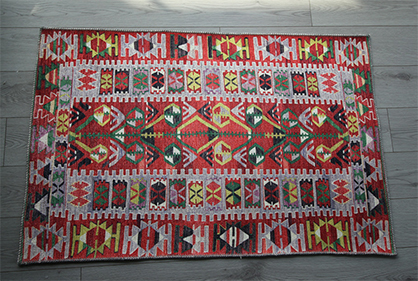
Makroser Tekstil has become a leader in digital printing carpets and other solutions for the Turkish and international market. © 2022 Mimaki


In addition to the printer itself, Makroser Tekstil uses original Mimaki ink in the printer, which has helped the company optimise its ink consumption. “While it is necessary to use 4 ml to print 1 square meter of paper with a similar ink, we can easily do the same with 2 ml of Mimaki ink. We have reduced our ink consumption by 30%, all while maintaining our print quality. As well as saving on cost, Mimaki’s inks are certified to be harmless to human health and environmentally friendly and made incorporating them into our production line a clear choice”, added Güldeste. “Mimaki has made a great contribution to our growth plans in the coming period thanks to the printing technology. With it at our disposal, we feel encouraged and able to grow in our current market as well as to enter new application areas.”
More News from Mimaki Europe B.V.

#Digital Printing

Mimaki introduces entry-level TS200-1600 dye sublimation printer for vibrant and versatile Results

Mimaki Europe, a leading manufacturer of industrial inkjet printers and cutting plotters, today announces the TS200-1600, its latest sublimation transfer inkjet printer, which will make its international debut at The Sign Show / The Print Show in Birmingham, UK (23–25 September 2025). Building on the success of the TS100, the new TS200-1600 delivers fast production speeds, high-quality and versatile applications at an affordable price point, making it an ideal solution for small shops, start-ups, and businesses looking to expand into customised goods and short-run textile production.

#Digital Printing

Elle-Erre – Scaling up with Mimaki’s textile printing innovation

The Italian company Elle-Erre is building on Mimaki technology to advance its business in digital textile and visual communications printing. With the third generation of Mimaki systems now in operation, Elle-Erre has increased productivity, reduced material waste, and further diversified its portfolio in areas such as sportswear and event applications.

#Digital Printing

Mimaki to exhibit at Texworld Paris with its next generation textile printing solution, TRAPIS

Mimaki Europe, a leading manufacturer of inkjet printing and cutting technologies, announces its participation in Texworld Paris, taking place from 15th-17th September at Parc des Expositions de Paris-Le Bourget (Halls 2-4). The company will demonstrate TRAPIS (Transfer Pigment System) alongside real-life customer use cases at its booth (Hall 3, Stand O204). Situated within Avantex Paris, part of Texworld Paris, this dedicated area highlights companies committed to reducing pollution and promoting circularity in the textile and fashion industry, so to create the fashion of the future.

#Digital Printing

Underscoring Mimaki’s commitment to greener print production

The print industry faces significant challenges in becoming sustainable, especially given its integral role in our daily lives. Each part of the industry has its own flaws that hinder environmental responsibility. From the chemical hazards of certain inks to the energy-intensive nature of printing technology, these issues collectively highlight that a shift towards more sustainable practices is urgently needed to reduce the industry's environmental impact.

More News on Digital Printing

#Digital Printing

Epson future proofs textile printing with Epson Textile Academy 2.0

Technology leader Epson today hosted its second Textile Academy Event at the company’s Textile Innovation Centre in Lutterworth, Leicestershire. Building on the success of its inaugural Textile Academy earlier this year, the event welcomed Textile Design BA students from Nottingham Trent University (NTU) and Loughborough University. The event features workshops designed to enhance student’s practical textile printing skills; corporate and entrepreneurial business acumen; marketing and self-branding; and environmental awareness around the textile industry.

#Digital Printing

EFI and Fiery, LLC, reach agreement on Fiery acquisition of Inèdit software

Electronics For Imaging, Inc. (EFI™) today announced that it has signed an agreement for Fiery, LLC, to acquire all interests in Inèdit Software, the leading RIP and color management software company serving all brands of digital textile printers worldwide. Inèdit’s software products, including neoStampa, neoTextil and neoCatalog, serve the digital textile and specialty printing markets, and will enable Fiery to broaden its suite of solutions targeted at those markets. EFI Reggiani will continue its strong working relationship with Inèdit as an OEM partner.

#ITMA Asia + CITME Singapore 2025

Kornit Digital launches breakthrough footwear solution at ITMA Asia + CITME Singapore 2025

Kornit Digital Ltd. (NASDAQ: KRNT) (“Kornit” or the “Company”), a global pioneer in sustainable, on-demand digital fashion and textile production technologies, today announced a major industry milestone: the commercial launch of its groundbreaking digital footwear solution for sports and athleisure markets.

#Digital Printing

Flying Colours meets Kornit: A new era for garment printing

The print industry is undergoing rapid transformation, driven by demands for speed, sustainability, and limitless creativity. For more than 30 years, Flying Colours, a specialist in artwork and colour separation services for printers worldwide, has been at the forefront of this evolution. Now, partnering with Kornit Digital, the company is demonstrating how decades of screen-printing expertise can unlock the full potential of Mass Digital Production.

Latest News

#Recycling / Circular Economy

Advanced Recycling Conference 2025 fuels innovation across key waste streams

The Advanced Recycling Conference (ARC) 2025 brought together nearly 220 experts from 28 countries to spotlight pioneering advancements and foster industry collaboration in recycling across diverse waste streams including plastics, textiles, automotive and other materials.

#Dyeing, Drying, Finishing

Navis TubeTex announces U.S. partnership with Icomatex

Navis TubeTex, a global leader in advanced dyeing and finishing machinery solutions, is pleased to announce a new partnership with Icomatex (www.icomatex.com), a respected European manufacturer of high-quality stenters and textile finishing equipment. Under this agreement, Navis TubeTex will exclusively represent the Icomatex stenter line in the United States.

#Recycling / Circular Economy

ADVANSA launches ADVA®tex: A new step toward textile-to-textile recycling

ADVANSA has introduced ADVA®tex, a new filling fibre made entirely from recycled pre-consumer textile waste, positioning the material as a significant step forward in textile-to-textile (T2T) recycling. The fibre is designed for use in duvets, pillows, mattresses, and furniture applications and is available in three versions.

#Knitting & Hosiery

KARL MAYER celebrates 35 years of EL pattern drive

KARL MAYER is celebrating an anniversary this year: on 30 November 1990, the first warp knitting machine with electronic guide bar control, the KS 4 EL, was delivered – another milestone for patterning. As early as 1980, the SU gearbox with the MRS42SU had initiated the transition from mechanical chains to digital data.

TOP