[pageLogInLogOut]

#Digital Printing

TPS 2022 to address sustainability in printing for textile applications

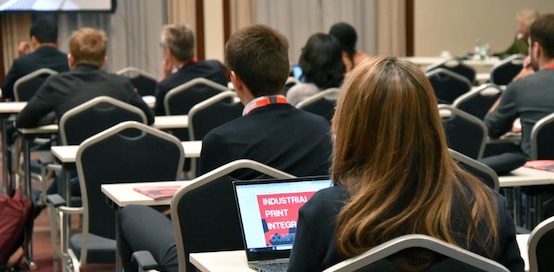
Following its new focus on textile markets, the European Specialist Printing Manufacturers Association (ESMA) launches a brand new event to explain and inspire change within the industry. Textile Printing and Sustainability (TPS) conference takes place on 8-9 September 2022 at Dorint Kongresshotel Düsseldorf-Neuss and welcomes all involved in automatisation, new business models and best environmental practices for various textile applications.

“According to the European Environmental Agency, textile has the region’s fourth largest climate impact, following only food, housing and transport industries. The average European throws away 11 kilograms of textiles every year”, explains Peter Buttiens, CEO of ESMA. “Different international bodies throw their weight behind changing this. For example, the EU is introducing a digital product passport to boost circular economy. This forms an incentive for every step of textile production and workflow, to stimulate creative reuse, recycling and repurposing of materials and end products.”

Textile Printing & Sustainability looks at all critical factors and global trends which influence textile market condition today and in the nearest future: customer-made fashion, responsible businesses, quality concerns, customisation and personalisation. The event assembles industry experts from two main printing processes – screen and inkjet – to promote best practices, discuss new application fields and explain benefits and challenges of individual technology choices.

The first submitted contributions include a keynote address by Karin Ekberg from Leadership & Sustainability. Karin has a professional track record as Head of of Environmental Services at adidas Group and Chair of the Sustainable Apparel Coalition. Heiner Rupperath from Brother will look at the environmental challenges in hardware manufacturer operation and Dr Inga Barende from Covestro will introduce the raw materials perspective. Institute of Textile Technology at RWTH Aachen will share the latest know-how behind smart textiles.


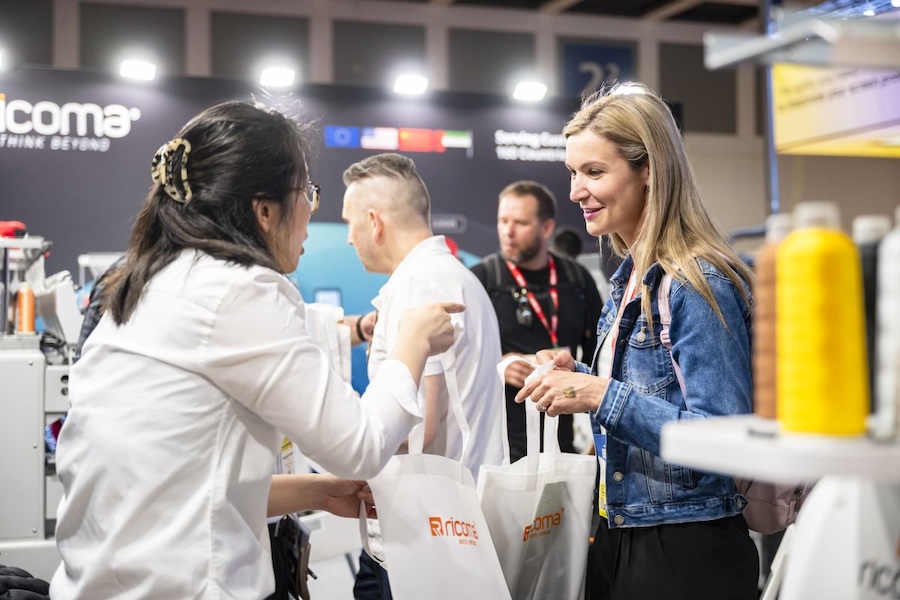
In total 40 presentations are scheduled on two conference tracks, accompanied by a networking section with more than 40 tabletops representing key industry and academia players. The programme covers the entire supply chain and workflow, involves manufacturers of products for fabric handling (pre- and post-treatment), the printing process itself (inks and equipment), as well as printers, cutters, sewers, value added resellers and brand owners. From material science, through print systems, to micro-factories and finishing – TPS brings together all those who drive change and contribute to innovation.

With the existing resources and know-how accumulated over thirty years of its service to industrial, functional and specialist printing community, ESMA is confidently looking forward to welcoming OEMs, printers, innovators and brands at the inaugural edition of TPS. Together with their partner and industry veteran, Thomas Poetz, the organisers invite you to join this new platform for learning and networking about the disruptive developments in printing on all types of textiles.

“As natural resources diminish and the climate crisis grows acute, the question of more sustainable textile industry occupies the entire world. Proposed solutions include changes in supply chains, development of new fibres and chemistry processes, as well as digitalisation”, says Thomas Poetz. “According to one calculation, up to 790 billion litres of water could be saved on yearly basis if all textile printing moved from analogue to digital. Similar reductions can be achieved with innovative dyeing processes. And there are of course other potential savings in areas such as energy, transport or waste production. With the TPS conference we set up a platform for the industry and research centres, so that sustainable networks can develop.”
More News from ESMA

More News on Digital Printing

#Digital Printing

Epson launches SureColor G9000: high-production Direct-To-Film printer delivering greater productivity and reliability

Epson today announces the launch of the SureColor G9000, a new high-production Direct-To-Film (DTFilm) printer designed to meet growing global demand for flexible and efficient textile transfer printing. Expanding Epson’s DTFilm line-up alongside the SC-G6000, the SC-G9000 introduces enhanced speed, reliability and ease of maintenance for commercial garment decorators and textile producers.

#Digital Printing

Maximising print efficiency exploring ink saving features for modern print production

In today’s print industry, balancing quality, efficiency, and environmental responsibility is a growing priority. With increasing pressure on margins and sustainability, solutions that streamline production without sacrificing results are more relevant than ever.

#Digital Printing

Mimaki upgrades TS330 series for vibrant and seamless dye sublimation printing

The TS330 Series now provides users with an extended colour gamut, offering the flexibility to serve different markets profitably from one solution – from fashion to décor to signage – with improved colour vibrancy, fidelity and accuracy. Mimaki also introduces a larger solution to the TS330 Series, the TS330-1800, able to accommodate single-piece, wide textile fabrics, ideal for larger home décor applications.

#Digital Printing

Call for speakers and partners: Kornit Konnections 2026

Kornit Konnections today announced it is officially accepting speaker proposals and partner interest for what is set to be the most influential digital apparel industry gathering of the decade. Interested parties should visit www.kornitkonnections.com.

Latest News

#Sustainability

Ying McGuire becomes new CEO of Cascale

Cascale today announced the appointment of Ying McGuire as Chief Executive Officer, effective June 1, 2026.

#Technical Textiles

Sustainable, lightweight, and sound absorbing: Polyester-based front trunk solution for BEVs

As car manufacturers look to further reduce their carbon footprint, Autoneum has developed an innovative front trunk solution for battery electric vehicles (BEVs), made entirely from polyester-based textile. The Ultra-Silent Frunk offers significant weight reduction, improved acoustic and thermal insulation, and uses up to 70 percent recycled material, supporting sustainable and efficient vehicle design. Autoneum, global technology leader in acoustic and thermal management for vehicles, has already received orders for the new frunk from three major OEMs in Asia and Europe to be built in three BEV models. Series production for two BEVs has been underway in China and Germany since last year.

#Raw Materials

Modern testing methods for raw cotton

The 38th International Cotton Conference Bremen will take place from 25 to 27 March 2026 at the Bremen Parliament. This conference has traditionally stood for in-depth expertise and international exchange. The program will focus on technical innovations, market trends, and regulatory frameworks across the entire value chain – from agriculture to the circular economy. With high-profile speakers, the conference is regarded as the key meeting point for the global cotton industry. Today’s focus: Cotton quality and testing methods.

#Spinning

Rieter responds to higher raw material prices

Global political and economic developments have been leading to rising raw material and energy costs for some time. The textile machinery industry is also affected by this trend. Rieter machines and components consist to a large extent of steel, copper, aluminum and electronics. These materials in particular have seen higher demand and higher prices in recent months.

TOP