[pageLogInLogOut]

#Digital Printing

GoCustom clothing adopts Kornit Avalanche HD6, KornitX Workflow Platform for digitized production efficiency on demand 
© 2021 Kornit Digital
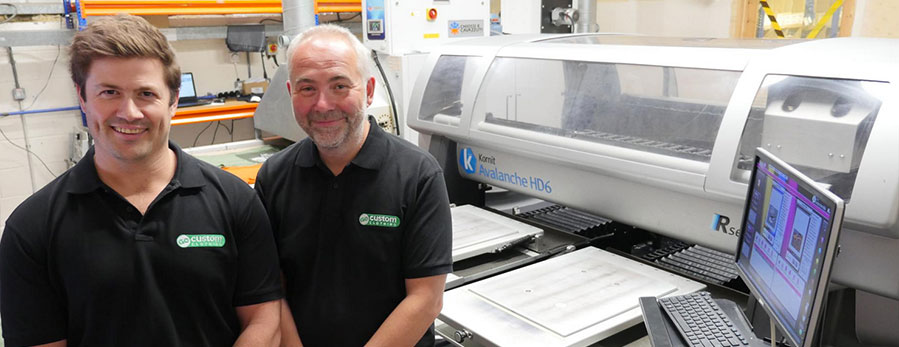
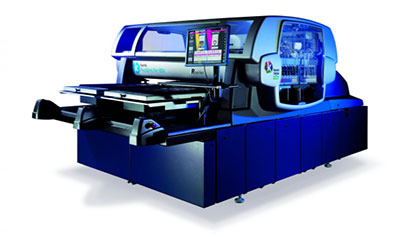
Kornit Digital (Nasdaq: KRNT), a worldwide market leader in sustainable, on-demand, digital textile production technologies, announced today that United Kingdom-based GoCustom Clothing has installed the Kornit Avalanche HD6 system for on-demand, direct-to-garment (DTG) digtal production. This installment coincides with GoCustom Clothing’s implementation of the KornitX platform, which provides a streamlined end-to-end workflow between the brand’s online customer stores and their production floor.

“Kornit’s system is the best system we found, giving us the capability we need with its speed, throughput and sustainability.”

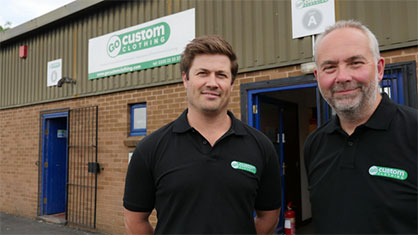
A family-run business since its founding in 1994, GoCustom Clothing offers print and embroidery services, and began by providing workwear for local businesses before branching out to school hoodies and uniforms. As their e-commerce business grew and orders became more diverse, GoCustom Clothing determined it was best to add digital DTG production capabilities, which could accommodate both orders of 1,000-plus pieces and single pieces. GoCustom originally invested in a Kornit Storm system for on-demand production, before upgrading to a Kornit Avalanche HD6 for increased capacity.
© 2021 Kornit Digital


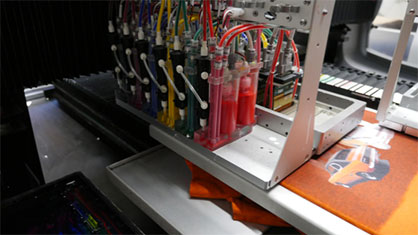
Kornit Avalanche HD6 can digitally produce numerous apparel types without considerable setup time.  Pallets can be changed quickly to handle different sizes and applications, versus the costly and time-consuming processes associated with screen printing operations. Furthermore, digitizing operations with KornitX,  Kornit’s operating system for on-demand sustainable fashion, means increased control and management of the end-to-end fulfillment process, from front-end steps including design, order management, and virtual catalog to smart routing of orders, production, packaging, and shipping.

“Kornit’s system is the best system we found, giving us the capability we need with its overall quality, speed, throughput, and sustainability,” says Hamish Eccles, Digital Marketing Director at GoCustom Clothing. “The KornitX workflow operating system allows us to connect directly with our customers and take small orders, which are then processed very simply. Through our Shopify application, if somebody is running a Shopify store, they can simply use our app, and immediately design products directly within Shopify, which would then come through to our system via KornitX, where we would then print and ship the product.”
© 2021 Kornit Digital


“The Kornit Avalanche HD6 provided us the quality and definition we were looking for by producing extrememly fine detail on these full-color prints,” added Tom Mason, GoCustom Clothing’s Sales Director. “You can really push the limits in terms of volume with the machine, and can run jobs you couldn’t just do before.”
© 2021 Kornit Digital


“Kornit’s differentiated technology offers true end-to-end digitization of the production experience, so businesses like GoCustom Clothing can provide consumers unlimited design possibilities, in any quantity, and fulfill them faster than ever,” says Chris Govier, Kornit Digital Europe, Middle East, and Africa Managing Director. “By eliminating inventory concerns and producing any number of pieces whenever the demand or opportunity is required, our customers, like GoCustom Clothing, become more agile, profitable, and sustainable.”


More News from TEXDATA International

#India ITME 2026

India’s textile industry: Current position, growth targets and industrial development

With ambitious export targets, major investments in manufacturing infrastructure and new international trade agreements, India is pursuing a comprehensive development strategy for its textile and apparel industry. An overview of the industry’s current position, government initiatives, progress achieved and challenges ahead.

#India ITME 2026

India ITME 2026: Textile technology meets India's investment ambitions

With ambitious growth targets, government incentive programmes and industrial development initiatives already underway, India is preparing for the next stage of its textile transformation. Against this backdrop, the 12th India ITME, taking place in Greater Noida from 4 to 9 December 2026, arrives at a particularly important moment for machinery manufacturers and textile producers alike.

#Digital Printing

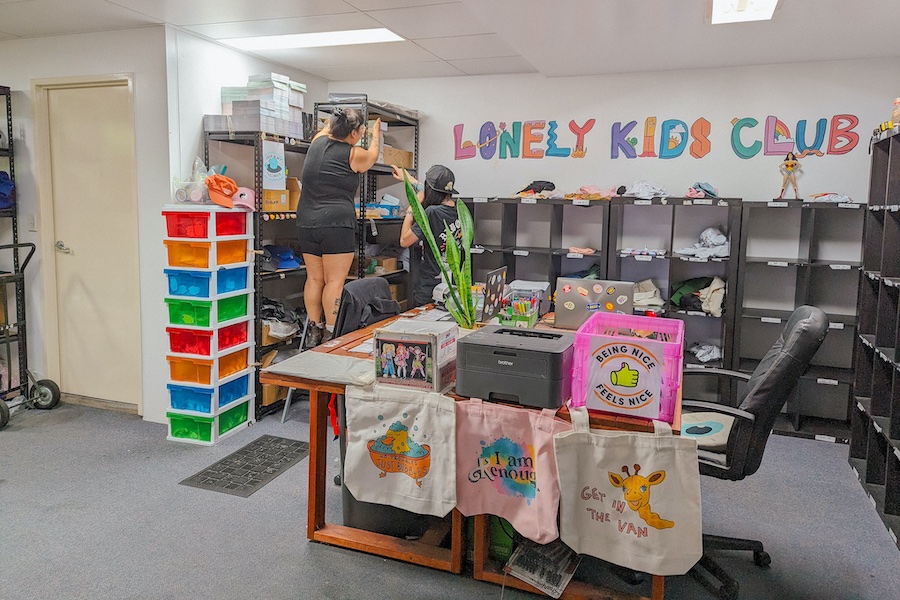
From a bedroom startup to 3,000 designs: How Lonely Kids Club built its business with DTG printing

Founded in Sydney in 2011, independent clothing label Lonely Kids Club has grown from a bedroom startup into a business offering around 3,000 graphic T-shirt designs. With its own production studio, direct-to-garment printing and a demand-driven manufacturing model, the company demonstrates how smaller apparel brands can combine creative independence with flexible production – while navigating the everyday challenges of quality control, workflow efficiency and sustainability.

#Weaving

“A complex design is only useful if the machine can reproduce it consistently”

Andreas Schnabel, Head of R&D for Technical Weaving Systems at Stäubli, discusses how 3D weaving can create textile reinforcements tailored to the loads within a composite component, where near-net-shape weaving can reduce processing steps and material waste, and what it takes to produce complex structures reliably and economically. He also explains how manufacturers can adapt Stäubli’s modular TF weaving platforms to new applications and how the company’s centre of excellence in Bayreuth supports the transition from research to industrial production.

More News on Digital Printing

#Digital Printing

Scaling print-on-demand: Imperial Custom Apparel connects industrial printing with e-commerce automation

Combining industrial direct-to-garment printing with integrated production software, Miami-based Imperial Custom Apparel has expanded its production capacity, improved print quality and streamlined its operations. The installation of three Kornit Atlas MAX PLUS systems alongside GelatoConnect software has enabled the company to serve more sales channels with fewer employees and significantly simplified workflows.

#Digital Printing

Mimaki highlights growing demand for hybrid UV printing across European markets

Insights from Mimaki's European partner network reveal how hybrid UV printing is responding to different regional market needs, driven by growing demand for flexible, application-oriented printing technologies.

#Digital Printing

VistaPrint increases apparel production capacity with Kornit Apollo

Kornit Digital (NASDAQ: KRNT), a provider of on-demand digital textile production technologies, reports that VistaPrint has significantly increased its apparel production capacity through the implementation of the Kornit Apollo system. The installation has enabled the international print and design company to add approximately 25,000 units of weekly production capacity while improving production speed, operational efficiency and order turnaround times.

#Digital Printing

Blue Tomato accelerates agile retail apparel production with Kornit Digital

Kornit Digital (NASDAQ: KRNT), a global pioneer in on-demand digital fashion and textile production technologies, is highlighting how Blue Tomato, Europe’s largest board sports retailer, is using two Kornit Atlas MAX PLUS systems to support a more agile approach to in-house apparel production. The systems are helping Blue Tomato respond faster to changing consumer trends, produce high-quality apparel for its network of 86 retail stores across Europe and reduce inventory by printing only what the market demands.

Latest News

#India ITME 2026

Groz-Beckert targets energy efficiency, productivity and process reliability across six textile technology sectors at India ITME 2026

At India ITME 2026 in Greater Noida from 4 to 9 December, Groz-Beckert will present its latest innovations across all six product areas – Knitting, Weaving, Nonwovens, Sewing, Tufting and Spinning. At Hall 14, Booth B6, the German textile technology specialist will showcase advanced components, systems, services and digital solutions designed to improve energy efficiency, productivity, process reliability and textile quality while addressing the increasingly diverse requirements of modern textile manufacturing.

#Knitting & Hosiery

Monarch extends its Woven Look knitting technology from mattress ticking to apparel and performance textiles

A fabric technology originally developed to reproduce the appearance of woven mattress ticking by Monarch Knitting Machinery, a member of the British Textile Machinery Association (BTMA), is finding new applications in apparel. With the introduction of its 36-gauge OD5B-M-7ED44 double-knit machine, Monarch is expanding the possibilities for producing fine knitted structures that closely resemble woven textiles while retaining the stretch and comfort associated with knitting.

#Textiles & Apparel / Garment

VIATT 2027 names Thailand as its inaugural Partner Country

Thailand will take centre stage as the inaugural Partner Country at the Vietnam International Trade Fair for Apparel, Textiles and Textile Technologies (VIATT), returning to Ho Chi Minh City from 24 to 26 February 2027. Featuring a pavilion, dedicated product displays and various fringe events, the Partner Country programme will showcase Thailand’s textile and fashion capabilities, complementing an exhibitor line-up spanning VIATT’s three sectors. Alongside this new cooperation, eight additionally confirmed country and region pavilions and zones are set to strengthen the fair’s international offering.

#Recycling / Circular Economy

IVGT presents initial findings from the Erasmus+ project Skills4Circularity

At Albstadt ID 2026, hosted by Albstadt-Sigmaringen University of Applied Sciences, IVGT project manager Iris Schlomski presented initial findings from Skills4Circularity on 12 November 2026. She opened her presentation with an estimate from the European Environment Agency: the EU generated around seven million tonnes of textile waste in 2022. The Erasmus+ project brings together 21 partners from twelve countries to identify the skills textile and clothing professionals need to design more durable products, use fewer resources in production and recover fibres after use.

TOP