[pageLogInLogOut]

#Digital Printing

Durst starts the "PREMISE" project with the Free University of Bolzano and TechnoAlpin
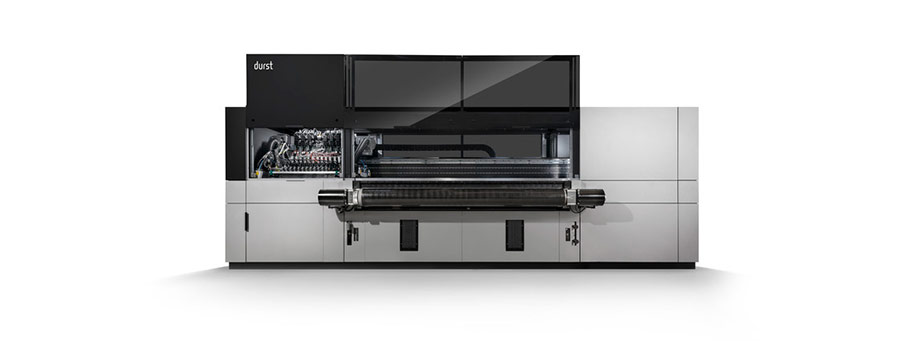
© 2021 Durst Group
Durst, manufacturer of advanced digital printing and production technologies, is starting the EU-funded project PREMISE with the Free University of Bozen (unibz). The manufacturer of snowmaking systems, TechnoAlpin, was selected as a further industrial partner.

The project, headed by Johann Gamper, Professor and Vice Rector for Research at the Faculty of Computer Science, aims to develop a technical infrastructure with database technologies that enables predictive maintenance measures on production facilities. The project runs until July 2022 and will be extended until the end of 2022 depending on the status. 

“In the PREMISE project, we are calculating appropriate algorithms that make predictions about maintenance requirements, including for sub-areas,” says Johann Gamper. “In this project, we can test technologies that we have been researching for years with our industrial partners on the basis of specific case studies and adapt them to specific requirements. We are thus contributing to technology transfer - an important mission of unibz."

"We sell our digital printing systems worldwide and for this reason we equip them with analytics software," says Christian Casazza, Customer Service Director of the Durst Group. "The combination of intelligent sensors and software evaluation for component and machine data forms the basis for predictive maintenance - the detection of error states or the need for service or replacement of spare parts "in advance" so that production can be adjusted accordingly. With the “PREMISE” project, we go one step further and use artificial intelligence methods to make these predictions and interventions before an emergency even more efficient and to be able to apply them even to complex, causal relationships. This is a decisive advantage, especially in times when international traffic is restricted."


Specific sensors are built into Durst printing machines that provide information on the functioning and condition of individual components and parts. To prevent machine downtime, there are specifications and cycles for maintenance, but every printing press has different production-related factors and / or loads that affect productivity and operating times. For this reason, algorithms are required that make predictions when something will happen or maintenance in a sub-area outside the standard will be necessary. All of this serves to increase the machine availability, even in remote production locations, and to minimize or plan production downtimes.

“The PREMISE project is a further component in our vision of a smart factory, where networked infrastructures, intelligent production systems and innovative software enable an automated business process,” says Michael Deflorian, Business Unit Manager Software & Solutions of the Durst Group. “With the predictive maintenance developed in the project Framework and the machine learning techniques used will in future trigger the maintenance of the printing systems independently in order to guarantee predictable and trouble-free operation."


More News from Durst Phototechnik AG

More News on Digital Printing

#Digital Printing

FESPA confirms participation from leading exhibiting suppliers and brands for inaugural textile event

FESPA has confirmed a strong exhibitor line-up for its inaugural Textile show, a dedicated new event that will run as part of FESPA 2026, alongside co-located events: Global Print Expo, Personalisation Experience, European Sign Expo, WrapFest and the brand-new Corrugated.

#Digital Printing

UK Manufacturer Basic Prints commits to digital-first production model with dual investment in Kornit Digital’s Apollo

Kornit Digital, a global leader in sustainable, on-demand digital fashion and textile production technologies, today announced that UK clothing manufacturer Basic Prints has expanded its digital production capacity with a second Kornit Apollo Direct-to-Garment (DTG) system. This marks a strategic shift supporting Basic Prints’ digital-first manufacturing model.

#Digital Printing

Keeping print inclusive: Empowering women in the print industry

Across all industries, cultivating a diverse and inclusive workplace is increasingly recognised as valuable and essential to long-term success. However, despite the print industry’s significant advancements in technology and innovation, visible representation of women remains limited. As the sector grapples with low recruitment, it’s important to challenge outdated perceptions. Creating real change, however, requires collective effort - no single company can do it alone.

#Digital Printing

Express Print boosts production using an expanded fleet of Mimaki technologies

Express Print, a fast-growing Bulgarian provider of visual communication and soft signage solutions, has significantly enhanced its production workflow with a comprehensive portfolio of Mimaki digital printing systems. Based in Varna and active for more than 10 years, the company maintains a strong focus on the advertising sector. Over the years, it has steadily expanded its operations, driven by a clear vision to bring the full spectrum of large-format printing services in-house, avoiding outsourcing and ensuring complete control over production quality.

Latest News

#Techtextil 2026

Gebr. Otto highlights versatility at Techtextil with regional supply chains, yarn innovations and new hygiene segment

At this year’s Techtextil, Gebr. Otto places its versatility at the center of its presentation. In addition to spinning, twisting and dyeing – traditionally focused on fine cotton – textile processors will also find a competent development partner for technical specialty solutions. The Dietenheim-based spinning mill has now built up a decade of experience in the production of technical yarns, particularly from aramids. A new hygiene segment has also been established, where yarns for medical and hygiene products are currently being produced. In the future, this department could also develop textile products for the food sector. Gebr. Otto will once again be present at the BW-i joint stand, booth D81, hall 12.1. What is wound onto the spool is determined by the customer: Gebr. Otto develops according to specific customer requirements and transforms its own ideas into yarn innovations.

#Europe

Commission presents proposal for EU Inc. - unlocking the full potential of the Single Market for Europe's entrepreneurs

Today, the European Commission presented its proposal for EU Inc., a new single set of corporate rules, building the cornerstone and starting point for the EU's 28th regime. EU Inc. is an optional, digital-by-default European corporate framework. It will make it easier for businesses to start, operate and grow across the EU – incentivising them to stay in Europe, and encourage those who once looked elsewhere to return.

#Man-Made Fibers

OnceMore® from Södra brings end-to-end traceability for circular Man-made Cellulosic Fibers (MMCF) using TextileGenesis

OnceMore® from Södra, the world’s first large-scale process for recycling blended fabrics into high‐quality dissolving pulp, will begin using TextileGenesis, a Lectra company, to strengthen traceability from raw material to retail across the value chain. OnceMore® produces dissolving pulp made from blended textile waste and wood sourced from responsibly managed Swedish forests. By integrating TextileGenesis, OnceMore® supports the growing need for verified data and secure, transparent tracking throughout increasingly complex supply chain.

#Sustainability

Experts publish APAC policy priorities

Cascale today announced the publication of its APAC Policy Priorities Paper, developed by the Asia-Pacific (APAC) Policy Member Expert Team (MET) to identify key regional sustainability challenges and provide practical, aligned recommendations for policymakers and industry stakeholders across Asia-Pacific.

TOP