[pageLogInLogOut]

#Digital Printing

Mimaki launches two advanced print solutions for digital textile production
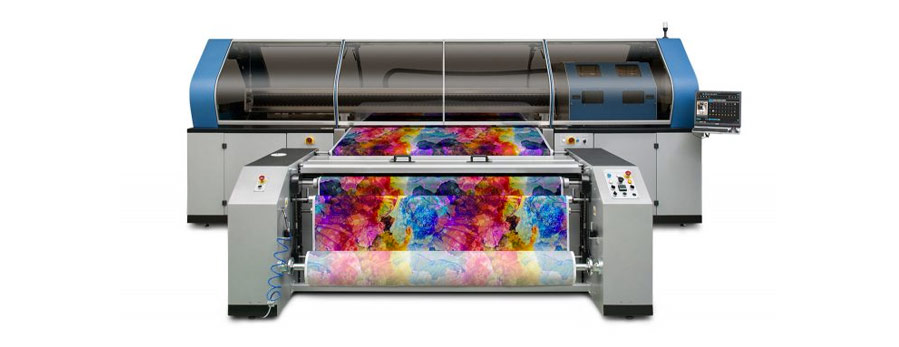
Mimaki’s latest high-speed industrial textile printer, Tiger 1800B MkIII © 2021 Mimaki
Mimaki Europe, a leading manufacturer of inkjet printers and cutting systems, today announces the addition of two new high performance textile printers to its market-leading product portfolio – The Mimaki TS100-1600 and the Mimaki Tiger-1800B MkIII Printer.

Add digital print technology to meet changing market demands

The TS100-1600 is Mimaki’s latest addition to its ‘100 series’ portfolio. This affordable, high-quality system is ideal for printers looking to add their first digital sublimation printing solution or expand their production capacity.

Bert Benckhuysen, Senior Product Manager at Mimaki Europe explained, “The textile printing industry has seen a growing requirement for increased product variety, lower inventories and shorter delivery times. Add to that the economic challenges of 2020 and we recognized that the market needed a digital textile printer that combined high quality, on-demand output with a low initial investment and cost-effective production. Having seen the success of our 100 series printers for the same reasons in other sectors, we knew that introducing a textile printer to this range would provide our customers with an opportunity to expand their businesses and seek new revenue opportunities, even amid these challenging times.”

Available in the EMEA from April 2021, the TS100-1600 has a print width of 1,600 mm and speed of 70 m2/h in the fastest mode. In addition, the use of a 1 litre ink bottle helps reduce the running cost and enables stable, continuous operation due to the reduced need for ink replacement. The printer is also equipped with a variety of renowned Mimaki features, including NCU (Nozzle Check Unit)1, NRS (Nozzle Recovery System)2, and the DAS (Dot Adjustment System) function which automates dot position correction and feeding amount correction, reducing the need for operator intervention. While the RIP software RasterLink 7 comes as standard, printers purchasing the TS100-1600 can also choose to add the TxLink4, another one of Mimaki’s original RIP software platforms.

Get ahead of the competition with the new and improved Tiger-1800B MkIII

The second printer launched today is the Tiger-1800B MkIII - the latest model of this high-speed, high-volume industrial textile printer range. Available as a high-quality direct-to-textile (reactive or direct sublimation) or sublimation transfer printing solution, the new Tiger-1800B MkIII has been developed with reliability and print accuracy at the forefront of the design process and features new software capabilities that help to increase productivity and reduce downtime.


“The textile industry is fast-moving, highly creative and leaves little room for error,” continued Benckhuysen. “Printers in this market require a robust system that will deliver the speed, quality and innovation needed to keep pace with this exciting industry. The new capabilities of the Tiger-1800B MkIII build on those featured in successful predecessor models to meet these requirements head on.”
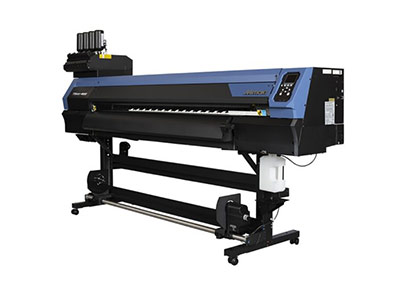
The newest addition in the 100 Series, the TS100-1600 © 2021 Mimaki


The new capabilities of the Tiger-1800B MkIII include the ‘Mimaki Printer Controller’ (MPC) software. This platform has been designed for ease-of-use and enables users to set up, operate and output data with one-touch, simple operation. Its intuitive interface and functionality allow users to easily run automated overnight operation by sending multiple jobs with different settings to the print queue. The nozzle recovery function further reduces downtime by allowing production to continue if the printer encounters a nozzle malfunction.

The Tiger-1800B MkIII is also supported by the latest ‘TxLink4’ software. Its new ‘Parallel RIP function’ can manage multiple sets of print data at once to maximise productivity and the ‘Variable print function’ provides printers with the flexibility to produce more innovative, creative apparel applications. This latest system has also been upgraded with 16-bit rendering to enable a smoother gradation expression and can handle high-speed data transfer thanks to its 10 GB-based Ethernet controller.
More News from Mimaki Europe B.V.

#Digital Printing

Maximising print efficiency exploring ink saving features for modern print production

In today’s print industry, balancing quality, efficiency, and environmental responsibility is a growing priority. With increasing pressure on margins and sustainability, solutions that streamline production without sacrificing results are more relevant than ever.

#Digital Printing

Mimaki upgrades TS330 series for vibrant and seamless dye sublimation printing

The TS330 Series now provides users with an extended colour gamut, offering the flexibility to serve different markets profitably from one solution – from fashion to décor to signage – with improved colour vibrancy, fidelity and accuracy. Mimaki also introduces a larger solution to the TS330 Series, the TS330-1800, able to accommodate single-piece, wide textile fabrics, ideal for larger home décor applications.

#Heimtextil 2026

Mimaki demonstrates versatile, simple TRAPIS textile printing at Heimtextil 2026

Mimaki’s textile pigment transfer printing system, TRAPIS, is able to print on a diverse range of fabrics - unlike traditional processes - including natural fibres and synthetic fabrics. The full solution will be shown on Mimaki’s booth (Hall 3.0 Stand A97), as the company returns to Heimtextil to showcase its advancements in sustainable, high quality and efficient textile printing.

#Digital Printing

Mimaki introduces entry-level TS200-1600 dye sublimation printer for vibrant and versatile Results

Mimaki Europe, a leading manufacturer of industrial inkjet printers and cutting plotters, today announces the TS200-1600, its latest sublimation transfer inkjet printer, which will make its international debut at The Sign Show / The Print Show in Birmingham, UK (23–25 September 2025). Building on the success of the TS100, the new TS200-1600 delivers fast production speeds, high-quality and versatile applications at an affordable price point, making it an ideal solution for small shops, start-ups, and businesses looking to expand into customised goods and short-run textile production.

More News on Digital Printing

#Digital Printing

Epson launches SureColor G9000: high-production Direct-To-Film printer delivering greater productivity and reliability

Epson today announces the launch of the SureColor G9000, a new high-production Direct-To-Film (DTFilm) printer designed to meet growing global demand for flexible and efficient textile transfer printing. Expanding Epson’s DTFilm line-up alongside the SC-G6000, the SC-G9000 introduces enhanced speed, reliability and ease of maintenance for commercial garment decorators and textile producers.

#Digital Printing

Call for speakers and partners: Kornit Konnections 2026

Kornit Konnections today announced it is officially accepting speaker proposals and partner interest for what is set to be the most influential digital apparel industry gathering of the decade. Interested parties should visit www.kornitkonnections.com.

#Digital Printing

Sold-out industrial inkjet print technology showcase signals accelerating adoption across advanced manufacturing

A new sold-out industrial inkjet print showcase taking place in Munich this month is sending one of the clearest signals yet that industrial print technologies are entering a new phase of commercial adoption, as manufacturers increasingly integrate inkjet into production-scale environments.

#Digital Printing

Epson future proofs textile printing with Epson Textile Academy 2.0

Technology leader Epson today hosted its second Textile Academy Event at the company’s Textile Innovation Centre in Lutterworth, Leicestershire. Building on the success of its inaugural Textile Academy earlier this year, the event welcomed Textile Design BA students from Nottingham Trent University (NTU) and Loughborough University. The event features workshops designed to enhance student’s practical textile printing skills; corporate and entrepreneurial business acumen; marketing and self-branding; and environmental awareness around the textile industry.

Latest News

#Sustainability

Ying McGuire becomes new CEO of Cascale

Cascale today announced the appointment of Ying McGuire as Chief Executive Officer, effective June 1, 2026.

#Technical Textiles

Sustainable, lightweight, and sound absorbing: Polyester-based front trunk solution for BEVs

As car manufacturers look to further reduce their carbon footprint, Autoneum has developed an innovative front trunk solution for battery electric vehicles (BEVs), made entirely from polyester-based textile. The Ultra-Silent Frunk offers significant weight reduction, improved acoustic and thermal insulation, and uses up to 70 percent recycled material, supporting sustainable and efficient vehicle design. Autoneum, global technology leader in acoustic and thermal management for vehicles, has already received orders for the new frunk from three major OEMs in Asia and Europe to be built in three BEV models. Series production for two BEVs has been underway in China and Germany since last year.

#Raw Materials

Modern testing methods for raw cotton

The 38th International Cotton Conference Bremen will take place from 25 to 27 March 2026 at the Bremen Parliament. This conference has traditionally stood for in-depth expertise and international exchange. The program will focus on technical innovations, market trends, and regulatory frameworks across the entire value chain – from agriculture to the circular economy. With high-profile speakers, the conference is regarded as the key meeting point for the global cotton industry. Today’s focus: Cotton quality and testing methods.

#Spinning

Rieter responds to higher raw material prices

Global political and economic developments have been leading to rising raw material and energy costs for some time. The textile machinery industry is also affected by this trend. Rieter machines and components consist to a large extent of steel, copper, aluminum and electronics. These materials in particular have seen higher demand and higher prices in recent months.

TOP