[pageLogInLogOut]

#Denim

ISKO proudly supports the virtual Textile Exchange Sustainability conference towards renewed efforts for momentum and best practice.

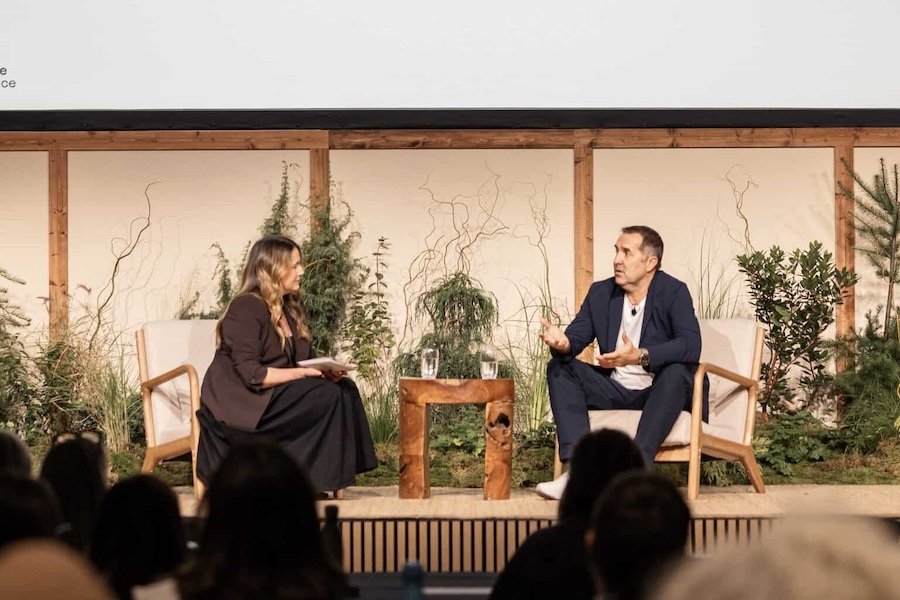
From November 2nd to November 6th, the leading denim innovator ISKO joined leading industry professionals from around the world at the 2020 Textile Sustainability Conference.

The Textile Exchange Sustainability Conference (November 2-6) is a formative event aimed at highlighting best practice and sustainability-related emerging trends and opportunities in the fashion industry. The first edition of the Textile Exchange conference to occur online, the event brought together more than 1,200 fashion industry professionals from all over the world, offering an agenda packed with sessions and network opportunities to discuss Science Based Targets, climate change, transparency and co-collaboration.
© 2020 ISKO
© 2020 ISKO


Whilst taking the pulse of the evolving impact of international circumstances, ISKO participated in the event as a trusted partner and member of Textile Exchange since March 2019. The company took the chance to exhibit its R-TWOTM technology, through which it has achieved Textile Exchange certifications across its 25,000 products: these are at either the Content Claim Standard, Global Recycled Standard, Organic Content Standard or Recycled Claim Standard levels, ensuring trust and certainty in chain of custody and material sourcing.


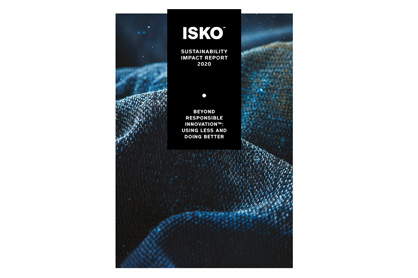
This program reduces raw material impact and highlights its ambitious Life-cycle Assessments (LCAs) project to develop verified Environmental Product Declarations (EPD®s) assessing the impact of all the products in its portfolio. The company also presented its first Sustainability Impact Report, which sets bold targets and provides a detailed overview of the company’s work within the UN’s Sustainable Development Goals and ILO standard frameworks. These were also a central theme of the conference, focusing on Science Based Target initiatives and the crucial role of embedding these into business strategy. As outlined in the plenary session led by La Rhea Pepper, CEO and co-Founder of Textile Exchange, we are at the pivotal ‘Decade to Change’.

“Ambitious targets, positive collaboration and a forward-thinking vision will be the levers that set the pace of the fashion industry of tomorrow. It has never been more apparent that the time is now to create the change we would like to see in the coming years. The work we do in our operations is always aimed at enabling best practice and driving forward thinking. We are proud to be a trusted partner and member of the Textile Exchange and support their agenda towards a more sustainable and responsible fashion industry,” said Ebru Ozkucuk Guler, ISKO Senior CSR & Sustainability Executive.



More News from TEXDATA International

#ITM 2026

ITM 2026: The new geography of textile production

New production hubs are emerging across North Africa and Central Asia, while Türkiye is accelerating its transformation toward higher-value, technology-driven and more sustainable textile manufacturing.

#Research & Development

“Production is a product”

From technical textiles and AI-driven robotics to the limitations of textile circularity: Professor Dr Thomas Gries looks back on more than two decades of development at ITA Aachen. In the interview, he explains why production technology remains a decisive success factor, discusses international collaborations and innovation ecosystems, and shares his views on the transformation of production landscapes and the challenges facing an increasingly regulated industry.

#Knitting & Hosiery

“We need to move away from the price trap and return to a value-driven mindset.”

With its new Textile Innovation Center, KARL MAYER is sending a strong signal for innovation, collaboration, and the future of textile applications. In this interview, Karl Josef Mayer discusses new opportunities in warp knitting, the processing of staple fibres, recycling, the changing role of machinery manufacturers, and why the textile industry must once again focus more strongly on the value of textiles. by Oliver Schmidt

#Associations

“Innovation, resilience and international experience remain the great strengths of the Swiss textile machinery industry”

Geopolitical uncertainty, growing competitive pressure from China, new free trade agreements and the shift towards a circular economy are currently reshaping the global textile industry. In this interview, Cornelia Buchwalder discusses the current mood within the Swiss textile machinery sector, the industry’s distinctive innovative strength, new market opportunities in India and Asia, and the technological trends that could shape the upcoming trade fair cycle leading up to ITMA 2027.

More News on Denim

#Recycled Fibers

Eastman Naia™ brings its inside-out denim vision to Kingpins New York

Following its debut at Kingpins Amsterdam, Eastman Naia™ brings the next chapter of its denim story to Kingpins New York, taking place July 22–23. At Booth Green 7, Naia™ presents its denim proposition built around three complementary design directions: Performance Denim, Fashion Denim and Authentic Denim.

#Denim

ISKO brings conscious color, texture, and tactile evolution to Bluezone Munich

At Bluezone ISKO is debuting its FW 27–28 Collection, structured around a trio of core sensory pillars: color, texture, and touch. This season, the textile leader showcases a creative vision where emotional connection and advanced technical innovation come together. The entire range is anchored by a dedicated commitment to eco-conscious material creation, utilizing patented processing technologies and high-quality Next-Gen materials powered by RE&UP.

#Denim

Jeanologia brings “Billy” to China, the AI transforming denim design

The denim industry is turning its attention to Hangzhou this week, where a new edition of Kingpins, the leading international trade show for the sector, takes place on May 21 and 22. There, the Spanish company Jeanologia, a global leader in sustainable technologies for the textile industry, is introducing its latest innovation to the Chinese market: “Billy”, the first artificial intelligence specifically developed for denim finishing design.

#Denim

Officina39 brings modular Low Temperature Reactive Dyeing and a new vision of denim efficiency to Denim Première Vision Milan 2026

At Denim Première Vision Milan 2026, at Stand G21, Officina39 returns to the international denim stage with a clear message: the next phase of denim innovation will be shaped by process efficiency, creative flexibility and the ability to rethink established industrial routines.

Latest News

#Associations

IVGT membership: expertise that pays off

For energy-intensive textile companies, government compensation mechanisms are an important economic factor. The IVGT successfully supports its member companies in applying for state aid and thereby regularly contributes to significant financial relief.

#Research & Development

Networking Day 2026: Industry stakeholders unite around textile recycling

In 2026, the Industry Research Group (IRG) Polymer Recycling once again brought together some of the key stakeholders in textile recycling for its annual Networking Day. This year, the event took place at EREMA’s premises in Ansfelden, Austria. It brought together key players from across the textile recycling value chain for a day of structured exchange and in-depth discussions.

#Knitting & Hosiery

The new RDJ 7/3 defines the design footprint of modern athletic shoes

Stylish, functional, and efficient to produce – spacer fabrics are the all-arounders among textile materials. These versatile fabrics are particularly in demand in the sports and casual footwear sector, as they combine comfort, breathability, and design freedom. At the same time, this industry is trend-driven, dynamic, and price-sensitive like few others. Innovations are therefore a decisive factor for success. With the RDJ 7/3, KARL MAYER offers a solution specifically tailored to these requirements. The particular strength of the new double raschel machine: its exceptional flexibility, thanks to its three jacquard bars.

#Research & Development

Smart textiles reversibly change shape in an energy-efficient manner in response to ambient temperature

Self-actuating textile structures are used in a wide range of applications, such as medical technology, automation, architecture, agriculture, and the apparel industry. An example is the use of shading nets in greenhouses, which can be deployed and retracted depending on the sunlight intensity. The German Institutes of Textile and Fiber Research Denkendorf (DITF) are developing textiles based on shape-memory polymers with reversibly controllable geometry.

TOP