[pageLogInLogOut]

#Denim

Monforts ‘Denimized’ customers take the lead in London
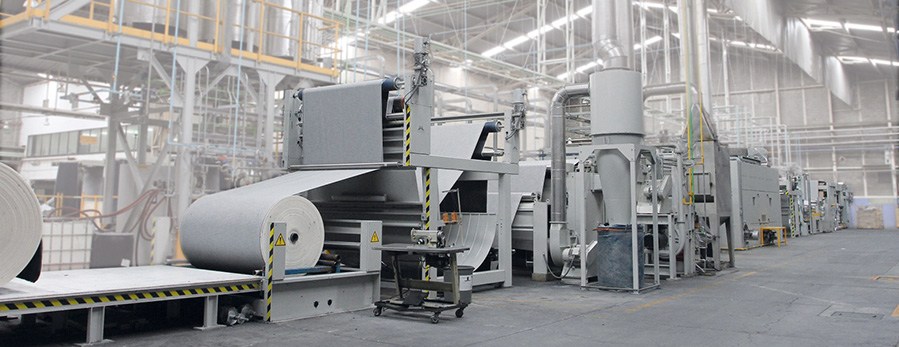
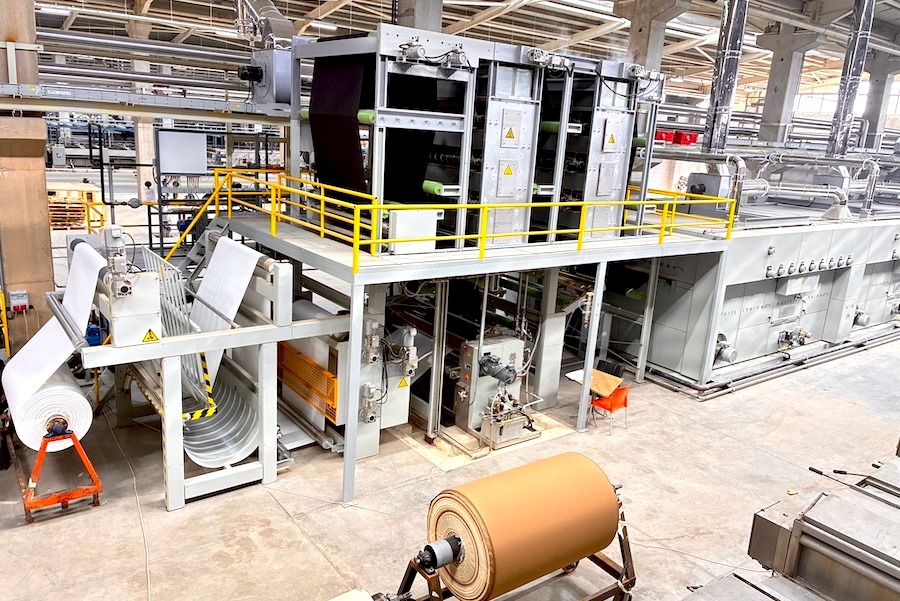
A complete Monforts ‘Denimized’ finishing range. (c) 2019 Monforts
Of the twelve participating denim mills who took part in Habitat 21 – a special Smart Creation showcase at the recent Denim Première Vision exhibition in London – no less than eleven were valued Monforts ‘Denimized’ finishing technology users.

The aim of Habitat 21 was to highlight those companies taking an eco-responsible approach to denim manufacturing via the use of recycled, organic and bio-based fibres, in combination with resource-saving dyeing and finishing technologies.

Monforts customers involved in the project were Advance Denim, Berto, Bossa, Calik, Evlox/Tavex, Kilim, Naveena, Orta Anadalou, Rajby Industries, Raymond Uco and Soorty.

Their innovations were detailed in a major presentation on trends for the Spring/Summer 2021 season by Manon Mangin of the Première Vision Fashion Team, based on three key themes – Sensation, Hybridisation and Expansion.
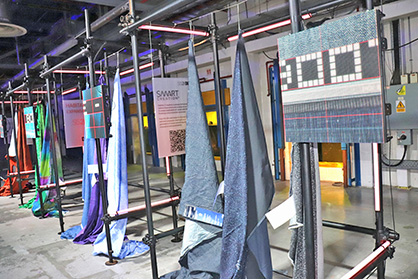
Habitat 21 – the special Smart Creation showcase at Denim PV. (c) 2019 Monforts


Water savings

There was plenty of sustainable innovation on show from Turkey, with Bossa, for example, unveiling the latest creations from its ongoing Reset programme – first introduced in 2006 and constantly evolving its eco-friendly options – and Calik exhibiting a denim collection made with its D-clear process, via which water is reduced by 40% in indigo dyeing and by 83% in the subsequent finishing.

Kilim is meanwhile intending to reduce water by 93% as a result of its current Cactus project, which will have a significant impact on the footprint of the 12 million metres of denim it makes annually, and in addition to resource-saving processes, Orta Anadalou is committing to complete traceability, with each of its garments now labelled with a unique QR code.

Hemp

Among innovations from Pakistan’s leading mills, Naveena made a splash with the introduction of its ‘cottonised’ hemp denim, developed in a collaboration with Kingdom Holdings – one of the largest manufacturers of hemp in China – in order to reduce the company’s reliance on cotton.

There are many challenges involved in working with hemp, Naveena says, but vertically-integrated spinning operations have enabled it to create blended yarns of cotton, hemp and Tencel containing only 49% cotton.

Both Rajby Industries and Soorty have now achieved Cradle to Cradle Gold certification for denim fabrics in their collections, as a globally recognised measure of safer, more sustainable products made for the circular economy.

To receive this certification, products are assessed for environmental and social performance across five critical sustainability categories – material health, material reuse, renewable energy


and carbon management, water stewardship, and social fairness. The standard encourages continuous improvement over time by awarding certification on the basis of ascending levels of achievement and requiring certification renewal every two years.

Aniline free

Advance Denim has meanwhile become the first denim mill in China to launch a collection made with aniline-free indigo.

As a result of its toxicity, analine is now starting to feature on the restricted substance lists (RSL) of some of the major clothing brands and retailers.

During traditional indigo dyeing process, some aniline stays locked into the indigo pigment and is difficult to wash off the fabric, while the remainder is discharged with the wastewater. The new process being employed by Advance Denim is based on an aniline-free indigo formulation from Switzerland’s Archroma.

Italy’s Berto also introduced pre-reduced indigo dyeing in an expanded range of denims based on GOTS-certified fabrics made with organic cotton and regenerated yarns.

“Our latest collection was inspired by young people – the Z Generation that is free spirited but at the same time involved in the fight against climate change,” said Berto’s marketing manager Francesco Polato. “We are seeking to meet their needs with an extroverted collection characterised by special colours and looks, but always with a 360-degree attention to sustainability.”
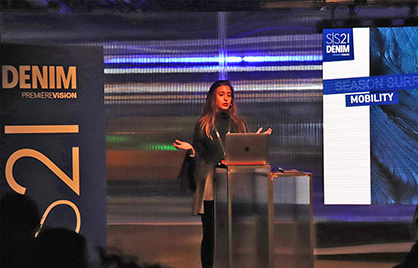
Manon Mangin of the Première Vision Fashion Team outlines the<br />
trends for the Spring/Summer 2021 season at the London show. (c) 2019 Monforts
Manon Mangin of the Première Vision Fashion Team outlines the trends for the Spring/Summer 2021 season at the London show. (c) 2019 Monforts


To complete the Smart Creation showcase, India’s Raymond Uco introduced a coloured denim range comprising fabrics that are both yarn dyed and made from sustainable dyestuffs, to significantly reduce the use of chemicals, while Evlox/Tavex announced plans to introduce post-consumer recycled denim to its collections, with complete traceability of all the materials used.

Denim Première Vision took place at the Printworks in London on December 2nd and 3rd. The next edition will be held in Milan in June 2020.

More News from A. Monforts Textilmaschinen GmbH & Co. KG

More News on Denim

#Textile chemistry

Officina39 expands in South Asia with dual trade show presence and new low-impact dyeing innovation

Officina39 reinforces its strategic expansion in South Asia by announcing its participation in two key textile industry events in Bangladesh and India, alongside the launch of a new solution designed to reduce the environmental impact of reactive dyeing.

#Denim

Eastman Naia™ debuts at Kingpins Amsterdam, transforming Denim from the inside out

At Kingpins Amsterdam (April 15–16, 2026), Naia™ by Eastman Chemical Company makes its debut, presenting its approach to circularity and comfort in denim at Stand 1, Ground Level (Blue Area). The brand also highlights its growing global ecosystem, connecting mill partners, designers and brands working to expand denim possibilities through fiber innovation.

#Denim

ISKO introduces a new chapter of denim innovation at Kingpins Amsterdam with FW 27/28

At Kingpins Amsterdam, ISKO presents its latest FW27/28 collection, a forward-looking exploration of denim that merges advanced color technologies, innovative fabric engineering, and contemporary finishing techniques. Designed to meet the evolving demands of the industry, the collection reflects ISKO’s commitment to pushing the boundaries of authenticity, performance, and responsible innovation, while also embracing a strong lifestyle perspective.

#Denim

TENCEL™ Lyocell - HV100 achieves global denim availability in six months; Vol. 2 debuts at Kingpins Amsterdam

When TENCEL™ Lyocell - HV100 debuted at last year’s Kingpins Amsterdam in October, 17 mill partners across five countries presented fabrics featuring the new fiber. Just six months on, participation has more than doubled, evolving into a global network that spans nine countries and four continents, signaling both strong industry momentum and growing demand.

Latest News

#Techtextil 2026

Techtextil 2026: KARL MAYER impresses as an innovative sector partner

KARL MAYER looks back with satisfaction on its participation in Techtextil 2026. From April 21 to 24, the international industry leader used the trade show in Frankfurt to meet with numerous key customers at its booth and, at the same time, establish many new contacts. Most visitors came from Germany, followed by major markets such as Poland, the United Kingdom, Turkey, France, and Portugal.

#Associations

BTMA backs global growth while investing in future UK leaders

As one of a number of new initiatives launched this year, the British Textile Machinery Association (BTMA) is launching the UK-India Textile Machinery Coalition. The UK-India Free Trade Agreement, signed in July 2025, has implications that extend across sourcing, competitiveness and long-term trade dynamics, believes BTMA CEO Jason Kent.

#Raw Materials

China projected to increase cotton production, yields, and imports in 2026/27

World cotton production in the 2026/27 season is projected at 25.9 million tonnes, exceeding global consumption of 25.2 million tonnes, according to the May 2026 issue of Cotton This Month. That means both production and consumption are expected to remain close to current season levels, while global cotton trade is projected to decline by 2.7% to approximately 9.6-9.7 million tonnes.

#Raw Materials

ICAC launches Carbon Credits Initiative to deliver new income streams to cotton farmers

The International Cotton Advisory Committee (ICAC) has announced a new initiative designed to unlock additional income streams for cotton farmers through participation in carbon credit markets, linking sustainable production practices directly to financial returns.

TOP