[pageLogInLogOut]
TRÜTZSCHLER SPINNING - THE NEW CARD

#Industry 4.0 / Digitalization

ISKO takes part in CEO Roundtable to explore the value of authenticity in the digital era.

A selection of 26 fashion industry top players to discuss how digitalization is impacting companies’ value, one of the most important parameter to be considered when talking about business. This was the fifth edition of the CEO Roundtable, promoted by Fashion and eBusiness, which took place on November 7th at Palazzo Parigi, Milan.

“Authenticity wins: climbing business in a sustainable way” – the discussion targeted the importance of communication and transparency for today’s industry, promoting responsibility and innovation.

The denim ingredient brand ISKO, always first in line when it comes to supporting the industry in the development of best practices, was among the event’s main partners. The company shared its long-standing and well-established commitment to Responsible InnovationTM, taking part in a panel tackling new models to blend together authenticity and innovation and thus responsibly succeed in business.

Fashion Magazine CEO&Editor-in-chief Marc Sondermann hosted the discussion, which started at 9.20 a.m. and involved Elena Faleschini, ISKO Global Field Marketing Manager, along with Nicolas Bargi, Save the Duck Founder&CEO, Francesca Toninato, 7 For All Mankind CEO and Stefano Modellini, Diana E-commerce Corporation Founder&CEO.

Focusing on the strict relation between responsibility and success in terms of business strategies, they targeted the importance of remaining authentic in the digital era, while fostering best practices in the communication field and promoting responsibility and innovation.

Pioneering Responsible InnovationTM in the denim industry, ISKO has committed to the development of sustainable solutions since the very beginning. Over the years, this effort has grown accordingly to the faster pace required by the increasing demand of a more sustainable industry. The ever-changing scenario of today’s market and its challenges are now demanding proof of the authenticity of information, so as to eradicate “greenwashing” and allow both customers and consumer to make responsible choices.

“It is clear that a big change is going on in the fashion industry. Consumers, especially Generation Y and Z, are prepared to walk away from companies that do not demonstrate being good corporate citizens”, explained Elena Faleschini, ISKO Global Field Marketing Manager. “Everyone, not just industry players, are starting to pay attention to the environmental and social impact of their choices and this might prove difficult as we are constantly submerged by information. This is why it is very important to ensure that what we claim is backed by a third party. Everything we do at ISKO has been verified – it is our responsibility, as leader in this industry, to be a force for good.”


Responsible InnovationTM in in the more and more digitalized business

The mill never ceases to approach the entire production chain and its impacts on both people and the planet. Communicating these efforts in a transparent and fully understandable way through verified facts and numbers has never been so important, not only on a B2B level but also in terms of who ultimately wears the products: consumers.

Being the first mill in the world awarded both the EU Ecolabel and Nordic Swan Ecolabel, the company puts a lot of efforts in meeting the most stringent criteria of a wide range of prestigious certifications.

ISKO’s portfolio includes 25,000+ responsibly produced textile concepts, ranging from traditional denim to cutting-edge patented technologies. Life-Cycle Assessments (LCAs) have been obtained for each one of them, ensured by independently verified Environmental Product Declarations (EPD®s). These assess the lifecycle of products and provide the water usage and carbon footprint of 1 square meter of fabric to allow our customers make responsible sourcing choices. To increase traceability and transparency, these data are included in an additional QR Code which is implemented on the hangtag of the entire ISKO collection.

The latest advancement of the mill’s reusing and recycling strategy results in the R-TWOTM platform, including fabrics made with a mix or blend of reused cotton, obtained from production loss with Content Claim Standard Certification (CCS) of Textile Exchange, and recycled polyester certified by the Recycled Claim Standard (RCS) or Global Recycle Standard (GRS), depending on the percentage used. The platform delivers a futuristic and innovative responsible approach, as it allows to decrease the usage of raw materials while improving sourcing efficiency through the recovery of production losses.

ISKO is also part of Textile Exchange since March 2019. This global non-profit organization focuses on minimizing the impacts of the textile industry on the world’s water, soil, air and people, allowing the mill to shape and design more responsible business models and more efficient practices.
More News from TEXDATA International

#ITM 2026

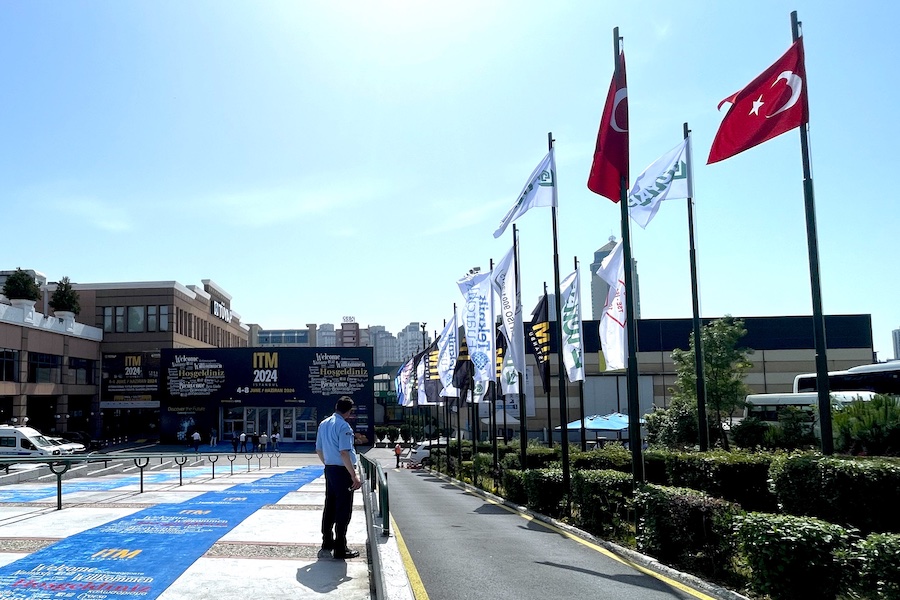
ITM 2026: The new geography of textile production

New production hubs are emerging across North Africa and Central Asia, while Türkiye is accelerating its transformation toward higher-value, technology-driven and more sustainable textile manufacturing.

#Research & Development

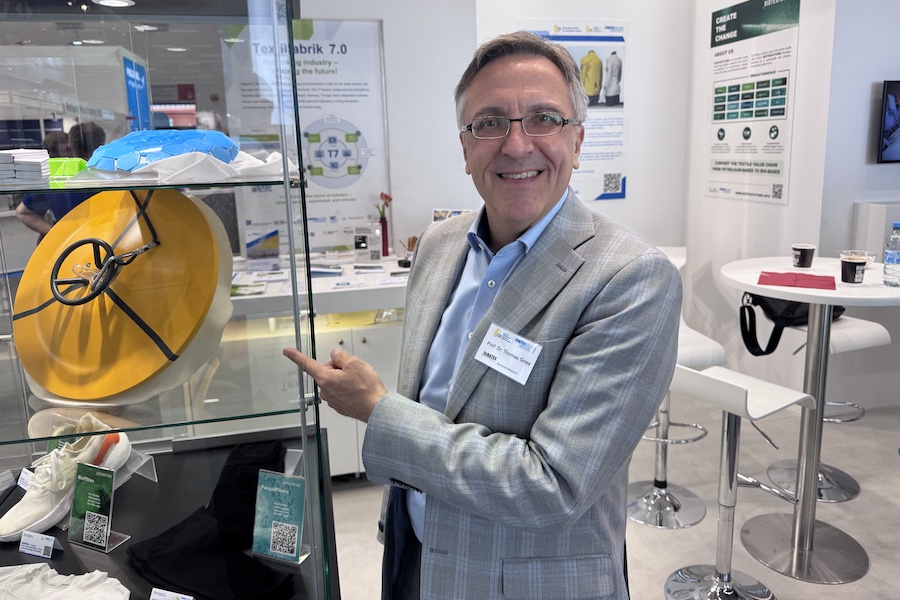
“Production is a product”

From technical textiles and AI-driven robotics to the limitations of textile circularity: Professor Dr Thomas Gries looks back on more than two decades of development at ITA Aachen. In the interview, he explains why production technology remains a decisive success factor, discusses international collaborations and innovation ecosystems, and shares his views on the transformation of production landscapes and the challenges facing an increasingly regulated industry.

#Knitting & Hosiery

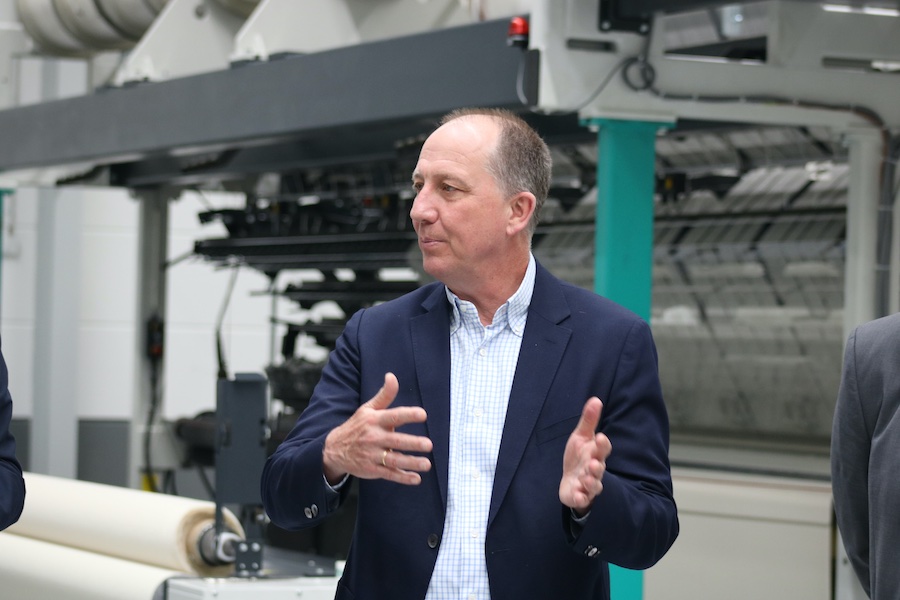
“We need to move away from the price trap and return to a value-driven mindset.”

With its new Textile Innovation Center, KARL MAYER is sending a strong signal for innovation, collaboration, and the future of textile applications. In this interview, Karl Josef Mayer discusses new opportunities in warp knitting, the processing of staple fibres, recycling, the changing role of machinery manufacturers, and why the textile industry must once again focus more strongly on the value of textiles. by Oliver Schmidt

#Associations

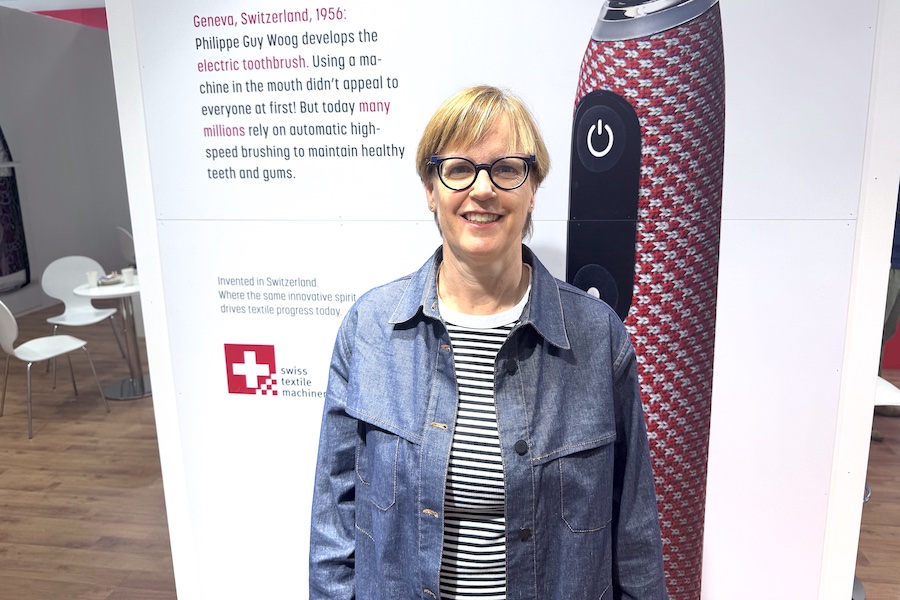
“Innovation, resilience and international experience remain the great strengths of the Swiss textile machinery industry”

Geopolitical uncertainty, growing competitive pressure from China, new free trade agreements and the shift towards a circular economy are currently reshaping the global textile industry. In this interview, Cornelia Buchwalder discusses the current mood within the Swiss textile machinery sector, the industry’s distinctive innovative strength, new market opportunities in India and Asia, and the technological trends that could shape the upcoming trade fair cycle leading up to ITMA 2027.

More News on Industry 4.0 / Digitalization

#Industry 4.0 / Digitalization

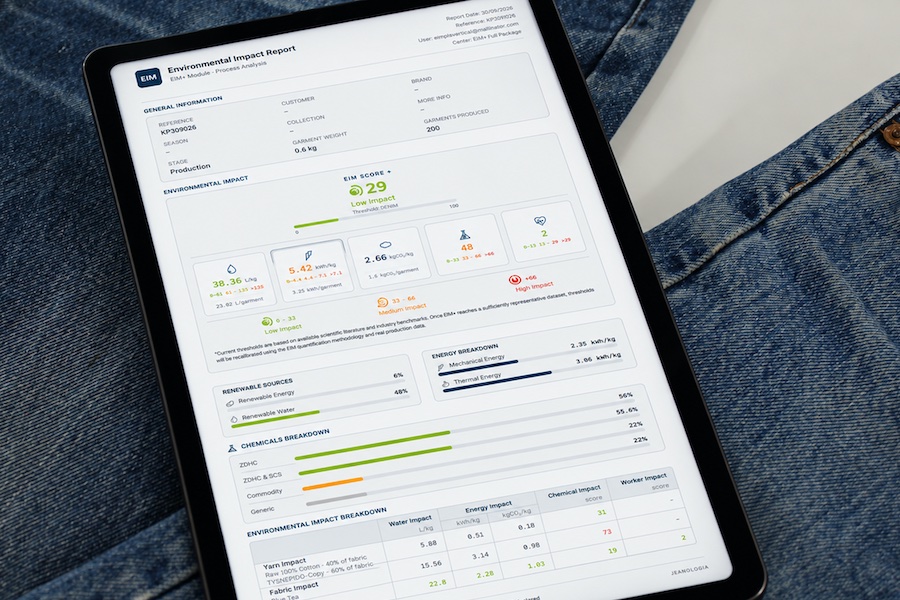
EIM evolves into a new Environmental Intelligence to measure the impact of textile production

¿Do we really know the environmental impact behind a garment? Answering this question remains one of the textile industry’s major challenges. Garment production involves multiple stages, from yarn and fabric to final finishing, carried out by different players across the supply chain. Accesing reliable data from each process, connecting it and establishing a common language are essential to understanding a product’s true impact.

#Industry 4.0 / Digitalization

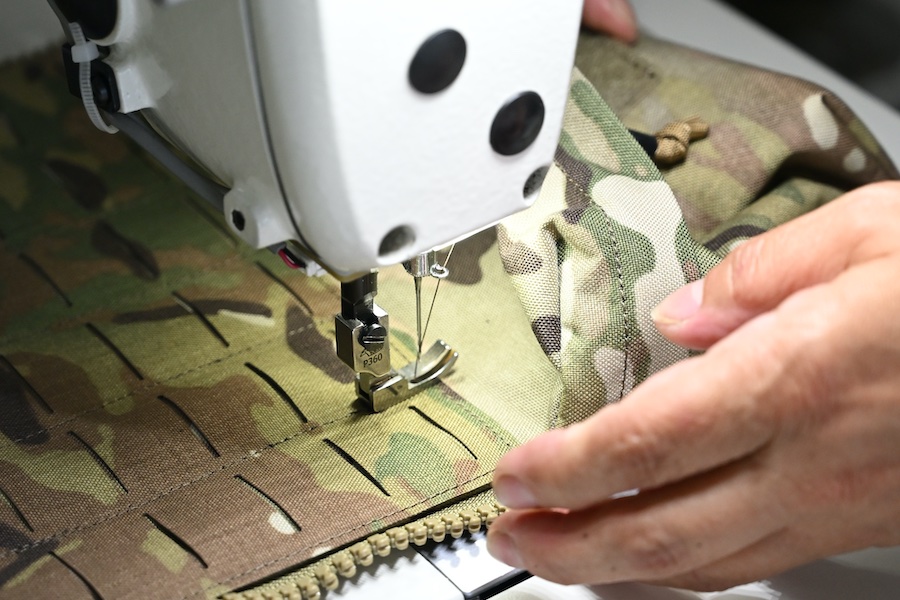
Orient Rongheng connects production planning across China and Bangladesh with FastReactPlan

Chinese apparel manufacturer Orient Rongheng is implementing Coats Digital’s FastReactPlan to digitalize production planning across its manufacturing operations in China and Bangladesh. The project aims to connect capacity, materials and order planning across multiple factories while integrating these processes with the company’s existing ERP and Manufacturing Execution System (MES).

#Industry 4.0 / Digitalization

Lectra launches Apogy with agentic AI for fashion product development

Lectra has launched Apogy, a new cloud-based solution for fashion product development that combines product data, collaborative workflows and agentic artificial intelligence. The platform is designed to connect the different stakeholders and processes between initial design and production while using AI agents to automate tasks and support decision-making throughout the development cycle.

#Industry 4.0 / Digitalization

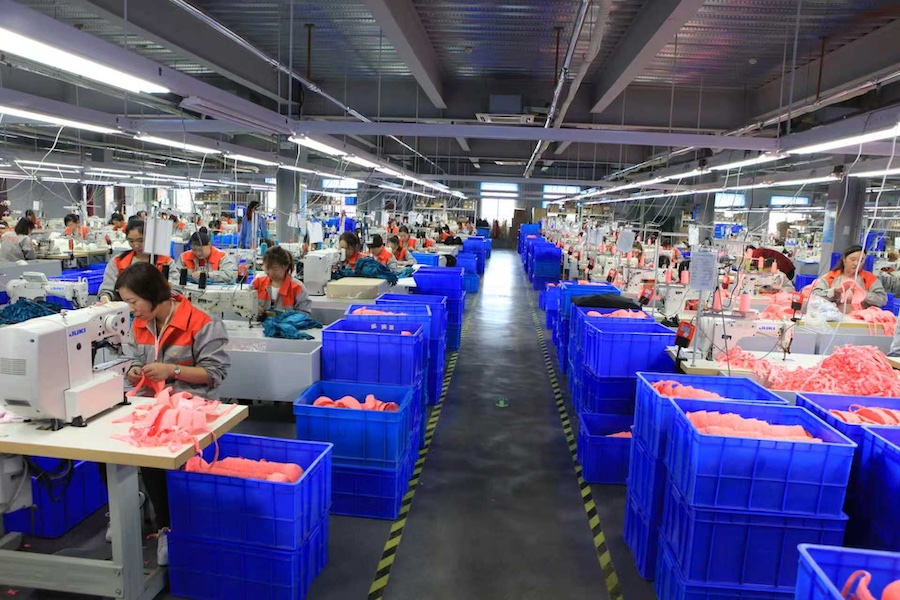
Coats Digital launches AI-powered GSD RealMotion for motion analysis

Coats Digital has launched GSD RealMotion, an AI-powered solution designed to provide apparel manufacturers with greater visibility into factory-floor operations. By analysing shop-floor video and applying Coats Digital’s GSD methodology, the solution turns video recordings into structured, motion-by-motion method studies.

Latest News

#Knitting & Hosiery

SHIMA SEIKI to showcase digital product creation at Apparel Sourcing Week

Leading digital textile solutions provider SHIMA SEIKI MFG., LTD. of Wakayama, Japan will exhibit at Apparel Sourcing Week 2026 in Bengaluru, India next month. The exhibition provides a platform for the entire apparel value chain, bringing together manufacturers, brands, suppliers and solution providers in one location.

#Digital Printing

SNA GZ accelerates its on-demand production strategy with Kornit Digital

SNA GZ is leveraging the Kornit Atlas MAX PLUS to expand its music merchandise production, streamline e-commerce order fulfillment, and grow its print-on-demand business across Europe. This investment increases SNA GZ's textile production capacity by 150% (2.5×), enabling the company to meet growing demand and support its continued expansion.

#Recycling / Circular Economy

NEUMÜHLE launches mono-material hoodie designed for textile recycling

With the Circular Mono Hoodie, Zurich-based label NEUMÜHLE introduces a new essential designed around a single-material principle. The textile construction is cotton throughout, right down to the sewing thread. Entirely free from elastane, the hoodie launches as a Limited Drop for CHF 139. Take-back, collection and existing recycling partnerships complement its circular design.

#Raw Materials

New Cotton Review examines competitiveness, market risk, and opportunities

From moving record volumes of Brazilian cotton to market, to managing price volatility, unlocking Ethiopia’s production potential, and strengthening African textile trade, the latest edition of Cotton: Review of the World Situation examines some of the most consequential opportunities and challenges facing the global cotton industry.

TOP