[pageLogInLogOut]

#Composites

Flipts & Dobbels opens new pathways for biocomposites within VIBES Initiative
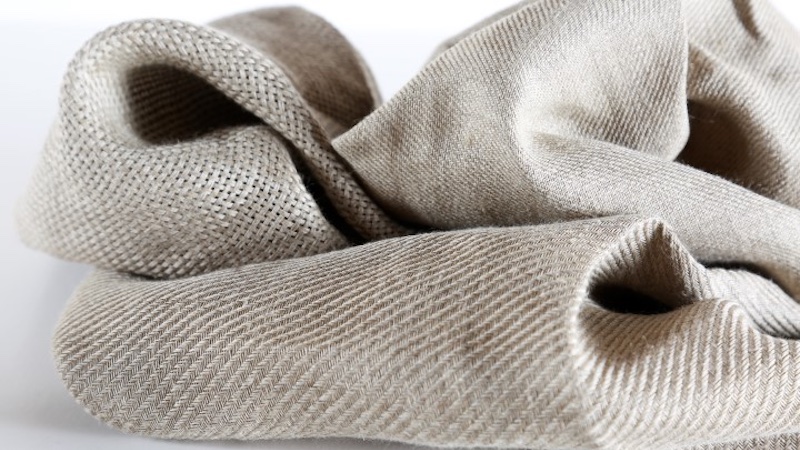
Through its involvement in the VIBES project, Flipts & Dobbels has contributed to the VIBES collaboration’s latest breakthrough: the successful manufacture of a carbon and natural fibre panel made with a bisphenol-free epoxy resin using resin infusion techniques. This achievement marks an important milestone in the development of sustainable, high performance composite materials.
Through its involvement in the VIBES project, Flipts & Dobbels has contributed to the VIBES collaboration’s latest breakthrough: the successful manufacture of a carbon and natural fibre panel made with a bisphenol-free epoxy resin using resin infusion techniques  © 2024 Flipts & Dobbels
Through its involvement in the VIBES project, Flipts & Dobbels has contributed to the VIBES collaboration’s latest breakthrough: the successful manufacture of a carbon and natural fibre panel made with a bisphenol-free epoxy resin using resin infusion techniques © 2024 Flipts & Dobbels


Flipts & Dobbels has been supporting the VIBES project for over four years, working with industry innovators to advance the development of bio-based composites by leveraging recyclable epoxy resins, lignin-based carbon fibres and natural flax reinforcements. These materials align with the VIBES goal of reducing environmental impact whilst maintaining high performance standards.

As part of the VIBES collaboration, manufacturing specialists Juno Composites explored key innovations, including the impact of moisture content in natural flax textiles on mechanical performance. This research, which paralleled some of the Alliance European Scientific Council ’s own work on moisture sensitivity, emphasizes the need for relying on the technical know-how of flax reinforcements manufacturers.

“The VIBES project has demonstrated that to fully realise the potential of flax fibres in performance composite applications, all aspects of the entire flax fibre production process, from seed selection to textile manufacturing, should be considered. With more than a hundred years’ experience of working with flax, our company is proud to support the continuous improvements delivered by the VIBES project.” said Caroline Flippts, Flipts & Dobbels.

The Alliance for European Flax-Linen & Hemp remains steadfast in its commitment to supporting its members like Flipts & Dobbels, as they lead the way in developing greener solutions.
More News from Flipts & Dobbels

More News on Composites

#Composites

Fewer pores, greater impact tolerance: Peter Dornier Foundation Prize 2026 honours material research on fibre-reinforced composite components for aerospace industry

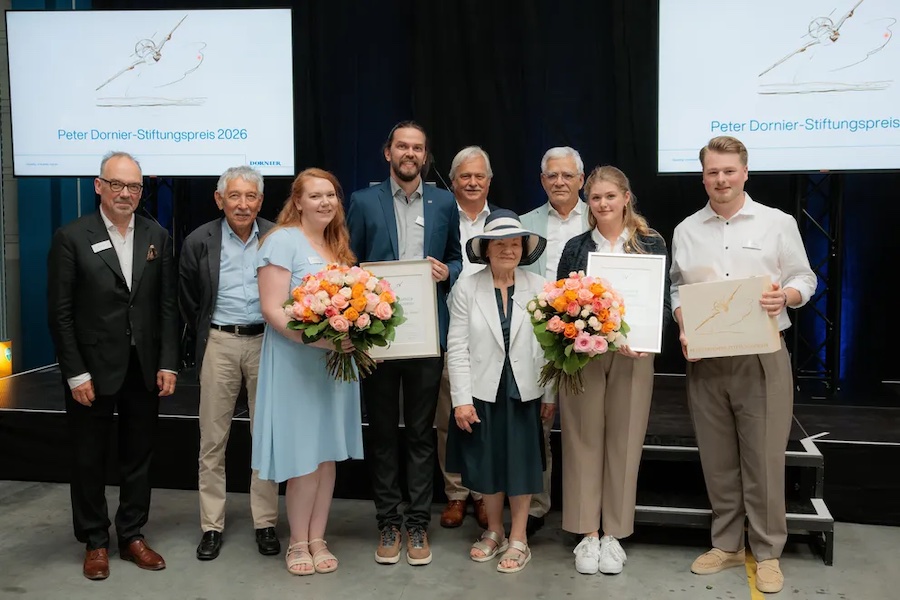
Microscopically small pores that form during manufacture, or barely visible impact damage, can severely impair the load-bearing capacity and service life of fibre-reinforced composite components. Two young researchers have presented groundbreaking work in this field and will both be awarded the 2026 Peter Dornier Foundation Prize: Dr.-Ing. Benedikt Neitzel from the Technical University of Ilmenau for his doctoral thesis on pore minimisation in the RTM process, and Johanna Buschmann, M.Sc., for her master’s thesis, completed at the German Aerospace Centre, on the improved impact tolerance of 3D fabrics compared to 2D laminates.

#Composites

Carbon Revolution wins Composites Australia Engineering Team Excellence Award

Carbon Revolution has won the Engineering Team Excellence Award at the 2026 Composites Australia Annual Industry Awards.

#Composites

JEC Forum Southeast Asia 2026 highlights Taiwan as a strategic hub for the global composites industry

The third edition of JEC Forum organized in Southeast Asia brought together 350+ participants from 22 countries for three active days of high-level Business Meetings, conferences, and networking, emphasizing Southeast Asia’s growing role in the global composites market. Held for the first time in Taipei from 23 to 24 June 2026, following the successful first editions in Bangkok, JEC Forum Southeast Asia 2026 confirmed its position as the region’s leading business platform dedicated to the composites industry.

#Composites

MEL Composites supports ELA Aviation with advanced composite materials

MEL Composites is supplying advanced composite materials and process consumables to ELA Aviation for the production of its next-generation gyroplanes. The collaboration underlines MEL Composites’ growing role in advanced aerospace mobility, providing lightweight materials designed to improve aircraft performance, manufacturing efficiency and structural reliability.

Latest News

#Research & Development

Networking Day 2026: Industry stakeholders unite around textile recycling

In 2026, the Industry Research Group (IRG) Polymer Recycling once again brought together some of the key stakeholders in textile recycling for its annual Networking Day. This year, the event took place at EREMA’s premises in Ansfelden, Austria. It brought together key players from across the textile recycling value chain for a day of structured exchange and in-depth discussions.

#Knitting & Hosiery

The new RDJ 7/3 defines the design footprint of modern athletic shoes

Stylish, functional, and efficient to produce – spacer fabrics are the all-arounders among textile materials. These versatile fabrics are particularly in demand in the sports and casual footwear sector, as they combine comfort, breathability, and design freedom. At the same time, this industry is trend-driven, dynamic, and price-sensitive like few others. Innovations are therefore a decisive factor for success. With the RDJ 7/3, KARL MAYER offers a solution specifically tailored to these requirements. The particular strength of the new double raschel machine: its exceptional flexibility, thanks to its three jacquard bars.

#Research & Development

Smart textiles reversibly change shape in an energy-efficient manner in response to ambient temperature

Self-actuating textile structures are used in a wide range of applications, such as medical technology, automation, architecture, agriculture, and the apparel industry. An example is the use of shading nets in greenhouses, which can be deployed and retracted depending on the sunlight intensity. The German Institutes of Textile and Fiber Research Denkendorf (DITF) are developing textiles based on shape-memory polymers with reversibly controllable geometry.

#Spinning

Barmag expands its portfolio for PA6/PA6.6 applications — also available as a retrofit solution

With the new type 6020 ceramic oiler, Barmag is introducing a powerful addition to its product portfolio for processing PA6 and PA6.6 yarns. The solution is specifically designed for low-titer applications in the range of 5 to 100 denier.

TOP



