[pageLogInLogOut]

#Composites

Hexcel and Fairmat announce partnership to recycle carbon fiber prepreg composites
© 2021 Hexcel
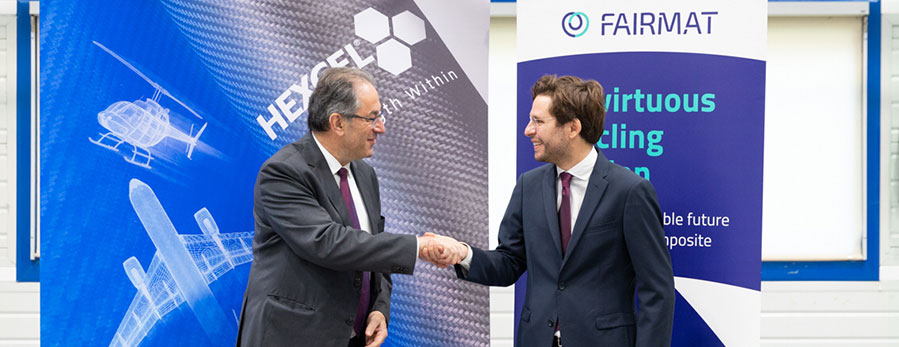
Hexcel Corporation (NYSE: HXL) and Fairmat, a deep technology startup based in France, have announced an agreement to build the capability to recycle carbon fiber prepreg from Hexcel European operations for reuse in composite panels sold into commercial markets. As a result, it is intended that most of the carbon fiber prepreg cutoffs generated at Hexcel plants in Europe will be repurposed by the end of 2022.

“With Fairmat, Hexcel has found an industrial recycling solution for the carbon fiber prepreg cutoffs generated at our European facilities,” said Thierry Merlot, President, Aerospace – Europe, MEA/AP & Industrial at Hexcel. “This partnership represents a significant step as we continue striving to be an industry leader and a responsible steward of resources. From lightweight composites that help reduce emissions to improving our processes to reduce our impact on the environment, Hexcel is relentless in our pursuit of innovations that will lead to a more sustainable future. So, we are delighted with this key collaboration.”

Under the partnership, Fairmat will lease a former Hexcel facility in Bouguenais (Loire-Atlantique) where it will recycle cutoffs generated during carbon fiber prepreg production at Hexcel European plants. Hexcel expects most of its carbon fiber prepreg cutoffs in Europe will be recycled as part of this partnership by the end of 2022. Fairmat will begin to set up the new site in early 2022 with production scheduled to start in March 2022.

Fairmat has developed a virtuous recycling process capable of circularizing the manufacture of carbon fiber composite materials, thereby giving a second life to this high value-added material. Carbon fiber and resins are mainly cold treated, leading to reduced energy costs and avoiding traditional landfill or incineration solutions. Fairmat’s clean recycling process is expected to save 41 kg of CO2 emissions per kilogram of recycled carbon fiber composite compared to virgin prepregs. Fairmat is aiming for a capacity of 5,000 tons of recycled material annually in this first production site.


“We are proud of the trust Hexcel has placed in us by signing this strategic partnership,” said Fairmat Founding Chairman Benjamin Saada. “The commercial agreement covering the first tons to be recycled in Europe will enable us to complete the industrial scale-up of our virtuous recycling technology by the end of the year. I originally founded Fairmat with a totally circular vision in mind, so it was important for me to be able to reuse an existing industrial facility to launch our production. I’m delighted that Fairmat is rapidly advancing toward its goal of giving advanced materials a second life.”
More News from Hexcel Corporation

More News on Composites

#Research & Development

Novel flame-retardant and recyclable fiber-reinforced composite

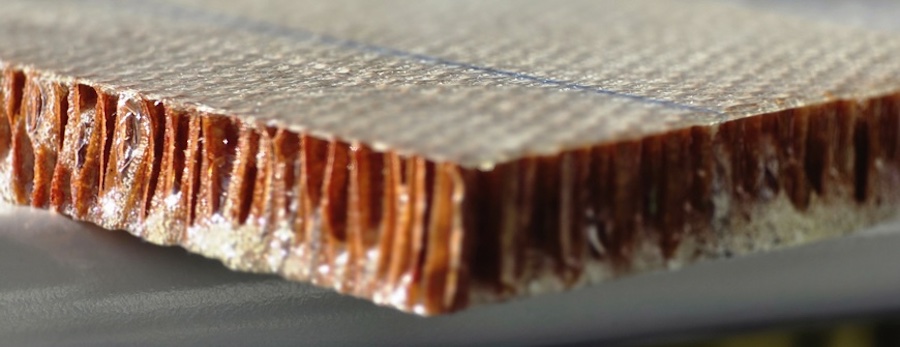
Airplanes and passenger trains must meet strict safety requirements, including fire safety standards. This calls for materials that are flame-retardant, lightweight, robust, and scalable. Empa researchers, in collaboration with their industry partner Elantas, have now succeeded for the first time in making such a material – a composite – fully recyclable.

#Composites

WHILL selects Teijin’s tough, lightweight Carbon Fiber Composite for new last-mile mobility

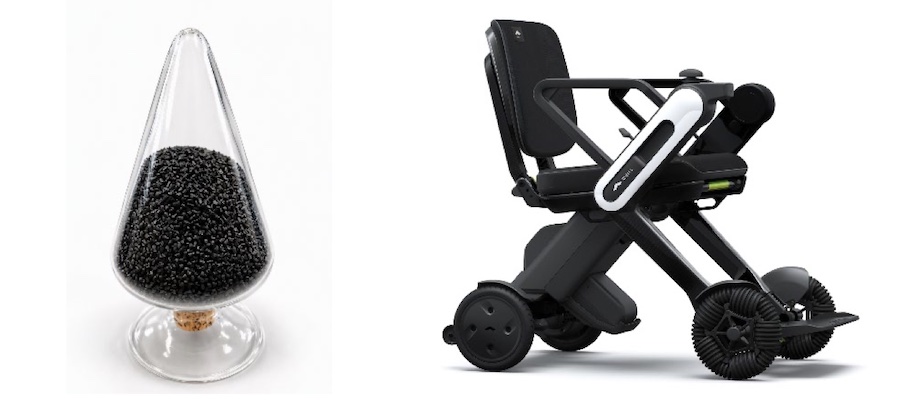
Teijin Limited announced today that WHILL Inc., a global leader in inclusive mobility technology, has selected Sereebo® P CFP series, a carbon fiber-reinforced thermoplastic (CFRTP) material, for key structural components of the upcoming WHILL Model C Lite. Sereebo® P CFP series provides high strength, light weight, design flexibility and system cost advantages to the Model C Lite, which is a battery powered, single-seat, last-mile device. This new model combines maneuverability with light weight and one-handed folding to ensure ease of handling and operation.

#Composites

Fewer pores, greater impact tolerance: Peter Dornier Foundation Prize 2026 honours material research on fibre-reinforced composite components for aerospace industry

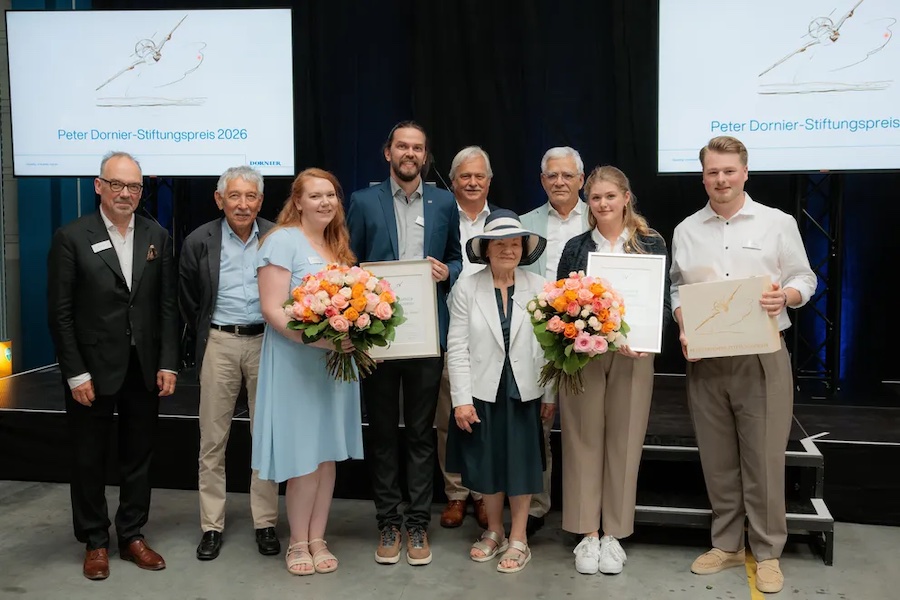
Microscopically small pores that form during manufacture, or barely visible impact damage, can severely impair the load-bearing capacity and service life of fibre-reinforced composite components. Two young researchers have presented groundbreaking work in this field and will both be awarded the 2026 Peter Dornier Foundation Prize: Dr.-Ing. Benedikt Neitzel from the Technical University of Ilmenau for his doctoral thesis on pore minimisation in the RTM process, and Johanna Buschmann, M.Sc., for her master’s thesis, completed at the German Aerospace Centre, on the improved impact tolerance of 3D fabrics compared to 2D laminates.

#Composites

Carbon Revolution wins Composites Australia Engineering Team Excellence Award

Carbon Revolution has won the Engineering Team Excellence Award at the 2026 Composites Australia Annual Industry Awards.

Latest News

#Industry 4.0 / Digitalization

Coats Digital launches AI-powered GSD RealMotion for motion analysis

Coats Digital has launched GSD RealMotion, an AI-powered solution designed to provide apparel manufacturers with greater visibility into factory-floor operations. By analysing shop-floor video and applying Coats Digital’s GSD methodology, the solution turns video recordings into structured, motion-by-motion method studies.

#Textile chemistry

Archroma and Lameirinho partner in pioneering deployment of InOneGO single-step dyeing

Archroma, a global leader in specialty chemicals, and Lameirinho, a leading home textiles manufacturer based in Portugal, are collaborating to bring InOneGO by Archroma, a new single-step dyeing process, into commercial production. Lameirinho’s first InOneGo bedlinens collection is now available worldwide.

#Knitting & Hosiery

KARL MAYER launches extra-wide HKS 3-M EL for increased productivity

KARL MAYER has launched a new extra-wide version of its HKS 3-M EL tricot machine, designed to increase productivity particularly in the manufacture of textiles for sports, activewear and athleisure applications.

#Research & Development

Reducing development times for technical textiles by accelerated thermo-oxidative aging in a high-pressure autoclave

Synthetic polymers used in technical textiles can be effectively protected against degradation caused by heat, oxygen, and water through the use of stabilizer systems. This enables service lives of several decades, extending to more than 50 years. As the use of durable technical textiles continues to grow, so does the demand for reliable methods to predict their service life within economically feasible testing periods. For the first time the German Institutes of Textile and Fiber Research Denkendorf (DITF) developed methods for robust service life prediction for textiles in an IGF research project.

TOP