[pageLogInLogOut]

#Composites

SGL Carbon SE presents an outlook for 2020 again based on the preliminary results for the second quarter 2020

In light of the uncertainties surrounding the further development, the duration as well as the impacts of the Covid-19 pandemic, on April 1, 2020, the Board of Management of SGL Carbon SE decided to suspend the guidance for the fiscal year 2020 as published in the Annual Report 2019. Based on preliminary Group results for the second quarter 2020 the Board of Management has today assessed the outlook for the second half of the year.

At the beginning of the second quarter 2020, business development particularly in the business unit Composites – Fibers & Materials (CFM) was still dominated by the pandemic protection measures in place in Europe and North America as well as a sharp initial decline in volumes. In the further course of the second quarter, own measures to adapt to the effects of the pandemic were accompanied by a beginning volume recovery. As a consequence, the preliminary results for the second quarter 2020 do not look as weak as anticipated at the presentation of the quarterly statement as of March 31, 2020 (Group sales to decline substantially double-digit compared to the prior year level, negative recurring EBIT1). In fact, while Group sales has likely declined by approx. 25% compared to the prior year level of approx. €273 million, recurring EBIT is likely to have remained at break-even level in the second quarter 2020. The liquidity position at approx. €150 million at the end of the second quarter 2020 has remained stable compared to the end of the prior quarter and thus continues to be above the level at year-end 2019 (approx. €137 million).

While the global economic backdrop continues to remain fragile and dominated by Covid-19, the outlook for the second half of the year is becoming more and more consistent. Therefore under specific assumptions, which remain tentative, an outlook can once again be presented for the fiscal year 2020. In particular, a second pandemic wave and an associated further decline in demand due to a recession is not taken into account in the current forecast for the full year.

Accordingly, SGL Carbon expects Group sales to decline year-over-year by 15% to 20% (Group sales 2019: €1,087 million) and a slightly positive operating recurring EBIT for the full year 2020.

As already communicated since the beginning of this year, SGL Carbon has been working on various additional funding options independent from the capital markets. Some of these measures have been successfully completed or substantially advanced in the past weeks. These will increase Group recurring EBIT in a low double-digit million € amount in the form of one-time effects, presumably mainly in the third quarter.

Consequently, Group net result from continuing operations for fiscal year 2020 is expected in a similar magnitude as before the Covid-19 pandemic outbreak (negative low double-digit million € amount) despite a lower operating Group recurring EBIT.


To take into account the reduced operating earnings expectations and in the context of a conservative free cash flow management, capital expenditures will be further reduced in the current year to approx. €60 million (Guidance in March 2020: €70-80 million) and thus below the level of depreciation.

Thanks to the successful execution of additional non-capital market related funding options mentioned above, the March 2020 guidance of a mid double-digit million € increase in net debt at year-end 2020 compared to year-end 2019 can be more or less confirmed despite substantially lower operating earnings expectations. The increase in net debt can largely be attributed to the payment of the purchase price for SGL Composites USA (the carbon fiber plant of our former joint venture with BMW in Moses Lake, Washington, U.S.), in the amount of 62 million U.S. Dollar, which is due at the end of this year.

Accordingly, a comfortable liquidity position is expected at year-end 2020 despite the purchase price payment due in the fourth quarter 2020. In addition, the syndicated loan in the amount of €175 million continued to remain available and undrawn.

The detailed interim report on the first half year 2020 will be published on August 13, as planned.

1The use of KPIs in this notification is aligned to the annual report 2019. There were no changes to the scope of consolidation or to valuation methods compared to the previous guidance.
More News from SGL CARBON SE

More News on Composites

#Research & Development

Novel flame-retardant and recyclable fiber-reinforced composite

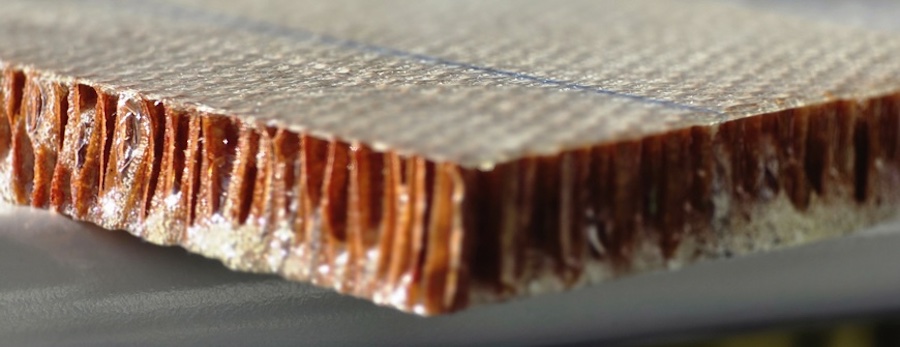
Airplanes and passenger trains must meet strict safety requirements, including fire safety standards. This calls for materials that are flame-retardant, lightweight, robust, and scalable. Empa researchers, in collaboration with their industry partner Elantas, have now succeeded for the first time in making such a material – a composite – fully recyclable.

#Composites

WHILL selects Teijin’s tough, lightweight Carbon Fiber Composite for new last-mile mobility

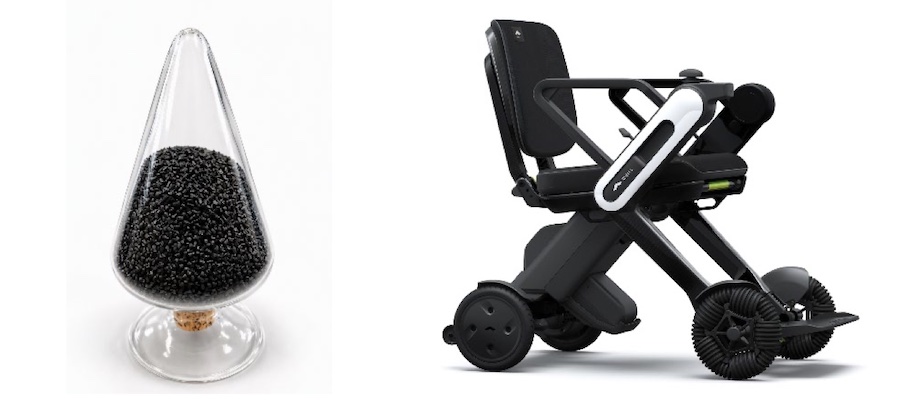
Teijin Limited announced today that WHILL Inc., a global leader in inclusive mobility technology, has selected Sereebo® P CFP series, a carbon fiber-reinforced thermoplastic (CFRTP) material, for key structural components of the upcoming WHILL Model C Lite. Sereebo® P CFP series provides high strength, light weight, design flexibility and system cost advantages to the Model C Lite, which is a battery powered, single-seat, last-mile device. This new model combines maneuverability with light weight and one-handed folding to ensure ease of handling and operation.

#Composites

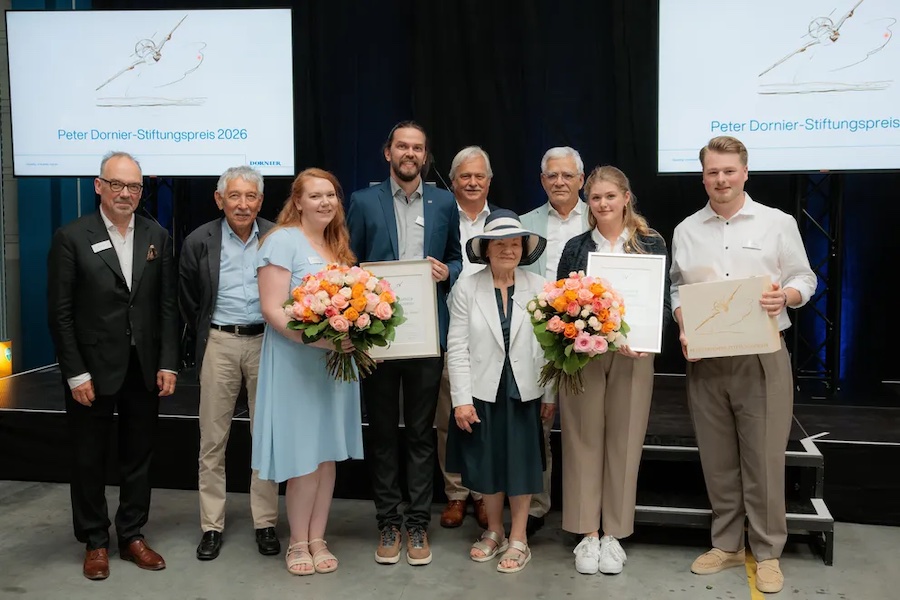
Fewer pores, greater impact tolerance: Peter Dornier Foundation Prize 2026 honours material research on fibre-reinforced composite components for aerospace industry

Microscopically small pores that form during manufacture, or barely visible impact damage, can severely impair the load-bearing capacity and service life of fibre-reinforced composite components. Two young researchers have presented groundbreaking work in this field and will both be awarded the 2026 Peter Dornier Foundation Prize: Dr.-Ing. Benedikt Neitzel from the Technical University of Ilmenau for his doctoral thesis on pore minimisation in the RTM process, and Johanna Buschmann, M.Sc., for her master’s thesis, completed at the German Aerospace Centre, on the improved impact tolerance of 3D fabrics compared to 2D laminates.

#Composites

Carbon Revolution wins Composites Australia Engineering Team Excellence Award

Carbon Revolution has won the Engineering Team Excellence Award at the 2026 Composites Australia Annual Industry Awards.

Latest News

#Industry 4.0 / Digitalization

Coats Digital launches AI-powered GSD RealMotion for motion analysis

Coats Digital has launched GSD RealMotion, an AI-powered solution designed to provide apparel manufacturers with greater visibility into factory-floor operations. By analysing shop-floor video and applying Coats Digital’s GSD methodology, the solution turns video recordings into structured, motion-by-motion method studies.

#Textile chemistry

Archroma and Lameirinho partner in pioneering deployment of InOneGO single-step dyeing

Archroma, a global leader in specialty chemicals, and Lameirinho, a leading home textiles manufacturer based in Portugal, are collaborating to bring InOneGO by Archroma, a new single-step dyeing process, into commercial production. Lameirinho’s first InOneGo bedlinens collection is now available worldwide.

#Knitting & Hosiery

KARL MAYER launches extra-wide HKS 3-M EL for increased productivity

KARL MAYER has launched a new extra-wide version of its HKS 3-M EL tricot machine, designed to increase productivity particularly in the manufacture of textiles for sports, activewear and athleisure applications.

#Research & Development

Reducing development times for technical textiles by accelerated thermo-oxidative aging in a high-pressure autoclave

Synthetic polymers used in technical textiles can be effectively protected against degradation caused by heat, oxygen, and water through the use of stabilizer systems. This enables service lives of several decades, extending to more than 50 years. As the use of durable technical textiles continues to grow, so does the demand for reliable methods to predict their service life within economically feasible testing periods. For the first time the German Institutes of Textile and Fiber Research Denkendorf (DITF) developed methods for robust service life prediction for textiles in an IGF research project.

TOP