[pageLogInLogOut]

#Associations

Alberto Paccanelli re-elected as President of EURATEX

Italian textile entrepreneur, Alberto Paccanelli, has been re-elected as President of EURATEX during its General Assembly on 17 June; he will thus extend his mandate with 2 more years, until June 2024. Paccanelli is CEO of the Martinelli Ginetto Group, active in the high-end home textiles. He is also a Board member of Sistema Moda Italia and Confindustria Bergamo.

On the occasion of his re-election, Paccanelli presented his vision on the future of the European textiles industry: “With the adoption of the EU Textile Strategy on 30 March, the European Commission has launched a very ambitious journey that will change the nature of our industry: more focus on sustainability and durability, more transparency within the supply chain, more communication with the consumer, but also a better level playing field for our European companies, and more investment in innovation, digitalisation and skills development. That is a very ambitious agenda, which needs to result in a more resilient European textile industry. The coming 2 years will be critical to translate that vision into specific legislation and concrete programmes. This requires a strong EURATEX, to actively contribute to that process. I am honoured to continue leading the organisation and fulfil this challenging task.”

EURATEX GA also elected 4 other members of the Presidency Team:

  • Bodo Bölzle (Amann, Germany),
  • Jean François Gribomont (Utexbel, Belgium),
  • Grégory Marchant (UTT, France) and
  • Ismail Kolunsag (Cross Tekstil, Turkey).

During the Assembly, EURATEX also welcomed new memberships from Ukrlegprom (Ukraine) and Astrico (Romania), and a partnership with Inditex (Spain).
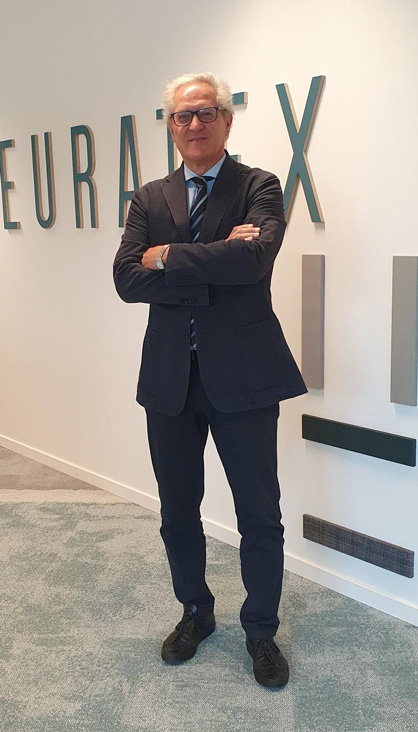
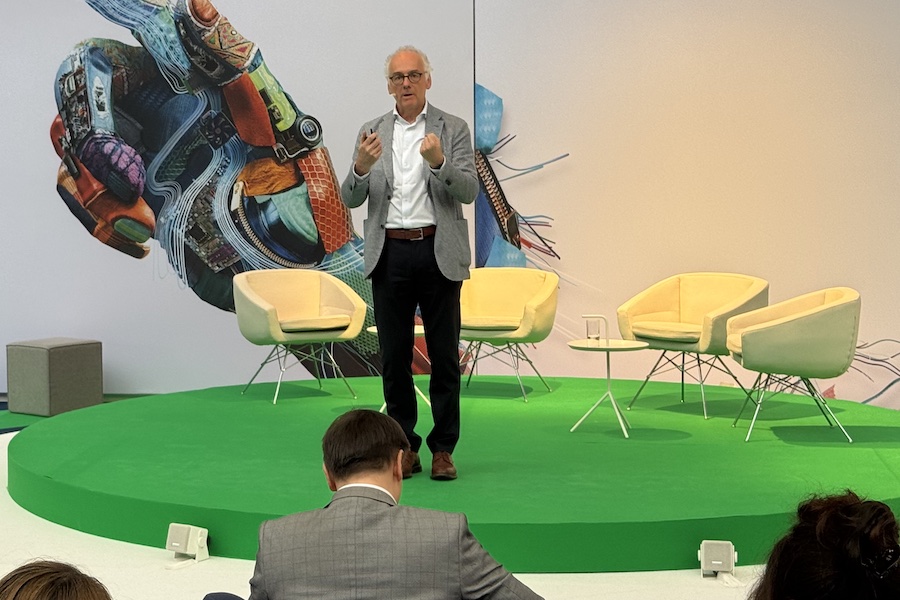
Alberto Paccanelli, President of EURATEX
More News from European Apparel and Textile Confederation (EURATEX)

#Associations

EURATEX calls for urgent action on industrial competitiveness

EURATEX, the European Apparel and Textile Confederation, welcomes today’s State of the Union Address by European Commission President, Ursula von der Leyen, and in particular her recognition of Europe’s need to rebalance unfair trade, cut red tape, and strengthen its industrial and strategic autonomy.

#Europe

European textile industry calls for €10 handling fee on ultra-fast-fashion imports

The introduction of the €3 customs duty on low-value imports marks an important milestone in Europe’s efforts to address the challenges created by the rapid growth of ultra-fast-fashion imports. Together with the abolition of the €150 customs duty exemption, it demonstrates that policymakers are willing to act when market distortions become impossible to ignore. However, the European textile and clothing industry considers this a first step rather than the final destination.

#Associations

Towards pragmatic and harmonised labelling in the EU

EDANA, alongside 14 European associations, urges the European Commission and Member States to adopt a pragmatic approach for the future harmonised packaging labels, in line with the EU’s agenda for the EU Single Market, simplification and competitiveness. The system should rely on text-free pictograms, available in achromatic or monochromatic versions matching the packaging palette, with the possibility of using digital labelling as a core element. Our associations represent manufacturers of consumer goods across Europe.

#Associations

Textile PRO Forum calls for greater harmonisation of textile EPR systems across Europe

The Textile PRO Forum has published a new analysis highlighting the need for greater harmonisation of textile Extended Producer Responsibility systems across Europe. The document, Toward harmonised Textile EPR Systems in Europe: analysis and recommendations, presents the results of work carried out by Workstream 1 of the Textile PRO Forum, led by Dr. Eng. Viola Corbellini, Strategic Development and Innovation Expert at Erion Textiles, and Eng. Luca Campadello, General Director at Erion Textiles. The workstream focused on reducing administrative burden for textile producers by identifying areas where procedures could be better aligned across countries.

More News on Associations

#Associations

German textile industry and retailers form alliance to shape textile EPR system

Germany’s textile and fashion industry and retail sector have joined forces to establish the “Alliance for Textile Circularity” (Allianz für textile Kreisläufe). Initiated by the German Textile and Fashion Industry Association (Gesamtverband textil+mode) and the German Retail Federation (HDE), the alliance aims to contribute industry expertise to the development of Germany’s future Extended Producer Responsibility (EPR) system for textiles and footwear.

#Associations

Automation, digitalization and new business models are shaping the future of footwear and leather technology

The European footwear and leather machinery industry is facing profound transformations. Global competitive dynamics, technological innovation, automation and digitalization are fundamentally reshaping markets, production processes and business models. This is one of the key findings of the new study “Threads of the Future – Footwear and Leather Technology Edition”, which was presented today by VDMA Textile Care, Fabric and Leather Technologies (VDMA TFL) during a press conference at SIMAC Tanning Tech in Milan.

#Raw Materials

Cotton Brazil Dialogues 2026 concludes with 50 international participants immersed in Brazilian cotton production

The Cotton Brazil Dialogues concludes its 2026 edition after a series of technical visits to farms, cotton gins and reference centers, as well as workshops focused on Brazilian cotton production. A total of 50 participants from 14 countries took part in the field trips. The initiative is led by the Brazilian Association of Cotton Growers (Abrapa) and the National Association of Cotton Exporters (Anea), with support from the Brazilian Trade and Investment Promotion Agency (ApexBrasil).

#Associations

Business situation weakens slightly, but the industry stays cautiously optimistic

The International Textile Manufacturers Federation (ITMF) has published the results of its 39th Global Textile Industry Survey (GTIS), conducted from 14 to 22 July 2026 among companies along the entire global textile value chain. Worldwide, 10% of participants rated their business situation as good, 53% as satisfactory and 37% as bad — a balance of -26pp, down from -17pp in May but still well above the 2023 lows. All regions are now in negative territory, from South Asia at -3pp to North & Central America at -58pp.

Latest News

#Research & Development

180 years of TESTEX: From Zurich silk testing to global certification

For 180 years, TESTEX has developed alongside the textile industry while maintaining the same underlying purpose: creating trust through independent and reliable measurement. Founded in Zurich in 1846 as the Zurich Silk Conditioning Institute, TESTEX has grown from a local institution serving the silk trade into an international Swiss testing and certification institute for textiles and leather.

#Recycling / Circular Economy

Moving Advanced Recycling from Innovation to Implementation

The Advanced Recycling Conference 2026 explores technologies, markets, financing and scale-up of innovative recycling solutions for waste streams including mixed plastic waste, textiles and PVC. Europe’s chemical and materials sector faces growing pressure to close carbon loops, strengthen raw-material safety and resilience and meet increasingly ambitious EU recycling targets. Against this backdrop, the Advanced Recycling Conference (ARC) will bring together industry leaders, technology providers, researchers, innovators and policy-makers on 17–18 November 2026 in Cologne, Germany.

#Sustainability

Cascale launches member-led process to shape 2030 strategy

Cascale has launched a member-led process to define the industry alliance’s strategic direction for the next decade. At the Cascale Annual Meeting 2026 in Athens, CEO Ying McGuire announced that members will contribute to an industry system map that will inform Cascale’s 10-year vision, its 2030 strategy and priorities for 2027. The new strategy is scheduled to be finalized in December.

#Functional Fabrics

PERFORMANCE DAYS introduces Digital Design Journey with CLO and VIZOO

PERFORMANCE DAYS will introduce a new Digital Design Journey at its upcoming edition in Munich, connecting physical fabric sourcing with 3D product development. Supported by CLO and VIZOO, the installation will demonstrate how real performance fabrics can be digitized and incorporated into virtual garment development workflows.

TOP