#Textiles & Apparel / Garment
adidas increases full-year outlook as top-line momentum accelerates
“Sales in our strategic growth markets EMEA and North America almost doubled. Revenues in our key categories Football and Outdoor even grew at triple-digit rates. The share of full-price sales increased strongly, fueling exceptional profitability improvements. This momentum gives us all the confidence to increase our full-year outlook despite the external challenges that our industry continues to face.”
Major developments in Q2 2021:
- Currency-neutral sales up 55%, despite low-double-digit drag from external factors
- Revenues in EMEA and North America almost double
- Gross margin up 0.5pp to 51.8% reflecting significantly higher full-price sales
- Operating margin improves to 10.7%
- Net income from continuing operations reaches € 387 million
- Inventories down 22% currency-neutral
- FY Outlook increased: Sales to grow up to 20%, net income from continuing operations to reach € 1.4 to € 1.5 billion
Currency-neutral revenue growth accelerates to 55%
In the second quarter, the company’s top-line momentum further accelerated leading to currency-neutral sales growth of 55%. This growth was achieved against the background of the geo-political situation as well as extended lockdowns in the Asia-Pacific region, which in combination reduced currency-neutral revenue growth by a low-double-digit rate during the quarter. From a channel perspective, the company’s top-line increase was characterized by a strong recovery from the material revenue decline in its physical distribution channels during the second quarter of 2020, when the global coronavirus pandemic had caused a very large number of temporary store closures. As a result, wholesale revenues as well as sales in adidas’ own-retail stores grew at a high-double-digit rate during the second quarter of 2021. E-Commerce revenues declined 14% in the quarter, reflecting the exceptionally high growth in the prior year period when digital revenues had almost doubled. In euro terms, the company’s revenues grew 51% or more than € 1.7 billion in the second quarter to € 5.077 billion (2020: € 3.352 billion).
Strong double-digit growth in most market segments
The top-line expansion in the second quarter was driven by increases in all market segments except Greater China. Currency-neutral sales in EMEA (+99%) and North America (+87%) almost doubled versus the prior year’s period, reflecting strong double-digit growth versus the 2019 level. Revenues in Latin America (+230%) more than tripled during the quarter, and sales in Asia-Pacific grew 66% despite the negative impact from the extended lockdowns in the region. In Greater China, the company recorded a steady business recovery as well as sequential sell-out improvements throughout the quarter. Nevertheless, revenues in Greater China declined 16% during the three-months-period. This development also reflects the strong recovery in last year’s second quarter, when sales in the market had grown at strong double-digit rates in May and June.
Operating margin improves to 10.7%
The company’s gross margin increased 0.5 percentage points to 51.8% (2020: 51.3%). The positive effects from significantly higher full-price sales and the non-recurrence of last year’s inventory allowances more than offset the negative impact from a less favorable market and channel mix as well as higher sourcing costs. Other operating expenses were up 5% to € 2.107 billion (2020: € 2.010 billion). As a percentage of sales, other operating expenses decreased 18.5 percentage points to 41.5% (2020: 60.0%). Marketing and point-of-sale expenses grew 17% to € 616 million (2020: € 525 million). As sports returned, the company strongly increased its brand investments to support the introduction of new products as well as to connect with consumers through both digital channels and physical platforms. As a percentage of sales, marketing and point-of-sale expenses were down 3.5 percentage points to 12.1% (2020: 15.7%). Operating overhead expenses were flat at a level of € 1.492 billion (2020: € 1.484 billion), which included stranded costs in the amount of around € 60 million that adidas temporarily incurred related to the intended divestiture of Reebok. As a percentage of sales, operating overhead expenses decreased 14.9 percentage points to 29.4% (2020: 44.3%). The company’s operating profit reached a level of € 543 million (2020: € -263 million). With an improvement of 18.5 percentage points to 10.7% (2020: -7.8%) the operating margin almost fully recovered to the pre-pandemic level.
Net income from continuing operations improves by more than € 600 million
The company’s net income from continuing operations improved by more than € 600 million to € 387 million (2020: € -243 million). Basic EPS from continuing operations reached € 1.93 (2020: € -1.13) during the quarter.
adidas with strong bottom-line growth in the first half of 2021
In the first half of 2021, revenues increased 40% on a currency-neutral basis driven by strong double-digit growth in all market segments. In euro terms, revenues grew 34% to € 10.345 billion (2020: € 7.733 billion). The company’s gross margin increased by 1.4 percentage points to 51.8% (2020: 50.4%) during the first half of the year. While negative currency fluctuations as well as the less favorable channel mix weighed on the gross margin development during the first six months of the year, this was more than offset by a significantly better pricing mix due to lower promotional activity as well as the non-recurrence of last year’s inventory allowances as well as purchase order cancellations costs. Other operating expenses were flat in the first half year at € 4.154 billion (2020: € 4.156 billion) and were down 13.6 percentage points to 40.2% (2020: 53.8%) as a percentage of sales. adidas generated an operating profit of € 1.248 billion (2020: € -215 million) during the first six months of the year, resulting in an operating margin of 12.1% (2020: -2.8%). Net income from continuing operations reached € 890 million, reflecting an improvement of more than € 1 billion compared to the prior year level (2020: € -217 million). Accordingly, basic earnings per share from continuing operations improved to € 4.52 (2020: € -0.97).
Average operating working capital as a percentage of sales decreases
Inventories decreased 22% to € 4.054 billion (2020: € 5.213 billion). While this development was supported by the reclassification of Reebok, inventories were still down strong double-digits year-on-year on a like-for-like basis. On a currency-neutral basis, inventories were also down by 22%. Operating working capital decreased 7% to € 4.213 billion (2020: € 4.506 billion). On a currency-neutral basis, operating working capital was down 5%. Average operating working capital as a percentage of sales decreased 1.8 percentage points to 21.4% (2020: 23.2%), reflecting a double-digit decrease in payables amid a normalization of the company’s payment terms with its vendors.
Adjusted net borrowings at € 3.146 billion
Adjusted net borrowing on June 30, 2021 amounted to € 3.146 billion (June 30, 2020: € 4.988 billion), representing a year-over-year decrease of € 1.842 billion. This development was driven by the increase in cash generated from operating activities, partly offset by the increase of receivables and the dividend payout.
adidas increases outlook for FY 2021
While adidas continues to be impacted by Covid-19-related lockdowns, industry-wide supply chain challenges and the geo-political situation, the company has increased its top- and bottom-line outlook for 2021.
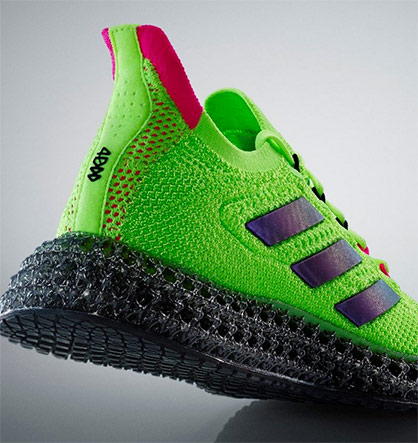
Given the accelerating top-line momentum, the company now expects currency-neutral sales to increase at a rate of up to 20% year-over-year in 2021, driven by strong double-digit improvements in all markets. This new outlook reflects sales growth of up to 7% in the second half of the year compared to the 2020 level, which will be fueled by an array of innovative product releases, including the re-introduction of NMD, one of adidas’ most successful franchises in recent history. In addition, the company’s Futurecraft 4D portfolio will be significantly expanded by the introduction of the 4D FWD Pulse. The scaling of the well-established ZX franchise will continue with the introduction of the ZX 5K Boost. The Forum franchise, after having been successfully incubated throughout the first two quarters of the year, will quadruple in size during the second half of the year driven by several iterations as well as dedicated marketing activities. In addition, major sport events, including the Olympic Games in Japan, the start of the club football season in Europe and the kick-off to the NFL season in the US, as well as grassroots activities around the world will provide ideal platforms to tell brand and product stories in front of global and local audiences.
The company’s full-year gross margin forecast continues to be for a level of around 52.0%. The operating margin is now expected to increase to a level of between 9.5% and 10% (previously: 9% to 10%). Net income from continuing operations is now projected to increase to a level of between € 1.4 billion and € 1.5 billion (previously: € 1.25 billion to € 1.45 billion). The company’s profitability outlook continues to include temporary stranded costs related to the intended divestiture of Reebok. In 2021, these costs are expected to amount to around € 250 million on the operating profit level and to impact net income from continuing operations by approximately € 200 million. The medium-term growth outlook is not impacted by these costs as adidas anticipates that only around 30% of the € 250 million will reoccur in 2022 and that by 2023 the stranded costs will be fully eliminated.
Following the company’s decision to focus its efforts on further strengthening the leading position of the adidas brand and to start a process aimed at divesting Reebok, all income and expenses of the Reebok business are reported as discontinued operations as of the first quarter 2021. For the sake of clarity, all figures related to the 2020 financial year refer to the company’s continuing operations unless otherwise stated. However, a restatement of 2020 balance sheet items is not permitted under IFRS.