[pageLogInLogOut]

#Associations

Sustainability: European industry calls on EU to keep Single-Use Plastics Directive unchanged

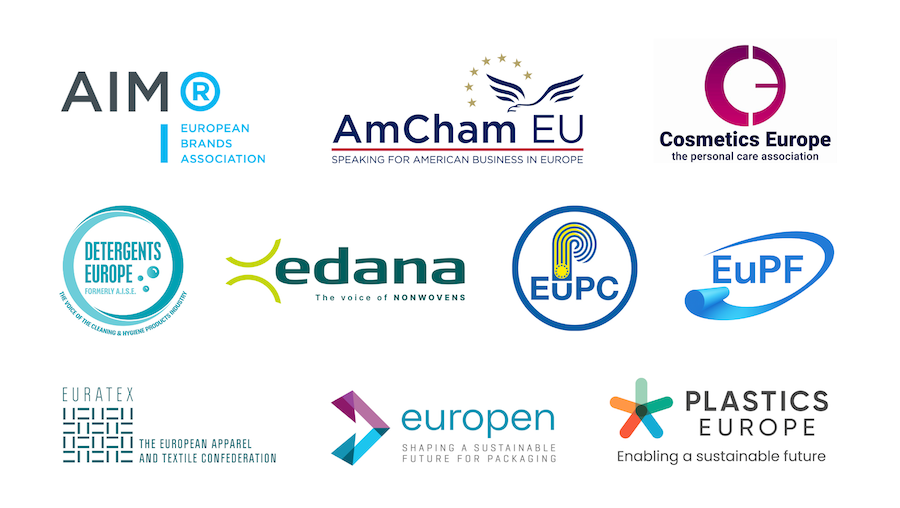
A broad coalition of European industry associations, including EDANA, Euratex and Plastics Europe, has urged EU institutions to maintain the current legal framework of the Single-Use Plastics Directive (SUPD). In a joint statement, the organisations argue that reopening the Directive at this stage would create legal uncertainty, increase regulatory complexity and undermine investment, while its implementation across the European Union is still incomplete.


According to the signatories, the Directive, adopted in 2019, has not yet generated sufficient evidence to justify a legislative revision. They point out that several provisions are still being implemented by Member States and that reporting remains fragmented, making it difficult to assess whether the Directive is achieving its intended environmental objectives. In particular, no comprehensive data are yet available to evaluate the effectiveness of the 2026 consumption reduction targets.

The associations also highlight the uneven transposition of the SUPD across Europe. Different national approaches and instances of so-called "gold-plating" have resulted in a patchwork of regulations that increases compliance costs for companies operating across multiple Member States while weakening the integrity of the EU Single Market.

In addition, the organisations warn that revising the Directive now would create significant legal uncertainty for businesses that are still adapting to existing requirements. They argue that changing the regulatory framework during the implementation phase could delay investments and create uncertainty for manufacturers regarding future obligations and product requirements.

The joint statement further cautions against potential overlaps with other major European legislative initiatives, including the Packaging and Packaging Waste Regulation (PPWR), the Ecodesign framework and the forthcoming Circular Economy Act. According to the signatories, parallel revisions could result in conflicting or duplicative provisions, adding further complexity for industry.

The associations therefore call on EU policymakers to focus on the consistent implementation and enforcement of the existing Directive before considering any legislative revision. They argue that addressing regulatory fragmentation and ensuring harmonised application across Member States should take priority over reopening legislation that has yet to demonstrate its full impact.

The joint statement was co-signed by a broad range of European industry organisations, including EDANA, Euratex and Plastics Europe, reflecting a shared call for regulatory stability and a more coordinated approach to implementing the EU's circular economy legislation.

Joint statement on the SUPD Evaluation

The undersigned associations, representing several European industrial sectors, call on EU institutions to maintain the current legal text of the Single-Use Plastic Directive (SUPD), adopted in 2019. While the signatories recognise the importance of ensuring that the SUPD delivers measurable and meaningful environmental outcomes, reopening the Directive now will create legal uncertainty, add disproportionate burden for economic operators that are already navigating partial and often divergent national transpositions, and increase the risk of regulatory overlaps or contradictions with existing and upcoming legislation. Moreover, there is currently insufficient evidence on the effectiveness of the current SUPD to justify a revision, as described below:

• Insufficient evidence to inform a revision of the SUPD. An impact assessment of the SUPD cannot be carried out at a moment when several of its provisions are not yet in place. While a first report on the state of implementation of the SUPD was published in April 2026, it remains partial, and reporting is not harmonised, preventing meaningful comparison of data across countries. Taking the example of consumption reduction targets, Member States and other EEA countries only reported data on SUP products placed on the market in 2022 and, even for this report, did so using different indicators. Crucially, since the target on consumption reduction is set for 2026, no data are yet available on whether that target has been achieved. In summary, the partial application of the SUPD and the limited data available suggest that a revision of the SUPD would be premature at this time.

• Preventing further fragmentation and gold-plating. The transposition of the SUPD has produced significant regulatory fragmentation, uneven enforcement, and widespread instances of gold‑plating, creating persistent uncertainty for companies active across multiple Member States. The result is a patchwork of national rules that undermines the integrity of the Single Market, inflates compliance costs, and fails to deliver proportionate environmental benefits. These structural shortcomings must be fully recognised in the evaluation of the SUPD and effectively addressed prior to considering a reopening of the Directive.

• Ensuring legal certainty for economic operators. A revision of the SUPD would create legal uncertainty for companies and Member States that are still implementing several of its provisions. While the SUPD entered into force in mid-2021, the date of application for most of its provisions is at a later stage. Furthermore, the EU Commission has only recently adopted some of the implementing decisions and guidelines on the current SUPD. Any change to the SUPD at a moment when companies are still adapting to new obligations, and Member States are still in the process of implementing some key provisions, would create legal uncertainty for economic operators who do not know whether targets or the scope of the SUPD may change. Legal uncertainty carries significant economic costs for economic operators, notably in terms of investment delays likely to persist throughout the entire SUPD revision process (2–3 years).

• Avoiding overlaps with other legislation. Revising the SUPD while the Ecodesign and Packaging Regulations are still being implemented, and as negotiations on the Circular Economy Act (CEA) begin, increases the risk of regulatory overlaps and contradictions. These frameworks cover intersecting areas1 and a revision of the SUPD in parallel with the CEA would almost inevitably lead to duplicative or conflicting provisions. Even if the EU Commission ensured full coherence in its

1 It should be recalled that the SUPD is a lex specialis in relation to Regulation (EU) 2025/40 and, in case of conflict, it should prevail within the scope of its application.

proposal, the co-legislators could still introduce provisions that diverge from or contradict the SUPD framework, further undermining legal certainty and the functioning of the Single Market.

At a time when EU leaders have made regulatory simplifications and a fully integrated Single Market central to Europe’s competitiveness agenda, we urge EU policymakers to focus legislative efforts where they are most needed and avoid reopening a framework that has yet to deliver concrete results.

© 2026 EDANA
© 2026 EDANA


More News from EDANA

#Technical Textiles

FILTREX™ India 2026 to bring global filtration leaders together in New Delhi

EDANA, the voice of nonwovens, in partnership with the Business Coordination House (BCH), will welcome filtration professionals from across the world to FILTREX™ India 2026, taking place on 7–8 October 2026 at the Eros Hotel, New Delhi.

#Nonwovens

EDANA announces five new board members following 2026 Annual General Meeting

The EDANA Board of Governors is elected or re-elected at the Annual General Meeting by the member companies. The Governors are senior executives (business leaders) from member companies, based in different countries and representing different sectors of the nonwovens industry. The Board has central responsibility for guiding EDANA's overall strategy and approving its policies and priorities. It meets three times a year.

#Nonwovens

EDANA launches landmark continence report to mark the start of the World Continence Week

Today marks the official commencement of the World Continence Week. To honour this global awareness initiative, EDANA has published a comprehensive report titled "The Central Role of Absorbent Hygiene Products in the Management of Adult Urinary Incontinence: Benefits, Costs and Environmental Impact." The World Continence Week (WCW) is an annual global initiative dedicated to raising public awareness about incontinence and bladder or bowel health issues. Traditionally held in June, this awareness week aims to shed light on a condition that affects millions of people worldwide but is frequently kept secret due to widespread social stigma, embarrassment, and taboo.

#INDEX 2026

INDEX™26: A strong edition in a challenging context, confirming Geneva’s role as a global hub for innovation in the nonwovens sector

EDANA’s INDEX™26, the world’s leading trade fair for nonwovens, co-organised with Palexpo, officially concluded last Friday 22 May with a successful edition. In a context marked by uncertainty and continued pressure, the 2026 edition of INDEX™ concluded successfully. With a diverse range of 625 exhibiting companies from 44 countries, an important number of visitors, and an expanded international reach, the event confirmed its role as a central hub for innovation and a representative showcase of the nonwovens’ ecosystem.

More News on Associations

#Raw Materials

Cotton Brazil Dialogues 2026 concludes with 50 international participants immersed in Brazilian cotton production

The Cotton Brazil Dialogues concludes its 2026 edition after a series of technical visits to farms, cotton gins and reference centers, as well as workshops focused on Brazilian cotton production. A total of 50 participants from 14 countries took part in the field trips. The initiative is led by the Brazilian Association of Cotton Growers (Abrapa) and the National Association of Cotton Exporters (Anea), with support from the Brazilian Trade and Investment Promotion Agency (ApexBrasil).

#Europe

European textile industry calls for €10 handling fee on ultra-fast-fashion imports

The introduction of the €3 customs duty on low-value imports marks an important milestone in Europe’s efforts to address the challenges created by the rapid growth of ultra-fast-fashion imports. Together with the abolition of the €150 customs duty exemption, it demonstrates that policymakers are willing to act when market distortions become impossible to ignore. However, the European textile and clothing industry considers this a first step rather than the final destination.

#Associations

Business situation weakens slightly, but the industry stays cautiously optimistic

The International Textile Manufacturers Federation (ITMF) has published the results of its 39th Global Textile Industry Survey (GTIS), conducted from 14 to 22 July 2026 among companies along the entire global textile value chain. Worldwide, 10% of participants rated their business situation as good, 53% as satisfactory and 37% as bad — a balance of -26pp, down from -17pp in May but still well above the 2023 lows. All regions are now in negative territory, from South Asia at -3pp to North & Central America at -58pp.

#Associations

IVGT membership: expertise that pays off

For energy-intensive textile companies, government compensation mechanisms are an important economic factor. The IVGT successfully supports its member companies in applying for state aid and thereby regularly contributes to significant financial relief.

Latest News

#Weaving

Lindauer DORNIER GmbH welcomes new apprentices and dual-study students

For 22 new “DORNIER Talents”, these days mark the beginning of a new chapter at Lindauer DORNIER. For the family-owned company, in-house training is a key pillar in developing skilled professionals and retaining them within the company for the long term.

#Research & Development

Novel flame-retardant and recyclable fiber-reinforced composite

Airplanes and passenger trains must meet strict safety requirements, including fire safety standards. This calls for materials that are flame-retardant, lightweight, robust, and scalable. Empa researchers, in collaboration with their industry partner Elantas, have now succeeded for the first time in making such a material – a composite – fully recyclable.

#Composites

WHILL selects Teijin’s tough, lightweight Carbon Fiber Composite for new last-mile mobility

Teijin Limited announced today that WHILL Inc., a global leader in inclusive mobility technology, has selected Sereebo® P CFP series, a carbon fiber-reinforced thermoplastic (CFRTP) material, for key structural components of the upcoming WHILL Model C Lite. Sereebo® P CFP series provides high strength, light weight, design flexibility and system cost advantages to the Model C Lite, which is a battery powered, single-seat, last-mile device. This new model combines maneuverability with light weight and one-handed folding to ensure ease of handling and operation.

#Textile chemistry

ZymoChem secures $4 million in renewed federal funding to advance U.S. biomanufacturing of critical materials and their supply chains

ZymoChem, the specialty chemicals company dedicated to bringing decarbonization, sustainability, and supply chain resiliency to the chemical industry through innovative biological manufacturing, today announced the resumption and expansion of its federal research portfolio. The company has been notified that previously paused work under a $5 million U.S. Department of Energy (DOE) program is officially back on, to be joined by continuing collaborations with three of the nation's premier national laboratories.

TOP