[pageLogInLogOut]

#Associations

Global Textile and garment manufacturers initiative publishes white paper on commercial compliance

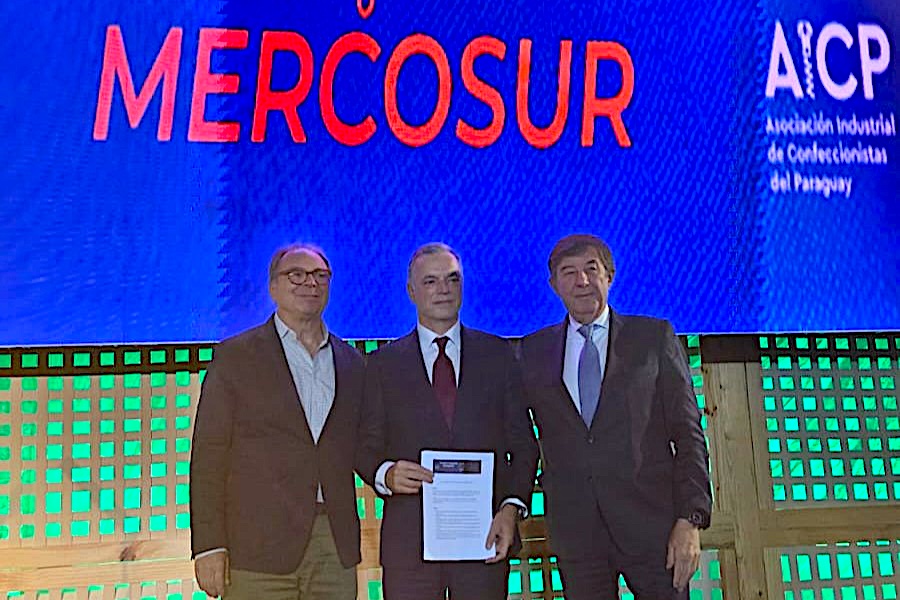
The initiative, led by the STAR Network, the International Apparel Federation (IAF) and the Better Buying Institute and supported by GIZ FABRIC consists of 13 industry associations from nine countries facing similar challenges regarding purchasing practices in the textile and garment industry. Through a process of consultation, these associations have now jointly agreed on the text of the white paper that is published today. This marks the first joint manufacturers’ position on the improvement of purchasing practices.

The white paper contains the core principles that manufacturers as part of the Sustainable Terms of Trade Initiative (STTI) do not want to see breached by the companies that buy from them. And it suggests how manufacturers will collaborate to apply commercial compliance in the apparel sourcing business

The white paper establishes commercial compliance as a leading principle for the manufacturer’s perspective on the improvement of purchasing practices. STTI defines it as ‘purchasing practices that do not cause obvious and avoidable harm to manufacturers’. The white paper lists ‘key recommendations’, defining what purchasing practices manufacturers consider to be breaches of their definition of commercial compliance. The associations participating in the initiative recognise that the breaches of these key recommendations seriously impair their ability to run a commercially viable business, let alone to contribute to stronger and more sustainable supply chains.

Going beyond the key recommendations, the work by the associations has also yielded a set of further recommended improvements to current common purchasing practices. Importantly, the white paper also contains a comprehensive research agenda aimed at finding out how purchasing practices can adhere to commercial compliance and be further improved while maintaining the flexibility and commercial independence that is to the advantage of both buyers and suppliers, as well as their customers and workers.


A phase 2 to the initiative is foreseen to start within weeks. In phase 2, two major and interconnected approaches will emerge. The initiative will seek structural dialogue with buying brands and retailers and some of the MSIs in which they participate on the inclusion of the concept commercial compliance in purchasing practices codes. Secondly, the initiative will aid the creation of a system of improved transparency regarding commercial compliance.

More News from INTERNATIONAL APPAREL FEDERATION (IAF)

#Textiles & Apparel / Garment

IAF Position on tariffs

The International Apparel Federation (IAF) represents the apparel manufacturing community across more than 40 countries—a global industry comprising hundreds of thousands of companies and millions of employees. Apparel and textiles are among the most globalized industries, historically foundational to industrial development around the world.

#Associations

IAF and ITMF unite global fashion and textile leaders

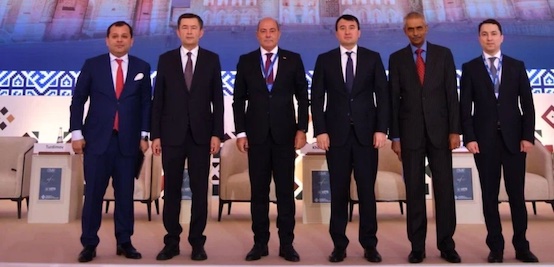
The joint ITMF Annual Conference and IAF World Fashion Convention was held on September 8-10 in the historic city of Samarkand, Uzbekistan. This year’s convention, co-organized by the International Apparel Federation (IAF) and the International Textile Manufacturers Federation (ITMF), and hosted by Uztextileprom, the Uzbekistan Textile and Garment Industry Association, and the Chamber of Commerce & Industry, Uzbekistan highlighted the crucial interdependence of our sectors.

#Associations

Partnership ITC and IAF: Full supply chain profitability

The International Trade Centre (ITC) and the International Apparel Federation (IAF) announce a partnership to stimulate innovation towards “full supply chain profitability” for apparel manufacturers and brands. The first phase of collaboration is research to be previewed at the 38th IAF World Fashion Convention, Philadelphia, October 23-24. Applying learning in autos and electronics, a joint study articulates how material suppliers and garment manufacturers create ‘smart flexibility’ by postponing production commitments closer to actual demand, unlocking capital from unneeded inventory and excess production. Smart Flexibility is a new approach that uses a mix of process and data tools enabling suppliers to create additional value for brands and manufacturers alike that supersedes the benefits of lowest cost global sourcing.

#Industry 4.0 / Digitalization

Global coalition calls for digital labeling

The American Apparel & Footwear Association (AAFA), the International Apparel Federation (IAF), and 128 additional organizations from all corners of the globe, today delivered a letter to supranational, national, and local authorities around the world to modernize domestic textile, garment, footwear, and related accessories labeling requirements and legally allow more sustainable and economic, digital labels for required labeling information.

More News on Associations

#Associations

Businesses urge European Commission to allow continued sale of products already lawfully placed on the market before the Empowering Consumers Directive’s application to avoid unnecessary waste and costs

EDANA, the voice of nonwovens, alongside a coalition of leading European business associations, has issued a joint statement urging the European Commission to introduce a "grandfathering clause" to the Empowering Consumers for the Green Transition (ECGT) Directive. The coalition warns that without transitional provisions for products already lawfully placed on the market, the new rules could inadvertently lead to massive waste and economic disruption.

#Associations

Joint Statement: Urgent clarification needed on scope of Textiles EPR for PPE and Medical Devices

EDANA, the voice of nonwovens, alongside fellow industry associations CIRFS (European Man-Made Fibres Association), EURATEX (The European Apparel and Textile Confederation), ESF (European Safety Federation), and EuroCommerce (Retail & Wholesale), has issued a joint statement raising critical concerns regarding the transposition of Directive (EU) 2025/1892, the targeted revision of the Waste Framework Directive.

#Associations

Young researchers recognised for cutting-edge work in recycling, fibre technology and textile mechanics

At the Aachen-Dresden-Denkendorf International Textile Conference held in Aachen at the end of November, Peter D. Dornier, Chairman of the Walter Reiners Foundation of the VDMA, honoured five successful young engineers. Promotion and sustainability prizes were awarded in the categories bachelor/project theses and diploma/master theses. Academic theses that develop solutions for resource-saving products and technologies, for example, are eligible for the sustainability awards.

#Europe

Level playing field at stake: Europe’s textile industry demands decisive action

Yesterday, the European Parliament took a welcomed and necessary step by voting a resolution calling for stronger market surveillance, reinforced customs controls and faster enforcement of the Digital Services Act in case of infringements. For Europe’s textile and clothing manufacturers, this is the first political acknowledgement that the system is broken — and that enforcement must finally match the scale of the problem.

Latest News

#People

Happy Holidays!

Dear reader, the year 2025 is drawing to a close. We are entering what we hope will be a peaceful holiday season, spending time with our families and taking a moment to pause and reflect. We hope we have been able to support you once again this year with relevant news and articles, and we look forward to surprising you with many innovations in the coming year. Enjoy the festive season, stay healthy, and we wish you a happy and joyful holiday season.

#Weaving

Lindauer Dornier announces leadership transition in weaving machine business

After more than ten successful years at Lindauer DORNIER GmbH, Mr Wolfgang Schöffl will leave the family-owned company at the end of the year to enter well-deserved retirement.

#Heimtextil 2026

Texpertise Focus AI: Messe Frankfurt puts Artificial Intelligence centre stage at its international textile and apparel trade fairs

Under the banner 'Texpertise Focus AI, Messe Frankfurt will place a strong emphasis on Artificial Intelligence (AI) across its international textile and apparel trade fairs from 2026 onwards, setting a future-shaping signal for the industry. The initiative highlights the responsible use of AI along the entire textile value chain, from fibre production to the point of sale. The programme will launch at Heimtextil in Frankfurt in January 2026.

#Technical Textiles

Autoneum and Polestar set new benchmarks for passenger experience and sustainability

As the global market leader in sustainable acoustic and thermal management, Autoneum is a key supplier of interior and exterior components for the highly anticipated Polestar 5 model. The successful collaboration between Autoneum and Polestar marks a significant milestone in sustainable automotive engineering: the electric grand tourer sports car features several innovations in lightweight, fully recyclable polyester-based components that ensure a superior driving experience. Polestar 5 was revealed at the IAA Mobility 2025 in Munich and is available in 24 markets.

TOP