[pageLogInLogOut]

#Associations

ITMF demands brands and retailers to act responsibly and sustainably

The Corona-pandemic has revealed how extended the textile value chain is from producing fibres to the finished consumer products offered by brands and retailers around the world. Fibres can be produced in one country, yarns spun in another; fabrics are woven or knitted yet in another country before the final garment is sewn and shipped across continents.

The textile value chain is only as strong as the weakest link in it. It is important to realize that in a situation of global demand and supply disruptions, cooperation and dialogue are paramount for the entire supply chain. Our industry is facing demand shocks due to lockdowns around the world, which have posed enormous challenges to the retail industry. Passing the loss and pain to suppliers by cancelling orders cannot be the answer. To the contrary, cancellations will create even more problems by weakening the supply chain further.

Textile and apparel companies are willing to do their utmost part to overcome this demand shock by delaying shipments or deferring payments, when necessary. But this has to be within reasonable limits. It is imperative that brands and retailers and their suppliers cooperate closely and look for solutions that support each other.

ITMF and its national textile and apparel associations represent hundreds of thousands of companies and millions of workers across the globe. These companies and workers cannot absorb the burden alone. ITMF’s recent Corona-Surveys have revealed that orders have plummeted by more than 40% globally and that turnover in 2020 is expected to be 33% lower than in 2019. The most pressing issue for most companies is liquidity. Therefore, it is essential that brands and retailers find solutions with their suppliers that allow them to pay their workers and avoid massive layoffs.


Responsible sourcing practices by brands and retailers are critical preconditions for socially compliant and eco-friendly production. Sustainability is not a one-way street; it can only be achieved, if stakeholders along the supply chain respect and treat each other responsibly.

ITMF was founded in 1904 and its members are associations and companies in the fibre, textile, apparel, home textile, textile machinery and textile chemical industry in almost 60 countries around the world, that are employing directly and indirectly millions of people.
More News from International Textile Manufacturers Federation (ITMF)

More News on Associations

#Associations

Joint Statement: Urgent clarification needed on scope of Textiles EPR for PPE and Medical Devices

EDANA, the voice of nonwovens, alongside fellow industry associations CIRFS (European Man-Made Fibres Association), EURATEX (The European Apparel and Textile Confederation), ESF (European Safety Federation), and EuroCommerce (Retail & Wholesale), has issued a joint statement raising critical concerns regarding the transposition of Directive (EU) 2025/1892, the targeted revision of the Waste Framework Directive.

#Associations

Young researchers recognised for cutting-edge work in recycling, fibre technology and textile mechanics

At the Aachen-Dresden-Denkendorf International Textile Conference held in Aachen at the end of November, Peter D. Dornier, Chairman of the Walter Reiners Foundation of the VDMA, honoured five successful young engineers. Promotion and sustainability prizes were awarded in the categories bachelor/project theses and diploma/master theses. Academic theses that develop solutions for resource-saving products and technologies, for example, are eligible for the sustainability awards.

#Europe

Level playing field at stake: Europe’s textile industry demands decisive action

Yesterday, the European Parliament took a welcomed and necessary step by voting a resolution calling for stronger market surveillance, reinforced customs controls and faster enforcement of the Digital Services Act in case of infringements. For Europe’s textile and clothing manufacturers, this is the first political acknowledgement that the system is broken — and that enforcement must finally match the scale of the problem.

#Natural Fibers

Better Cotton Initiative partners with Uzbek government agency to offset certification costs

The Better Cotton Initiative (BCI) has today announced a strategic agreement with Uzbekistan’s Light Industry Agency to increase financial support for cotton farming clusters adopting sustainable agricultural practices.

Latest News

#Spinning

First PA66 spinning plant with EvoQuench successfully commissioned

With the successful commissioning of a multi-digit PA66 spinning line for microfiber yarns, Chinese textile company Shandong Nanshan Fashion Technology Co., Ltd. has added yarn production to its textile value chain.

#Knitting & Hosiery

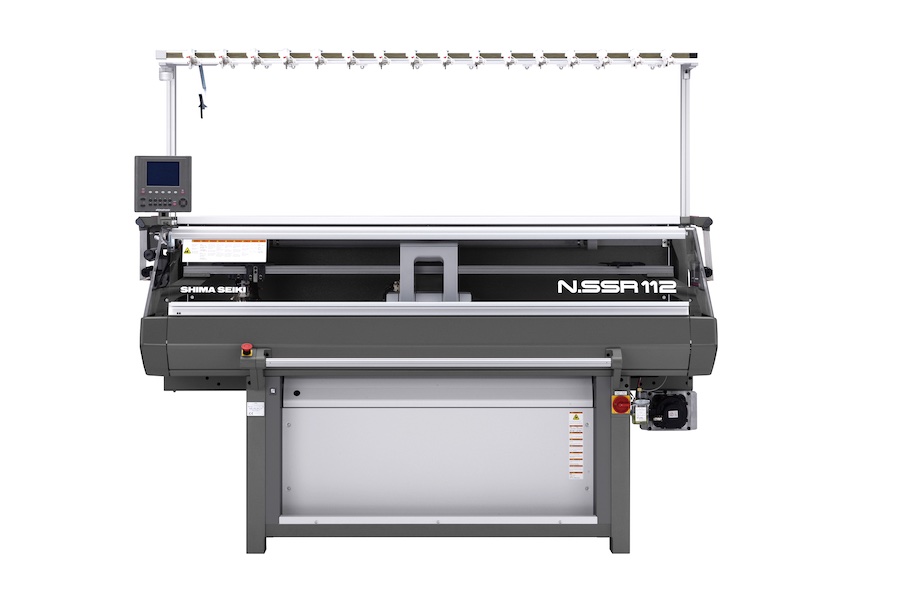
SHIMA SEIKI returns to ShanghaiTex

Leading flat knitting solutions provider SHIMA SEIKI MFG., LTD. of Wakayama, Japan, together with its Hong Kong and Chinese market subsidiary SHIMA SEIKI (HONG KONG) LTD., will exhibit at the ShanghaiTex 2025 exhibition (Booth No.: Hall N3, Booth A20) held in Shanghai, China this month. This marks the return of SHIMA SEIKI to ShanghaiTex after a 14-year hiatus, its last exhibit at the show having been in 2011.

#Research & Development

Fraunhofer CCPE presents the “Monomaterial Design Set” – Innovative solutions for circular product design

Composite materials made from different types of plastic often extend the lifetime of products but make recycling more difficult in the circular economy. That is why Fraunhofer CCPE has developed the “Monomaterial Design Set”. This new approach helps to reduce the variety of plastics used in durable products and offers circular solutions for designers and product developers.

#Man-Made Fibers

arena introduces renewable LYCRA® EcoMade fiber in its latest swimwear collection

Italian swimwear specialist arena has unveiled a new collection that brings sustainability and performance even closer together. Launched on December 4, the line features swimsuits made from recycled nylon and renewable LYCRA® EcoMade fiber — the first time the bio-based spandex has been used commercially in swimwear.

TOP