[pageLogInLogOut]

#Associations

EU Circular Economy Action Plan: “EURATEX stands ready with concrete and realistic proposals to move it forward.”
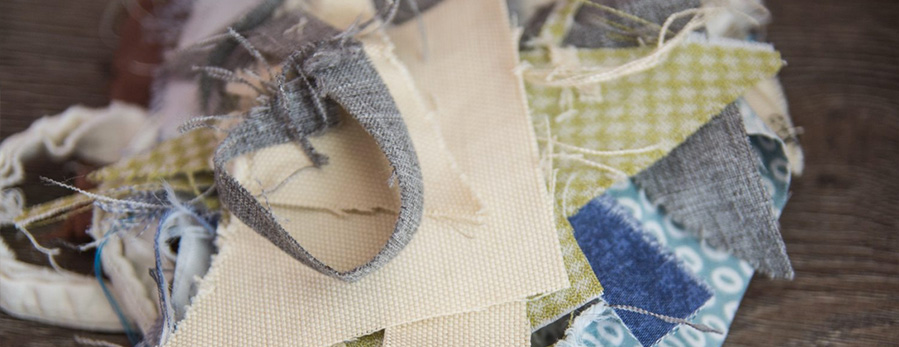
(c) 2020 EURATEX
The European textiles and clothing sector cares about circularity of its products; for several years already, the industry is re-inventing itself to offer solutions that are workable and make a sustainable impact. That’s why EURATEX welcomes the new Circular Economy Action Plan, released by the European Commission today, as it reflects many proposals developed by our industry.

At the same time, this Action Plan is just the starting point for developing a more focused strategy, which must take into account the specific challenges of our sector. EURATEX has already developed its own comprehensive strategy, including specific recommendations and workable solutions.

EURATEX welcomes the plan as it sets the foundations to change the way products are made, the way waste is managed, and the way people consume. The Action Plan wants to be as comprehensive as possible, involving all the actors in the value chain, citizens, Members States and local realities. The EU needs now to set the conditions to remove structural barriers, address or prevent market failures and bring harmonised solutions across the European single market. Essentially, the EU needs to create a European market for reuse of textile material and such an objective can be achieved with the upcoming Strategy for Textiles.

For the textile and apparel industry, the Circular Economy Action Plan is not a “wake-up call” because companies have been doing a lot for the past years. They invested money in research and innovation and came up with a wide range of solutions. They, though, faced a lot of challenges that prevent such solutions to enter a broader market.

Therefore, EURATEX is asking the European Commission to focus on the following points:

99% of the textile and apparel industry is composed by SMEs. The EU needs to take into consideration their specificities. In particular, SMEs lack fund to upscale their products and solutions, plus they need a legislative framework which is not burdensome. We ask the EU to remove barriers, not create new ones.


Companies need a territory that can deal with the whole circularity process. A company, which produces textiles by recycling used clothes or other fibers, should have a textile recycling facility in the vicinity, not 250km away. We, therefore, welcome the proposal of the European Commission to provide guidance to achieve high levels of separate collection of textile waste by 2025. It must be done in a well-organized manner, so to avoid tons of waste textile waiting to be processed.

Green Public Procurement will increase demand allowing business to invest in circularity. In 2015, public procurement accounted for 13.1 % of the GDP in the EU, this means that almost €1.923 bln were spent by public bodies purchasing goods or services. That is a formidable leverage which Member States can use to boost closed-loop productions, promote scale economies which lower costs and proactively drive changes. Authorities can then choose high quality and durable products, reward low-impact manufacturing processes, and favour products designed with recycled or biobased/biodegradable materials.

EURATEX looks forward to the upcoming initiatives announced by the EC in the Circular Economy Action Plan, as it wants to be part of the development of polices, making circularity an efficient reality. According to EURATEX Director General Dirk Vantyghem “this plan can be the starting point for a new structural dialogue with the EU and partners of the value chain. All the actors need to agree on what has to be changed and how to unleash circular textile products”.
More News from European Apparel and Textile Confederation (EURATEX)

#Associations

European Business Coalition welcomes provisional application of EU–Mercosur Agreement and calls for Swift and full implementation

With the European Commission’s decision to provisionally apply the EU–Mercosur Interim Trade Agreement, a process spanning more than 25 years now moves decisively into its implementation phase.

#Europe

Antwerp Declaration community urges EU leaders to deliver emergency measures as Europe’s competitiveness crisis deepens

EURATEX, representing the European textile and fashion industry, joins the Antwerp Declaration Community’s call on EU Heads of State and Government to adopt emergency measures that restore industrial competitiveness and deliver tangible results for Europe’s manufacturing base in 2026.

#Europe

FITA, ABIT and EURATEX underline strategic importance of Mercosur – EU Partnership Agreement for the textile and apparel industry

The Argentine Textile Industry Federation (FITA), the Brazilian Textile and Apparel Industry Association (ABIT), and the European Apparel and Textile Confederation (EURATEX) continue to monitor the process of internalizing the Mercosur-European Union Partnership Agreement. This agreement is essential for the competitiveness of our industries, on both sides of the Atlantic.

#Associations

Industry associations warn against state-run EPR models in the EU

European industry associations, led by Euratex, have raised concerns over a growing trend in several EU Member States to introduce state-run Producer Responsibility Organisations (PROs) within Extended Producer Responsibility (EPR) schemes.

More News on Associations

#Associations

EDANA joins industry coalition urging a strong internal market legal basis for the New Circular Economy Act

EDANA has joined 67 European industry associations in a joint industry statement calling on the European Commission and co-legislators to anchor the forthcoming New Circular Economy Act (CEA) in the Internal Market legal basis (Article 114 TFEU).

#Associations

EDANA warns of consequences of misclassification of PET spunbond imports

EDANA would like to remind its members and industry stakeholders of the legal requirement to comply with the EU rules on customs classification when importing nonwovens from third countries outside the EU. In this regard, it was recently discovered that there appears to be a high level of customs misclassification occurring in our industry. This could have dangerous and costly consequences for importers.

#Associations

Engineering depth and diversity for composites

Airbond is the latest member of the British Textile Machinery Association (BTMA) to receive recognition for contributions to the composites industry. The engineering firm based in Pontypool, South Wales, has just received the Make UK Energy and Sustainability Award for its Lattice 3D Printing project.

#Composites

Alliance for European Flax-Linen & Hemp expands bio-materials presence at JEC World 2026

The Alliance for European Flax-Linen & Hemp is pleased to announce its participation at JEC World 2026, featuring a significantly expanded presence and an enhanced offering for the global composites industry.

Latest News

#INDEX 2026

EDANA unveils nominees for INDEX™26 Awards: Highlighting the next generation of nonwoven excellence

EDANA is proud to unveil the highly anticipated nominees for the INDEX™26 Awards, the nonwoven industry’s highest accolade for technical and sustainable excellence. Out of a record-breaking field of entries, these finalists represent the cutting edge of material science—from bio-based hygiene fibers and PFAS-free protective textiles to revolutionary water-filtration machinery. Each nominee has been selected by a jury of industry experts for their ability to solve critical global challenges, including the transition to a circular economy and the pursuit of enhanced consumer performance.

#Raw Materials

Lenzing Group positions bio‑based materials as a strategic asset for Europe’s economic security

The Lenzing Group, a leading supplier of regenerated cellulose fibers for the textile and nonwovens industries, hosted a high‑level roundtable in Brussels to discuss how bio‑based materials can strengthen Europe’s economic security and support the shift toward a fossil‑free future. Organized in cooperation with Euractiv, the event brought together representatives of the European Commission, the UK Mission to the EU, academia, civil society, and industry.

#Natural Fibers

Beyond Cotton: Natural Fibres in the Spotlight at the Bremen Cotton Conference - Branded by DNFI

Climate targets, fragile supply chains, and rising regulatory requirements are fundamentally changing the perspective of the textile industry - the focus is increasingly shifting toward the base material. Not only cotton, but natural fibres are gaining significant importance: they stand out not only because of their outstanding functional properties, but also because they make a valuable contribution to the bioeconomy and responsible product development.

#Textiles & Apparel / Garment

Coats to showcase innovative reinforcement and filler materials for leather goods and accessories at APLF 2026

Coats, a world-class Tier 2 manufacturer and trusted partner for the apparel and footwear industries, will be promoting four advanced materials from its ‘Lifestyle Solutions’ portfolio at APLF 2026 in Hong Kong in March. Each innovation has been specifically engineered to help luxury and premium brands elevate the craft, durability, sustainability and creative expression required in the manufacturing of handbags, purses, and other high-end designer accessories.

TOP