[pageLogInLogOut]
TRÜTZSCHLER SPINNING - THE NEW CARD

#Yarn & Fiber

Outlast launches new PCM acrylic fiber

The new generation of PCM acrylic fibers: Outlast and TAF succeeded in producing a heat managing Outlast® acrylic fiber with a four times higher performance (c) 2015 Outlast Technologies LLC
Outlast Technologies, Inc., a market leader in phase change materials (PCM), and the renowned fiber manufacturer Thai Acrylic Fibre Co. Ltd., Bangkok/Thailand, announce they have succeeded in developing a new generation of a PCM acrylic fiber with Outlast® technology. This new fiber provides four times the performance and offers perfect climate comfort for apparel and home textiles.
Second generation with four times higher performance

A new production process has allowed the Outlast® acrylic fiber to perform four times better than the existing version. “We are using now a non-encapsulated pPCM system and we no longer work with encapsulated mPCMs here,” says Martin Bentz, President of Outlast Technologies LLC, Golden/USA.“This change allowed us to improve the performance of the new Outlast® acrylic fibers enormously. With that, the spinning and dyeing properties are enhanced."

This especially plays a positive role for dark colors - darker tones are easier to achieve now through a better color absorbance.

The new Outlast® acrylic fiber blends very well with wool. It is well suited for use in socks, knitwear (e.g. pullovers) and home textiles (blankets) offering the significant added value of a dynamic heat and moisture management. The new Outlast® acrylic fibers absorb excess body heat, store and release it.
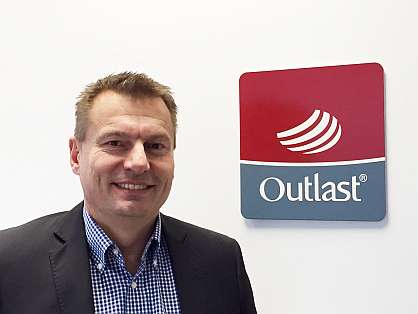
Pic: "We are proud of our new PCM acrylic fiber with a four times higher performance," says Martin Bentz, President of Outlast Technologies, Golden/USA.

The performance fibers regulate the climate proactively – in contrast with other technologies that only wick away humidity. Outlast® technology proactively manages heat while controlling the production of moisture before it begins, so less humidity is produced inside the apparel. This Outlast® difference also results in more comfort as well as improved hygiene, which is important especially when it comes to socks.

Outlast® technology

Outlast® technology was originally developed for NASA to protect astronauts from temperature fluctuations in space. Outlast® technology utilizes phase change materials (PCM) that absorb, store and release heat for optimal thermal comfort. Outlast® technology is comparable to ice in a drink; as it changes from solid to liquid, it absorbs heat and cools the drink, keeping that drink at the desired temperature for a longer period of time. Outlast® phase change materials work in the same way.

The PCMs have the capacity to absorb, store and release excess heat. This gives any product containing Outlast® technology the ability to continually regulate the skin’s microclimate. As the skin gets hot, the heat is absorbed, and as it cools, that heat is released.

Outlast® technology is not wicking technology, which manages moisture by reacting to your sweat and pulling it away from the skin. Outlast® technology will proactively manage heat while controlling the production of moisture before it begins. That’s the Outlast® difference. The benefits of Outlast® products at a glance:

  • Absorbs excess body heat
  • Manages moisture
  • Reduces overheating
  • Reduces chilling
  • Reduces perspiration
  • Continuously adapts to thermal changes

Outlast presented the newest innovations at Techtextil.

More News from TEXDATA International

#Techtextil 2026

Performance Apparels: Functional textiles drive innovation at Techtextil 2026

From high-performance fibres and advanced membranes to smart textiles and sustainable material concepts – functional apparel is becoming one of the most dynamic innovation fields in technical textiles. At Techtextil 2026, exhibitors demonstrate how new materials, finishing technologies and digital functions are shaping the next generation of protective, workwear and outdoor systems.

#Texprocess 2026

Texprocess 2026: Automation, digitalisation and AI reshape textile processing

Investment decisions in textile processing have become increasingly complex. Rising energy prices, labour shortages and geopolitical uncertainties are forcing companies to prioritise technologies that deliver measurable improvements in efficiency and process stability. This applies not only to apparel production, but also to the processing of technical textiles and high-performance materials. Modernisation projects are therefore being evaluated more selectively – but the pressure to upgrade production systems continues to grow. Texprocess 2026 reflects this tension between cautious investment behaviour and increasing technological demand.

#Techtextil 2026

Textile Chemicals & Dyes: Innovation in Textile Chemistry moves into focus at Techtextil 2026

From PFAS-free finishes and water-saving dyeing technologies to advanced coatings and recycling-compatible formulations, innovation in textile chemistry is accelerating across the industry. Reflecting this development, Techtextil 2026 introduces Textile Chemicals & Dyes as a dedicated product segment, highlighting the growing role of chemical solutions in shaping the next generation of technical textiles.

#Recycling / Circular Economy

textile.4U publishes special edition “Top 100 Textile Recycling Companies 2025”

With a comprehensive 176-page special edition, textile.4U is dedicating its latest issue entirely to one of the most dynamic and influential topics in today’s textile industry: textile recycling. The new issue, published exclusively in high-quality print, presents the Top 100 textile recycling companies researched and selected by TexData – organizations that already play a key role in the transition to circular textiles or are expected to have a significant impact in the near future.

More News on Yarn & Fiber

#Yarns

Yarn Expo Spring 2026 concludes, connecting buyers with innovative selection of sustainable yarns and fibres

Yarn Expo Spring 2026 wrapped up successfully on 13 March, as a record-high of over 600 exhibitors from 12 countries and regions welcomed more than 25,000 visitors from 113 countries and regions. Held across 27,000 sqm in Hall 8.2 of the National Exhibition and Convention Center (Shanghai), the fair highlighted the textile industry’s accelerating shift toward a lower-impact, more functional future. Exhibitors presented eco-friendly organic, regenerated and recycled yarns and fibres, alongside innovative options such as sweat-resistant and high-performance materials. A comprehensive fringe programme further enriched the event, offering practical market insights and new networking opportunities.

#Man-Made Fibers

Lenzing advances its transformation: Higher EBITDA, stronger free cash flow and more than EUR 200 million in cost savings

The business performance of the Lenzing Group in 2025 was affected particularly in the second half of the year by external factors such as international tariff measures, subdued demand and declining market prices. As a result, revenue decreased slightly by 2.3 percent to EUR 2.6 billion, primarily due to lower fiber sales volumes and lower prices for fibers and pulp, which were further negatively impacted by currency developments. Nevertheless, thanks to the comprehensive Performance Program, Lenzing was able to improve its operating performance and key financial indicators compared with the previous year.

#Man-Made Fibers

“Lead Transformation – Generate Impact”: Lenzing presents its 2025 Annual and Sustainability Report

The Lenzing Group has published its 2025 Annual and Sustainability Report, entitled LEAD TRANSFORMATION – GENERATE IMPACT. The report shows how Lenzing is actively shaping change in the industry and making a lasting impact: economically, ecologically, and socially. Lenzing is consistently focused on the future: with targeted investments in premiumization, excellence, innovation, and sustainability, the company is strengthening its position as a leading provider of sustainable, cellulose-based premium fibers. The combined report is available in digital format.

#Raw Materials

Lenzing Group positions bio‑based materials as a strategic asset for Europe’s economic security

The Lenzing Group, a leading supplier of regenerated cellulose fibers for the textile and nonwovens industries, hosted a high‑level roundtable in Brussels to discuss how bio‑based materials can strengthen Europe’s economic security and support the shift toward a fossil‑free future. Organized in cooperation with Euractiv, the event brought together representatives of the European Commission, the UK Mission to the EU, academia, civil society, and industry.

Latest News

#Techtextil 2026

Modernizing Needling – DiloGroup at Techtextil & INDEX 2026

With the theme “Modernizing Needling”, the DiloGroup presents a comprehensively enhanced portfolio for needling technology. The objective is to further increase the performance and application range of needlefelt production lines in terms of productivity, flexibility, and the development of new products, thereby meeting the growing demands of modern technical textiles.

#Advertorial

New Gravimax MMX-R X-ray sensor platform opens up new application fields

The demands placed on quality control in web-based production processes are increasing: materials are becoming more complex, basis weights are varying more widely, and at the same time, pressure is growing to make processes more efficient and transparent. Precise measurement data across the entire web width has therefore become a key factor in ensuring stable production processes. With its new Gravimax MMX-R sensor platform, Mahlo introduces a radiometric measurement solution designed to set new standards in determining basis weight and material composition. The platform combines advanced X-ray technology with newly developed signal processing, enabling measurement tasks that previously often required multiple sensor technologies.

#Recycling / Circular Economy

Carbios confirms Longlaville plant in France following financing progress

Carbios has reaffirmed its plans to build its Longlaville plant in France within a project financing framework, targeting the start of production in the first half of 2028. The company also reports a solid cash position of around €60 million at the end of 2025 and has appointed Benoît Grenot as Deputy Chief Executive Officer to support the execution of its strategic projects.

#Composites

KARL MAYER strengthens partnerships in the composites industry at JEC World 2026

KARL MAYER further strengthened its role as a reliable and competent partner to the composites industry at JEC World 2026. The global market leader in textile machinery manufacturing used the trade show to meet key customers, establish numerous new contacts, and engage in in-depth technical discussions.

TOP