[pageLogInLogOut]

#Yarn & Fiber

RadiciGroup supports Istituto Natta in ISO 14001 certification
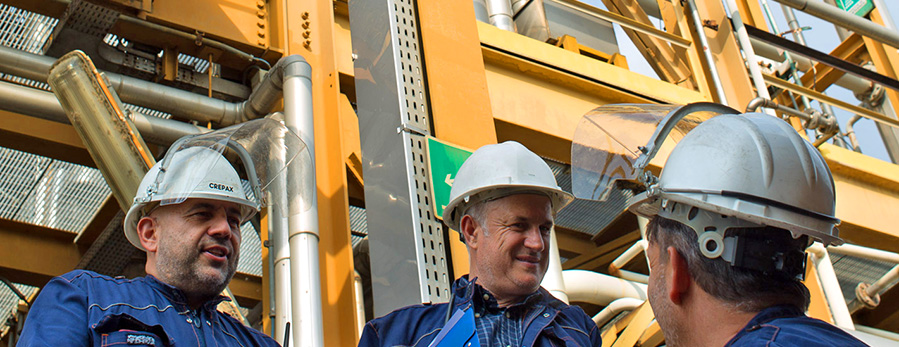
A joint effort, part of Natta’s alternating school-work programme, to achieve environmental management certification for the school (c) 2017 Radici Group
Care for the community and environmental sustainability, as well as collaboration, cross-influence, and transversal experiences between school and work: these are the key words guiding Giulio Natta Istituto Statale di Istruzione Superiore [State Institute of Higher Education] in Bergamo in its joint effort with RadiciGroup to obtain ISO 14001 Environmental Management Certification for the school.

Certifying a school’s environmental management system as part of the educational curriculum, with the training support of an ISO 14001 certified company of the Group, is an ambitious pioneering project launched for the first time by a public school of higher education in Italy. This new challenge, which is one of Istituto Natta’s ongoing high-profile collaborative projects with RadiciGroup for its school-work programme, provides both partners with the opportunity to expand their competencies and ideas on how to improve performance in their respective fields.

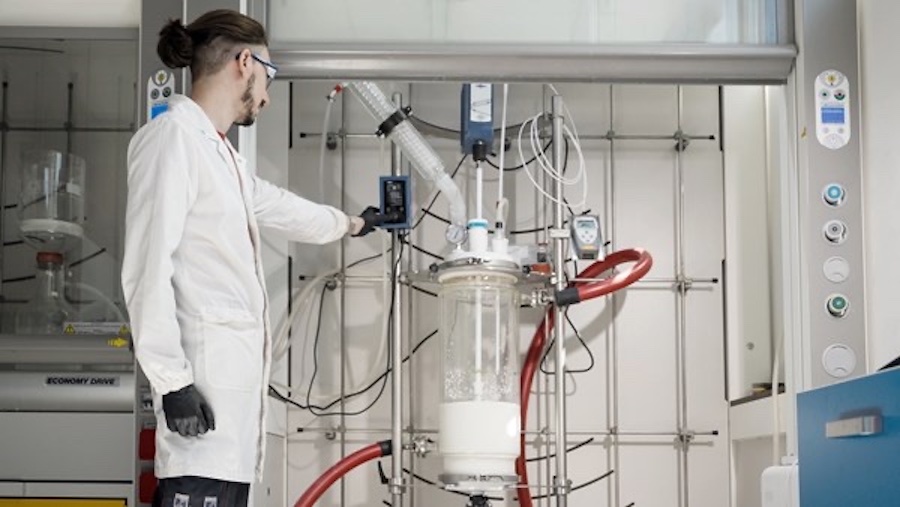
The first step of the initiative was taken a few months ago at the headquarters of Radici Novacips in Chignolo d’Isola (Bergamo - Italy), a Group company specializing in the production of various types of engineering plastics, materials used for numerous applications.

In this initial phase, Istituto Natta’s teachers and a number of RadiciGroup employees participated in training sessions focusing on risk assessment and related assessment tools, as provided for by the ISO 14001 standard.

In the next phases of the project, the teachers who attended the above training sessions will teach their acquired specific knowledge to selected third and fourth year classes (about eighty students) of the Liceo delle Scienze Applicate [Upper Secondary School of Applied Sciences] and the Istituto Biotecnologico Ambientale [Technical Upper Secondary School of Biotechnology and Environmental Sciences]. The training courses will cover all the activities and procedures required for the certification process.

During the training programme, which will last two years, the instructors and students actively engaged in the project will be assisted and supervised by an expert, who will ensure that the students learn the competencies required to operate in accordance with the ISO 14001 environmental standard. This standard is recognized and widely used by community- and environment-oriented companies.

“This project is a real opportunity for in-the-field school-company interaction, where different linguistic registers can give rise to a virtuous circle of information exchange, knowledge and experience, stressed Maria Amodeo, headmistress of Istituto Natta. The training programme has a cultural connotation congenial to the way we think of school.” 

Istituto Natta’s decision to pursue its environmental certification path with the aid of a company that is already certified and has long been engaged in reporting the environmental impact of its business activities provides the students with the opportunity to get acquainted with environmental issues using a methodology combining theory and practice. This will stimulate in-depth study and thinking, and, at the same time, open a window onto the real problems that a company faces day in day out.

RadiciGroup, for its part, has the chance to interact with students, understand tomorrow’s needs, and look at itself through students’ eyes: all vital aspects in building a constructive relationship with the community, besides ensuring the prosperity of the business.

“At RadiciGroup we think that relations with schools of all kinds and levels are of fundamental importance to the exchange of competence and knowledge, Roberta Beltrami, head of the RadiciGroup Education and Training Department, pointed out. We try to help young people to better understand which skills are more in demand in the labour market and we want to stimulate them – in particular students attending technical and scientific secondary schools – to consider innovation, research and sustainability from a win-win perspective.”
More News from Radici Partecipazioni SpA

#Recycled Fibers

Recycling mixed-fibre garments becomes a reality: RadiciGroup, The LYCRA Company and Triumph take circular fashion a step forward

The process, which is both economically and environmentally sustainable, has enabled the production of an underwear set made from 100% recycled nylon and LYCRA® fibre in a closed-loop system.

#Sustainability

RadiciGroup: 21st Sustainability Report published

RadiciGroup has published its 21st Sustainability Report, covering the year 2024, confirming more than two decades of transparency and measurement in the economic, environmental, and social dimensions. From its first Social Report in 2004 to the current reporting aligned with the GRI Universal Standards, the Group is now preparing for its next challenge: the adoption of the criteria that will be set out by the Corporate Sustainability Reporting Directive (CSRD).

#Recycling / Circular Economy

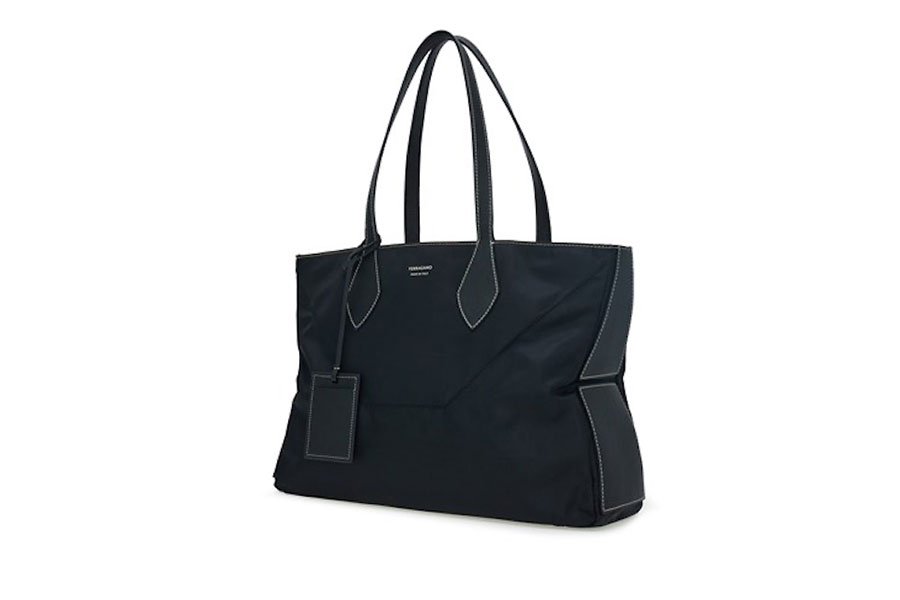
RadiciGroup and Ferragamo team up for an eco-design project under the Monitor for Circular Fashion initiative

RadiciGroup, a leading player in sustainable textile solutions, has partnered with Ferragamo to develop “Nova – The evolution of a Star”, an eco-design project that reimagines one of the Maison’s iconic handbags through the lens of circularity.

#Yarn & Fiber

Twenty years of Sustainability Report for RadiciGroup

The RadiciGroup Sustainability Report reaches an important milestone this year: twenty years have in fact passed since the Group published its first Social Report in 2004, qualifying it as one of the pioneering companies in the realisation of voluntary non-financial reporting. The document measures the Group’s achievements and the actions it has taken to reduce its environmental impact, respect social values, and implement good business management practices.

More News on Yarn & Fiber

#Yarns

Yarns and technologies in symbiosis: Biella Yarn presents Fall/Winter 2027/2028 collection “New Romance_”

Biella Yarn, the flat knitting brand of Suedwolle Group, launches new Fall/Winter 2027/2028 collection, inspired by the symbiosis of yarns and technologies – elements that blend, adapt and evolve together, forming something new without losing their origin. The name “Neu Romance_” reflects the emotional and neurological dimension of the yarns: a connection that engages the senses, experienced through material, touch and interaction. The collection is further brought to life through design collaborations, featuring selected yarns used in different design approaches.

#Recycling / Circular Economy

The textile industry in transition

Recycling, traceability, eco-design and digitalisation are among the key future challenges facing the European textile industry. The Erasmus+ project Skills4Circularity, involving 21 partners from twelve countries, is investigating the skills required to address these challenges. As the German industry partner, the Industry Association for Finishing – Yarns – Fabrics – Technical Textiles (IVGT) is bringing the industry’s perspective to the project.

#Research & Development

GenuTrace client advisory: Is your cotton supply chain UFLPA ready?

U.S. Customs and Border Protection has released updated operational guidance (CBP Publication No. 5560-0526) expanding its forced labor enforcement framework. The guidance supersedes the original 2022 UFLPA Operational Guidance and now covers all forced labor enforcement authorities — UFLPA, CAATSA, and WROs/Findings — in a single unified document. For cotton importers, the enforcement posture has not softened. It has become more structured, more documented, and more demanding. Learn more about UFLPA.

#Spinning

"We will become a recycling powerhouse"

The textile industry is now in its fourth consecutive year of crisis, while automation, artificial intelligence and recycling are reshaping the rules of the game. In this interview, Rieter CEO Thomas Oetterli discusses the first signs of a market recovery, reflects on his first three years at the helm of the company, explains the integration of Barmag, outlines Rieter’s vision of the fully automated spinning mill and highlights the strategic importance of recycling. In doing so, he explains why the new Rieter Group aims to play a leading role in transforming the textile value chain into a circular economy.

Latest News

#Research & Development

2026 general meeting of the Friends and Supporters of RWTH Aachen at ITA

The Friends and Supporters of RWTH Aachen e. V. (proRWTH) looked back on a successful year of support at their 2026 general meeting. The meeting took place at Institut für Textiltechnik (ITA) of RWTH Aachen and was combined with a joint session of the Executive Board and the Administrative Board. Before the general meeting began, participants were given a guided tour of ITA, providing them with fascinating insights into current research and development topics in textile engineering.

#Natural Fibers

Cashmere specialist joins AbTF Board of Trustees

The Aid by Trade Foundation (AbTF) is pleased to welcome Brian Yu, the chief executive officer of the Artwell Group, to its board of trustees. As CEO, Brian Yu developed Artwell into the world’s largest supplier of responsibly produced cashmere knitwear.

#Recycling / Circular Economy

HKRITA signs MoU with Jeanologia and Looptworks to establish the Green Machine Circular Textile Ecosystem

The Hong Kong Research Institute of Textiles and Apparel (HKRITA) yesterday officially signed a landmark Memorandum of Understanding (MoU) with two key global partners, Jeanologia and Looptworks, to establish the Green Machine Circular Textile Ecosystem – a first-of-its-kind collaboration to accelerate the large-scale recycling of blended textiles.

#Spinning

Object Carpet tests production of rPET BCF yarn on Neumag BCF line

In a joint project with Object Carpet GmbH, Denkendorf; the Institute for Textile Technology (ITA), Augsburg; and Next Generation Recyclingmaschinen GmbH (NGR), Feldkirchen, Austria, Barmag investigated the processing of recycled polyester for BCF yarn. The goal was to evaluate the fundamental suitability of 100% recycled carpet material for reuse in carpet yarn production to create a closed-loop system in carpet manufacturing. To date, commercial rPET BCF processes have been based solely on rPET from bottle pellets.

TOP