[pageLogInLogOut]

#Yarn & Fiber

Teijin Materials and Technologies to support World Solar Challenge

Teijin Aramid B.V. opening a new window, the core company of the Teijin Group's aramid business, announced today that its para-aramid fiber Twaron will be deployed in the solar-powered vehicles being developed by the KU Leuven and University of Michigan teams taking part in the Bridgestone World Solar Challenge, the world’s biggest solar car racing event, taking place in Australia from October 8 to 15.

Taking advantage of its advanced materials and processing technologies, the Teijin Group intends to further strengthen its ability to deliver innovative technological solutions in fields such as weight reduction and battery efficiency. It plans to do this in order to meet the expected growth in worldwide demand for electric vehicles (EV) leading up to the year 2040, by which time these are expected to become the default mode of transportation.

The KU Leuven team is using Twaron-based parts above the tracking box and in the driver safety canopy to allow the vehicle to send and receive electromagnetic signals, enabling more precise communication and the monitoring of signal transceivers. The University of Michigan team is using Twaron to reinforce the undercarriage of their vehicle, utilizing the material’s superior abrasion resistance and high strength-to-weight ratio. Toho Tenax America Opening a new window, the Teijin Group's US-based carbon fiber business, will be providing its TENAX carbon fiber to both teams.
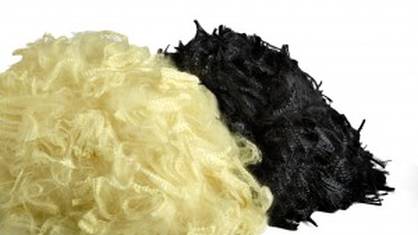
Twaron Staple Fiber (c) 2017 Teijin Group


In Japan, the Teijin Group supplies advanced high-performance materials and technologies to the Kogakuin University Solar Team; it also provides them with technical support in the areas of structural design, molding and on-the-spot backup during races. Ultra-lightweight fabric made with TENAX carbon fiber, Panlite polycarbonate (PC) resin and Technora para-aramid fiber prepreg are used to reduce the vehicle’s body weight.
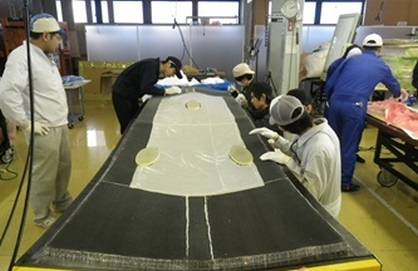
The Teijin Group is supplying the Kogakuin University Solar Team with a variety of high-performance materials (c) Teijin Group


V-Lap nonwoven polyester fabric used for seat cushions contributes to vehicle weight reduction as well as improving overall driver comfort. SOLOTEX polytrimethylene terephthalate (PTT) fiber is incorporated into the team’s uniforms providing excellent comfort and a close fit in what are often harsh race environments. NANOFRONT ultra-fine polyester fiber is used in the team’s driving gloves, improving steering wheel grip.

A bi-annual event, the Bridgestone World Solar Challenge was inaugurated in 1987, and this year’s race will be the 14th in the series. It is the world’s leading solar car racing event, regularly showcasing advanced, innovative solar power technologies.


More News from

#Research & Development

Networking Day 2026: Industry stakeholders unite around textile recycling

In 2026, the Industry Research Group (IRG) Polymer Recycling once again brought together some of the key stakeholders in textile recycling for its annual Networking Day. This year, the event took place at EREMA’s premises in Ansfelden, Austria. It brought together key players from across the textile recycling value chain for a day of structured exchange and in-depth discussions.

#Knitting & Hosiery

The new RDJ 7/3 defines the design footprint of modern athletic shoes

Stylish, functional, and efficient to produce – spacer fabrics are the all-arounders among textile materials. These versatile fabrics are particularly in demand in the sports and casual footwear sector, as they combine comfort, breathability, and design freedom. At the same time, this industry is trend-driven, dynamic, and price-sensitive like few others. Innovations are therefore a decisive factor for success. With the RDJ 7/3, KARL MAYER offers a solution specifically tailored to these requirements. The particular strength of the new double raschel machine: its exceptional flexibility, thanks to its three jacquard bars.

#Research & Development

Smart textiles reversibly change shape in an energy-efficient manner in response to ambient temperature

Self-actuating textile structures are used in a wide range of applications, such as medical technology, automation, architecture, agriculture, and the apparel industry. An example is the use of shading nets in greenhouses, which can be deployed and retracted depending on the sunlight intensity. The German Institutes of Textile and Fiber Research Denkendorf (DITF) are developing textiles based on shape-memory polymers with reversibly controllable geometry.

#Spinning

Barmag expands its portfolio for PA6/PA6.6 applications — also available as a retrofit solution

With the new type 6020 ceramic oiler, Barmag is introducing a powerful addition to its product portfolio for processing PA6 and PA6.6 yarns. The solution is specifically designed for low-titer applications in the range of 5 to 100 denier.

More News on Yarn & Fiber

#Man-Made Fibers

Sorona® and WGSN announce top bio-based material trends of 2027

Sorona®, the partially bio-based polymer from Covation Biomaterials (CovationBio™), and global trend forecasting authority WGSN today release the material trends shaping the textile industry through 2027 and beyond following a comprehensive examination of bio-based functional fiber applications and global data.

#Sustainability

The first widely accessible Life Cycle Assessment study for cashmere production published by Textile Exchange.

Crucial new data to better understand, measure, and address the impacts of cashmere production has been made available to the fashion, textile, and apparel industry through a new Life Cycle Assessment (LCA) published by Textile Exchange.

#Yarn & Fiber

R-Evenge chooses Q-NOVA® yarn by Fulgar for its line of technical socks dedicated to wellness

Q-NOVA®, Fulgar’s sustainable polyamide 6.6 yarn, has been selected by R-Evenge for the development of its collection of technical socks dedicated to wellness, fitness, and water-based activities.

#Yarns

Yarn Expo Shenzhen 2026 closes doors, advancing sustainable and innovative sourcing in South China

Yarn Expo Shenzhen 2026 served as a strategically positioned mid-year sourcing platform for the Greater Bay Area, highlighting Shenzhen’s role in connecting regional demand, supply and innovation exchange across the textile value chain. During the three-day fair, over 20,000 visits were drawn from 74 countries and regions[1], as exhibitors and buyers engaged with new developments in greener, performance-led, and value-added yarn and fibre solutions. Held in conjunction with Intertextile Shenzhen Apparel Fabrics and PH Value, the fair underscored the benefits of closer synergy and new materials across yarn, fabric and apparel platforms for the South China market.

Latest News

#Spinning

Pre-Cleaner CL-X: Proven in cotton cleaning – creating value beyond the spinning mill

Since its market launch, the CL-X has firmly established itself in blowroom lines worldwide. Hundreds of installations confirm its ability to deliver superior cleaning efficiency, lower waste, higher productivity and significant energy savings. Now, new customer applications show that the CL-X not only continues to excel in spinning preparation – it is also entering a completely new field of application: ginning.

#Natural Fibers

2026 ICAC report projects World cotton trade to reach 10.3 million tonnes by 2028/29

The International Cotton Advisory Committee has released the 2026 World Cotton Trade Report, which provides analysis of global cotton trade patterns, key trading relationships, import and export trends, and the geopolitical and policy developments shaping cotton trade flows.

#Digital Printing

Where every detail counts: Experiential applications of DTF and UV-DTF printing

Personalisation has moved far beyond the traditional logo on a t-shirt. Today, brands want to create complete experiences, where every detail – from clothing and accessories to décor and packaging – feels distinctive and reflective of their identity.

#Europe

The Digital Product Passport registry is now live

On 20 July, the European Commission launched the Digital Product Passport Registry together with a testing environment, marking an important milestone in making the Digital Product Passport (DPP) a practical reality for businesses placing products on the EU market.

TOP