[pageLogInLogOut]

#Sustainability

TE calls for papers for the 2017 Textile Sustainability Conference

Textile Exchange, the global nonprofit organization that works to make the textile industry more sustainable, is calling for papers for the 2017 Textile Sustainability Conference which will take place in Washington, D.C. from 9th to 13th October. This year' s conference motto is ‘United in Action: Catalyzing the Sustainable Development Goals in Textiles’.
Textile Exchange has committed to creating a target call to action for the textile industry around adopting the United Nation’s Sustainable Development Goals (UN-SDGs).  The SDG’s are a universal call to action to end poverty, protect the planet and ensure that all people enjoy peace and prosperity.

TE wants to catalyze the SDGs to create action and is working to ensure that companies have strategies to support the adoption of the SDGs for their organizations.  The adoption by its members and the industry of preferred fibers has the direct benefit of increasing biodiversity, reducing water pollutants, increasing food security, reducing poverty and indirect benefits on building resilient communities through increased economic benefits, gender equality and land use.  Consequently, this year’s Annual Conference is titled: United in Action: Catalyzing the Sustainable Development Goals in Textiles.

TE asks that any proposal interested people submit be specific as to the SDGs covered as well as consider the relevant key performance indicators published for that SDG so TE can work to incorporate those KPIs in their benchmarking work. Textile Exchange will review all submissions and determine which ones are appropriate for the 2017 Textile Sustainability Conference. They will send notifications on all submissions that are accepted by April 1 via email.

For more information about the SGDs and guidelines as well as submit a paper for the Textile Sustainability Conference 2017 please visit: http://textileexchange.org/2017-conference-call-for-papers/

More News from Textile Exchange

#Sustainability

Textile Exchange 2026: From sustainability commitments to industry-wide action

More than 1,300 participants and over 90 speakers gathered in Vancouver to discuss how the textile and apparel industry can move from planning to implementation, with a focus on resilient supply chains, circularity, regenerative agriculture and collaboration.

#Man-Made Fibers

Textile Exchange: reporting companies advance on preferred materials as global fiber production reaches new high

Companies participating in Textile Exchange’s Materials Benchmark increased their use of materials from preferred production systems in 2025, while global fiber production continued to grow and reached a record 139 million tonnes. The contrasting trends highlight both the potential for change at company level and the scale of the challenge facing the wider textile industry.

#Sustainability

Action Cohort: Textile Exchange’s new initiative designed to help scale preferred production systems

Textile Exchange has published new guidance to help brands and retailers participating in its Action Cohort prepare for upcoming reporting and target-setting requirements. Earlier this year, the organization evolved its membership to create more action-oriented pathways, designed to accelerate progress toward scaling preferred production systems that create beneficial impacts and resilient supply chains and livelihoods.

#Sustainability

New guidance to help organizations deliver the Material Matter Standard’s human rights commitments

Textile Exchange has published new guidance and tools to help organizations better understand and implement the human rights and livelihoods requirements of the forthcoming Materials Matter Standard.

More News on Sustainability

#Sustainability

Fashion for Good launches Project Footprints Unpacked to close environmental data gaps in the footwear industry

Fashion for Good has launched Project Footprints Unpacked, a joint effort with Carbonfact, New Balance, On and two other brands. The project aims to transform primary data from suppliers into ISO-compliant life cycle assessment (LCA) datasets to guide robust reporting and scalable decarbonisation decisions in the footwear value chain.

#Sustainability

Cascale adds more than 20 material options to the Higg MSI

Cascale announced version 3.13 of the Higg Material Sustainability Index (Higg MSI) on 12 November 2026. The update adds more than 20 material options from 10 data contributors and revises more than 20 existing datasets. It has been available on the Worldly platform since 11 November.

#Sustainability

Inside the Making at Ecomondo 2026: Textile supply chain calls for transparency and measurable sustainability

Transparency, verifiable environmental claims and closer cooperation across the textile value chain were the central themes of the “Inside the Making: The Power of the Process” panel at Ecomondo 2026 in Rimini. Representatives from denim and sportswear manufacturing, textile finishing, digital printing and branding discussed how technological innovation and supply chain collaboration can help companies meet new European regulatory requirements while making sustainability economically viable.

#Recycling / Circular Economy

H&M Foundation highlights economic barriers to scaling circular textile systems

Discussions at Textile Exchange 2026 underline the need for coordinated investment, reliable material flows and a fair distribution of costs and risks across the textile recycling value chain.

Latest News

#India ITME 2026

Groz-Beckert targets energy efficiency, productivity and process reliability across six textile technology sectors at India ITME 2026

At India ITME 2026 in Greater Noida from 4 to 9 December, Groz-Beckert will present its latest innovations across all six product areas – Knitting, Weaving, Nonwovens, Sewing, Tufting and Spinning. At Hall 14, Booth B6, the German textile technology specialist will showcase advanced components, systems, services and digital solutions designed to improve energy efficiency, productivity, process reliability and textile quality while addressing the increasingly diverse requirements of modern textile manufacturing.

#Knitting & Hosiery

Monarch extends its Woven Look knitting technology from mattress ticking to apparel and performance textiles

A fabric technology originally developed to reproduce the appearance of woven mattress ticking by Monarch Knitting Machinery, a member of the British Textile Machinery Association (BTMA), is finding new applications in apparel. With the introduction of its 36-gauge OD5B-M-7ED44 double-knit machine, Monarch is expanding the possibilities for producing fine knitted structures that closely resemble woven textiles while retaining the stretch and comfort associated with knitting.

#Textiles & Apparel / Garment

VIATT 2027 names Thailand as its inaugural Partner Country

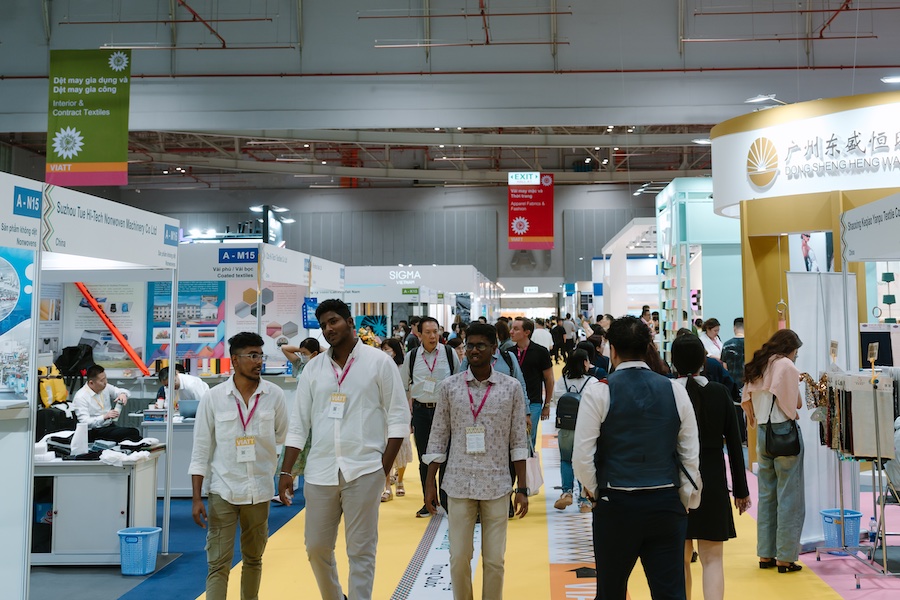
Thailand will take centre stage as the inaugural Partner Country at the Vietnam International Trade Fair for Apparel, Textiles and Textile Technologies (VIATT), returning to Ho Chi Minh City from 24 to 26 February 2027. Featuring a pavilion, dedicated product displays and various fringe events, the Partner Country programme will showcase Thailand’s textile and fashion capabilities, complementing an exhibitor line-up spanning VIATT’s three sectors. Alongside this new cooperation, eight additionally confirmed country and region pavilions and zones are set to strengthen the fair’s international offering.

#Recycling / Circular Economy

IVGT presents initial findings from the Erasmus+ project Skills4Circularity

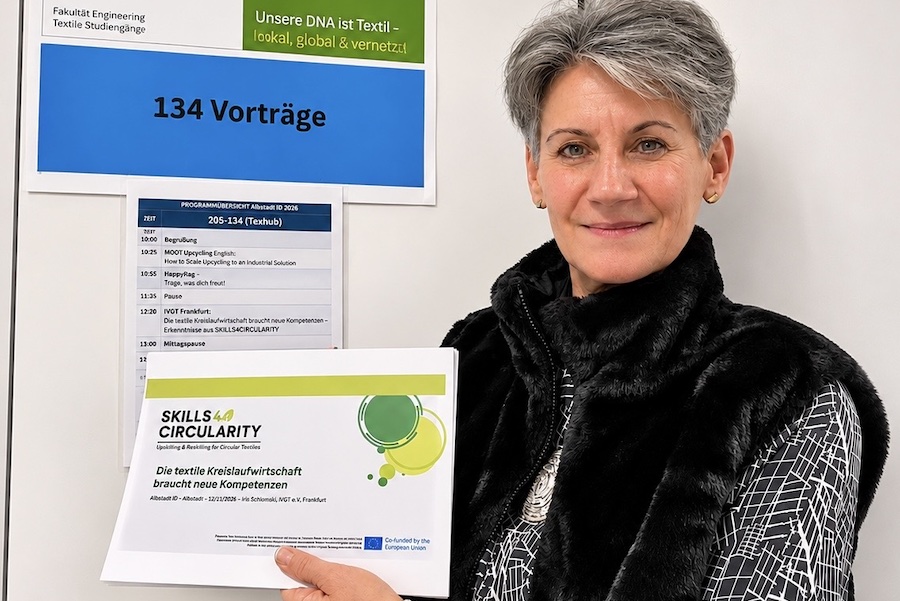
At Albstadt ID 2026, hosted by Albstadt-Sigmaringen University of Applied Sciences, IVGT project manager Iris Schlomski presented initial findings from Skills4Circularity on 12 November 2026. She opened her presentation with an estimate from the European Environment Agency: the EU generated around seven million tonnes of textile waste in 2022. The Erasmus+ project brings together 21 partners from twelve countries to identify the skills textile and clothing professionals need to design more durable products, use fewer resources in production and recover fibres after use.

TOP