


#Shanghaitex 2017
ShanghaiTex 2017 - Exploring market opportunities by latest textile applications
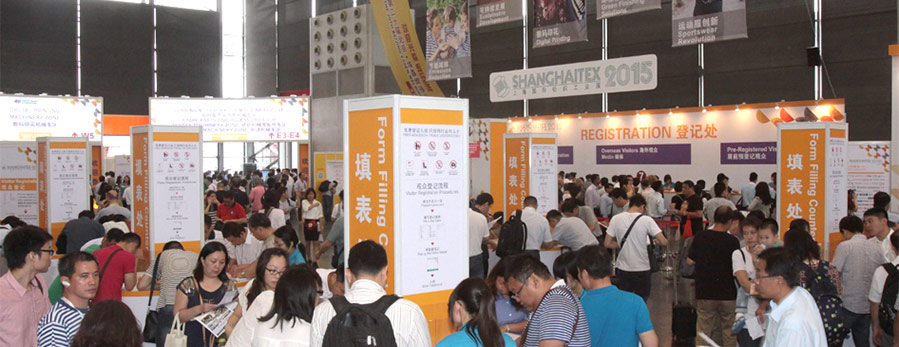
The 18th International Exhibition on Textile Industry (November 27-30, 2017@SNIEC, Pudong, Shanghai) focuses on the world's latest innovative textile technology and high-growth application sectors, aiming at assisting industry players to overcome challenges and make full use of these new applications to breathe new breakthroughs and values to textile industry.
Automotive and Industrial Textiles Asia is now the world's fastest growing region for automobile, where textiles are widely applied on automobile production such as seat cover, carpets, roof, heat/sound absorption materials, etc. As British Textile Intelligence predicts, the total volume of textiles per vehicle is expected to reach 35 kg in 2020. Therefore, huge market potential should be highlighted in automobile industry. Confronting the stricter requirement on technology, professionalism and customization from automobile manufacturer, ShanghaiTex 2017 will feature a "Technology for Automotive Textile" theme zone at E1 Hall which mainly demonstrates spinning, weaving, knitting, fiber, glass fiber, filtering material, etc. The show will focus on the latest fiber and technology with a wide range of production solutions to assist enterprises in industrial fabrics, automobile interiors, automobile parts, carpets, construction, electronics factory, etc. so as to grasp the opportunities in the high-growth market. Creative Knitting in Lifestyle Knitting technology is always evolving in accordance to our ever-changing lifestyle. Thus it penetrates our lives with evolving appearance, function and application. ShanghaiTex 2017 will explore the cutting-edge knitting technology and application from view of different lifestyles, stimulating innovation and inspiration among textile manufacturers.
People are now tending to pursue fitness and healthy lifestyles, which leads to the emerging technology of functional fiber processing with better elasticity, air permeability, and softness properties. These new technologies can not only enhance sports performance, but also combine function with fashion for more aesthetic perception. Furthermore, the revolutionary integration of electronics and textiles has made Smart Textiles a market heat. It is able to respond to changing environment, communicate, detect and bear other interactive features. ShanghaiTex 2017 will uncover the wisdom by bringing conductive fabrics and soft batteries under the spotlight for sportswear, sport shoes, fashion and wearable electronics enterprises. Green Printing, Dyeing and Finishing Facing the pressure of strict environmental policy, printing and dyeing industry is also keeping up the market pace. With high energy efficiency, precision and flexibility, digital printing developed rapidly and has made up many short comings of traditional printing technology. The "Printing, Dyeing and Finishing Machinery Zone" located at Hall W3/W4 will focus on the characteristics of short production cycle, low-volume and on-demand production of digital printing. In order to provide solutions on increasing design flexibility, inventory problems and lowering cost & manpower etc., ShanghaiTex 2017 will help textile and apparel enterprises stand out from the traditional inefficient printing industry. ShanghaiTex is sponsored by Shangtex Holding Co Ltd, China Council for the Promotion of International Trade Shanghai Sub-council and China Chamber of International Commerce Shanghai Chamber of Commerce; and is organized by Adsale Exhibition Services Ltd, Shanghai Textile Technology Service & Exhibition Co Ltd. and Shanghai International Exhibition Co Ltd.






