Weaving

2010-12-20

Karl Mayer: Good reasons for commercial success on the imitation leather and embroidery markets

The HKS 3-M is one of the most flexible, versatile machines in KARL MAYER’s product portfolio. This efficient, high-speed tricot machine features a specific knitting motion and special knitting elements, and can produce very fine as well as very chunky knitted constructions. This tricot machine can also work a wide range of different lappings and a variety of products. The product repertoire of this all-round production machine includes automotive textiles, as well as upholstery fabrics, sportswear, mosquito nets, cleaning textiles, fabrics for flags and banners, and coating carriers.
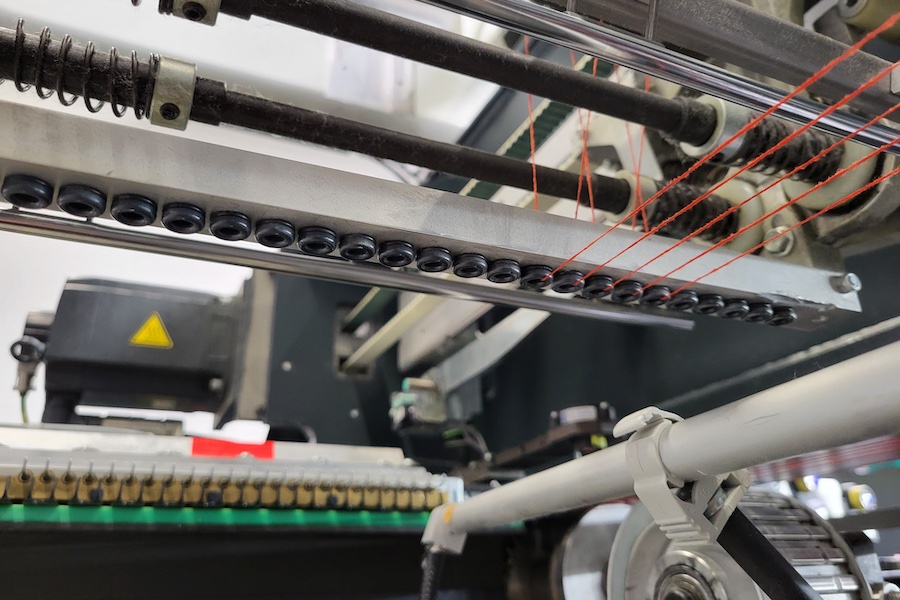
Huge surge in demand for the HKS 3-M, especially in India and China


New product developments are opening up a new end-use for the warp-knitted fabrics produced on the HKS 3-M, i.e. embroidery grounds.
These airy marquisette fabrics are particularly popular among Turkish net curtain manufacturers, especially since the last Heimtextil trade fair. In India, on the other hand, producers of saris are becoming increasingly interested in these warp-knitted textiles as carriers for decorative embroidery. This is further reinforced by the huge demand for the HKS 3-M as a result of the rapid growth of the Chinese artificial leather industry, where warp-knitted textiles are used as the backing substrates for PU or PVC coatings to produce animal hide effects.

Efficient production of dimensionally stable embroidery grounds
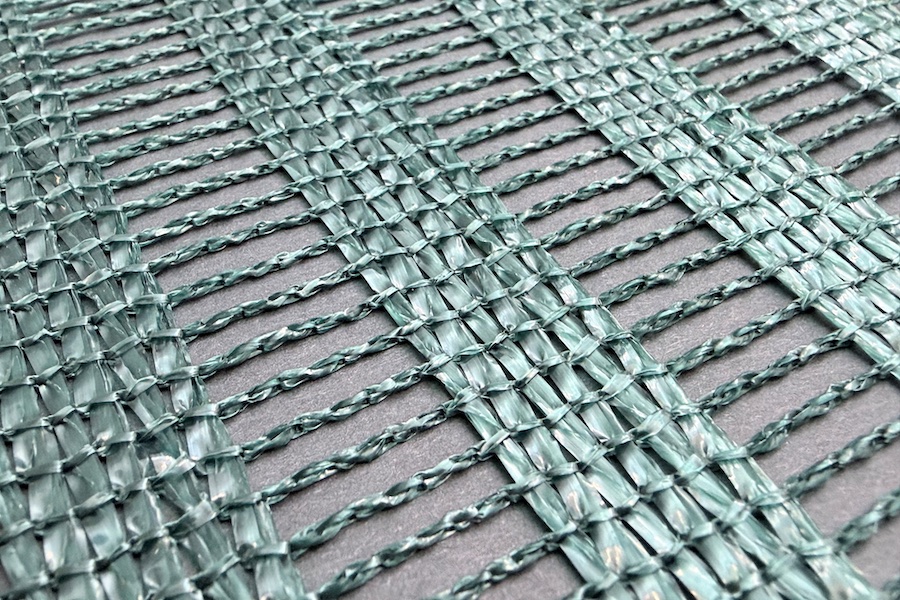
The HKS 3-M can produce high-quality, fine marquisette fabrics in a gauge of E 28 for use as embroidery grounds. The small openings in the textile mesh structure are absolutely symmetrical and produce a finished article with a neat appearance. The embroidery grounds produced on this tricot machine are also extremely slip-resistant and stable in the lengthwise and crosswise directions. These characteristics enable the embroidery process to be carried out at high speed. The reason for this exceptional processing performance is the special pattern design, which features a double weft and a pillar stitch lapping.
With their fine, dimensionally stable construction, the embroidery grounds produced on the HKS 3-M are becoming more and more established alongside the chunkier marquisette fabrics produced on the RSE series of machines, which is one of the machines that has been traditionally used until now. Compared to classic raschel-knitted textiles, this new machine offers two advantages in terms of its efficiency: at a working width of 130", its operating speed is almost 24% faster, and the investment outlay for buying the machine is also lower.

Coating carriers
One of the materials that has proved to be suitable for producing composite materials, such as artificial leather, is a warp-knitted construction featuring the ‘trainer’ lapping – a construction that has become established for producing tracksuits. This soft, weft-raised fabric is produced on an HKS 3-M with a width of 210" and a gauge of E 28. It is made from a blend of 100% textured and untextured polyester. Unlike warp-knitted fabrics that are used as apparel fabrics, this semi-technical textile has a lower stitch number and a modified yarn geometry. In this case, the change mainly relates to the position of the textured yarns. A relatively elastic fabric is produced which, as well as having excellent drapability, also has a soft handle and good resistance to tearing. These characteristics are not as important for furniture and clothing, but they are required for producing luggage, bags and shoes.

As far as storage articles, clothing and running/walking gear are concerned, the coating that produces the animal hide look is usually applied to the smooth side of the fabric. This enables the soft, pleasant handle to be fully exploited during use.
Special expertise is needed to apply the PU or PVC material to the warp-knitted textile, especially to control the shrinkage. The change in format of the textile, which is caused by the heat, can quickly lead to delamination – especially in conjunction with the surface of the polyester, which is smoother than that of viscose or cotton. However, shrinkage can be controlled by carrying out the finishing process correctly.
It is more advantageous to use polyester than cotton or viscose. The smooth outer side of the synthetic fibres creates a flat fabric surface without any protruding fibres, which normally have to be removed after raising by carrying out an additional shearing process.
The production of ‘trainer’ fabrics on the HKS 3-M is particularly beneficial. The warp-knitted coating substrate as a backing for imitation leather can be produced on the flexible tricot machine at an operating speed of 2,400 min-1, which is a unique level of efficiency. These factors have particularly impressed manufacturers in China, where the demand for the HKS-3M has been growing for several months.
Related News
Latest News Weaving

2012-05-16

2012-05-15

2012-05-15

2012-03-30

2012-03-29

More News from KARL MAYER Textilmaschinenfabrik GmbH

2012-05-15

2012-04-12

2012-04-11

2012-04-10

2012-04-10

Latest News

2012-05-16

2012-05-16

2012-05-16

2012-05-16

2012-05-16