[pageLogInLogOut]

#Yarn & Fiber

Killer Brand uses Sorona® in launch of sustainable yarn dyed shirting fabrics made with bio-based materials in a new format

© 2023 Killer Brand
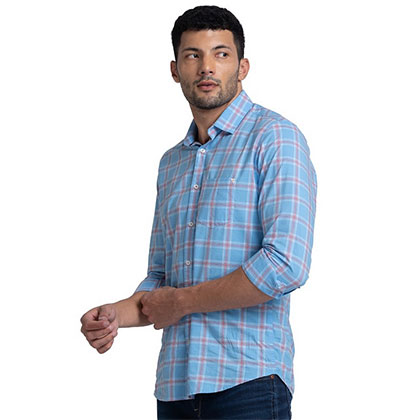
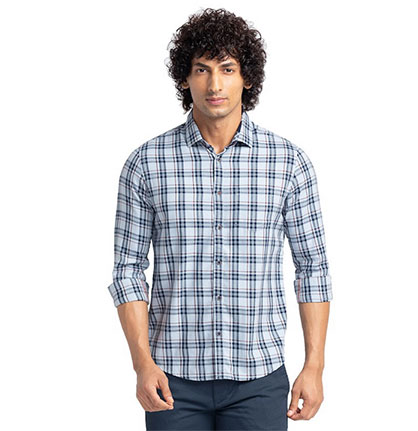
CovationBio, a leading global company offering bio-based solutions, announces the latest innovation from its bio-based polymer brand Sorona®, in collaboration with Killer (KKCL in National Stock Exchange, India), a young, trendy, vibrant fashion brand with an attitude. The release of this collection brings an innovation to the shirting world with Sorona® polymer treated in a hank dyeing process for the first time. The new application for shirting offers a two-way stretch with Sorona® polymer removing the need for spandex.

The collaboration between CovationBio and Killer combines cotton and Sorona® polymer to create a garment with exceptional comfort, moisture management, luxurious drape, and a superior hand feel in addition to vibrant color, and outstanding stretch and recovery. The new global collection expands the future of sustainable textiles in casual fashion, streamlining the method for dyeing Sorona® polymer and reducing the processing time for colored stretch fabrics made with Sorona® polymer.

Sorona® polymer, made from 37% annually renewable plant-based ingredients, offers a high-performing, responsibly sourced material option. Fibers made with Sorona® polymer are currently used in various apparel applications, including athleisure and athletic wear, insulation, swimwear, outerwear, suiting, faux fur, and more. Sorona® polymer is a USDA Certified Biobased Product, has earned Class 1 certification as an OEKO-TEX® STANDARD 100 product, and is bluesign® approved. 
© 2023 Killer Brand
© 2023 Killer Brand


“The traditional yarn dyed checked fabrics lack stretch and Sorona® polymer fills the void. While the yarn dyed concept is not new, Mr. Rakesh Basa, Technical Manager from the Killer team, challenged us to develop a process that would still work with Sorona® polymer. The excellent stretch and recovery displayed by the yarns must be maintained through the yarn dyeing and fabric development process. Working closely with our strategic value chain partners, we delivered this innovative solution to the Killer brand team who realized the potential to add an entirely new category to their shirting portfolio,” said Neelmani Verma, South Asia Mill Manager & Technology Specialist for CovationBio.

“At KKCL, we are driven by a strong desire to constantly keep pace with the newest trends that are attractive to Gen Z, our core customer segment, that values performance and style in equal measure. Shirting is a growing segment within our menswear portfolio. We chose Sorona® polymer as a key innovation to bring the elements of comfort, stretch, recovery, and moisture management. We believe in close customer engagement and have enabled that through these new garments that deliver both performance and sustainability. Our collaboration with the CovationBio team is an important step towards innovation that balances three key elements for our offerings – style, comfort, and fashion,” added Hemant Jain, Joint Managing Director, KKCL and Killer Brand Leader.


“Sorona® polymer in yarn dyed format is an innovation that simplifies the overall fabric processing and maintains and delivers superior performance and an additional degree of design freedom. The Killer brand team was looking at new ways to innovate in the arena of yarn dyed shirting. They realized fibers made with Sorona® polymer present a unique way to bring comfort and youthful vibrancy to their garments and express the spirit of what their brand stands for - freedom in movement that displays both style and substance. We were fortunate to work with the Killer brand who have a strong pulse of the needs of their customer and are pioneers in this space,” said Dr. Michael Saltzberg, CEO, CovationBio.
© 2023 Killer Brand
© 2023 Killer Brand


More News from CovationBio

More News on Yarn & Fiber

#Yarns

Yarn Expo Shenzhen 2026 closes doors, advancing sustainable and innovative sourcing in South China

Yarn Expo Shenzhen 2026 served as a strategically positioned mid-year sourcing platform for the Greater Bay Area, highlighting Shenzhen’s role in connecting regional demand, supply and innovation exchange across the textile value chain. During the three-day fair, over 20,000 visits were drawn from 74 countries and regions[1], as exhibitors and buyers engaged with new developments in greener, performance-led, and value-added yarn and fibre solutions. Held in conjunction with Intertextile Shenzhen Apparel Fabrics and PH Value, the fair underscored the benefits of closer synergy and new materials across yarn, fabric and apparel platforms for the South China market.

#Yarns

Yarns and technologies in symbiosis: Biella Yarn presents Fall/Winter 2027/2028 collection “New Romance_”

Biella Yarn, the flat knitting brand of Suedwolle Group, launches new Fall/Winter 2027/2028 collection, inspired by the symbiosis of yarns and technologies – elements that blend, adapt and evolve together, forming something new without losing their origin. The name “Neu Romance_” reflects the emotional and neurological dimension of the yarns: a connection that engages the senses, experienced through material, touch and interaction. The collection is further brought to life through design collaborations, featuring selected yarns used in different design approaches.

#Recycling / Circular Economy

The textile industry in transition

Recycling, traceability, eco-design and digitalisation are among the key future challenges facing the European textile industry. The Erasmus+ project Skills4Circularity, involving 21 partners from twelve countries, is investigating the skills required to address these challenges. As the German industry partner, the Industry Association for Finishing – Yarns – Fabrics – Technical Textiles (IVGT) is bringing the industry’s perspective to the project.

#Research & Development

GenuTrace client advisory: Is your cotton supply chain UFLPA ready?

U.S. Customs and Border Protection has released updated operational guidance (CBP Publication No. 5560-0526) expanding its forced labor enforcement framework. The guidance supersedes the original 2022 UFLPA Operational Guidance and now covers all forced labor enforcement authorities — UFLPA, CAATSA, and WROs/Findings — in a single unified document. For cotton importers, the enforcement posture has not softened. It has become more structured, more documented, and more demanding. Learn more about UFLPA.

Latest News

#Spinning

Ibrahim Fibres and Trützschler: A strong partnership enters its next phase with the TC 30Si

For more than two decades, Ibrahim Fibres and Trützschler have grown side by side, driven by a shared ambition to continuously improve spinning performance, strengthen technology leadership and set new benchmarks in the textile industry. Today, Ibrahim Fibres is a leading yarn and polyester staple fiber manufacturer in Pakistan. The company operates the largest number of Trützschler cards in the country, with more than 200 machines running across its mills in Faisalabad, and plays an important role in one of Asia’s largest textile industries.

#Digital Printing

USColorworks expands digital platform with Kornit Atlas MATRIX and Atlas MAX PLUS solutions

Kornit Digital Ltd. (NASDAQ: KRNT), a global pioneer in sustainable, on-demand digital fashion and textile production, today announced that USColorworks, a North Carolina-based apparel decoration and fulfillment company specializing in custom and on-demand printing for retail and promotional markets, has expanded its Kornit digital production platform with the addition of Atlas MATRIX and Atlas MAX PLUS systems to deliver high-quality, on-demand apparel across cotton, blended fabrics and polyester.

#Research & Development

Geotextiles made from recycled materials: GREEN leads the way into the industry

For the industry, recycled materials are creating new opportunities in geotextile production. In the GREEN project, the Fraunhofer Cluster of Excellence Circular Plastics Economy CCPE demonstrates that recycled polypro-pylene (PP), polyethylene terephthalate (PET), and high-density polyeth-ylene (HDPE) can be processed into nonwovens, fibers, and membranes that meet industrial requirements. This creates opportunities for use in existing production lines and new value chains in the geotextile market.

#Nonwoven machines

A Penteadora starts up ANDRITZ textile recycling and needlepunch nonwoven lines in Portugal

A Penteadora SA has successfully started up a complete mechanical textile recycling line and a needlepunch nonwoven line supplied by ANDRITZ at its production site in Unhais da Serra, Portugal. This investment enables A Penteadora to expand its industrial capabilities and develop a new generation of solutions based on pre- and post-consumer recycled textiles. The input materials originate from its own production waste and other textile waste streams. Both lines are fully operational, and the first products are expected to reach the market in July.

TOP