[pageLogInLogOut]
USTER Think Quality

#Yarn & Fiber

Wood-based alternative: Feminine hygiene fibres from Kelheim

Kelheim’s premium tampon fibre Galaxy® has proven effective in sanitary pads: It can substitute up to 70% of the synthetics in ADL (Acquisition-Distribution-Layers) in feminine hygiene pads. The amount of feminine hygiene waste is enormous – and often the time it takes for these products to degrade is hundreds of years longer than the lifespan of the woman who used it, because the synthetic components are not bio-degradable. Changing consumer behavior drives the need for environmentally friendly yet safe alternatives.

The viscose hygiene fibres from Kelheim offer significant ecologic advantages: they are made from cellulose, which means they are based on renewable wood and they are fully biodegradable.

These fibres are manufactured exclusively in Germany, in one of the most environmentally friendly plants worldwide.

Galaxy® in sanitary pads offers not only a benefit for the environment. Due to its excellent wicking and absorption capacity it conducts liquids quickly and efficiently away from the body and leaves a pleasant feeling on the skin – in other words, it does exactly what the ADL layer is made for. In addition, Galaxy® helps to distribute the liquid evenly in the absorbent core enhancing so the overall performance of the pad.


In comparison to other sustainable and conventional (synthetic) materials Galaxy® excels by

  •  faster acquisition?
  •  lower rewetting
  •  enhanced distribution.

“Plastic must disappear from these single-use products. The substitution of single synthetic components in sanitary pads is the first step”, says Dominik Mayer from the Bavarian fibre expert’s R&D team. “Down the road we want to offer a completely bio-based solution for sanitary pads and for various other hygiene applications.

Our advantage – besides the functionality of our patented Galaxy® fibre: Kelheim Fibres has been a renowned partner of the hygiene industry for decades; our production fulfils highest hygiene requirements. We offer our customers fibres that are ideally suited for the specific needs of their products and their processes.”




More News from Kelheim Fibres GmbH

#Man-Made Fibers

Kelheim Fibres GmbH informs about the closure of operations

The management of Kelheim Fibres GmbH informs that business operations will be terminated as of 31 March 2026. A continuation of the company beyond this date is not possible. The investor and sales process conducted within the framework of the self-administration did not lead to a positive outcome. The potential strategic investor who most recently entered the process has withdrawn from a potential investment at short notice.

#Man-Made Fibers

Investor withdrawal forces Kelheim Fibres to assess future operations

Kelheim Fibres GmbH has confirmed that the planned transaction within its ongoing self-administered insolvency proceedings has failed. The intended sale to the Munich-based LEO III Fund, advised by the DUBAG Group, could not be completed despite extensive efforts.

#Man-Made Fibers

Kelheim Fibres GmbH: Strategic Realignment and Acquisition by LEO III Fund

Kelheim Fibres GmbH has signed a notarial purchase agreement with Munich-based financial investor LEO III Fonds, exclusively advised by DUBAG Group, as part of its ongoing self-administered insolvency proceedings. The signing took place on November 5, 2025, with the completion of the transaction scheduled for January 1, 2026.

#Man-Made Fibers

Kelheim Fibres on track for the future

Kelheim Fibres GmbH, a global leader in specialty viscose fibre solutions, has successfully completed an internal restructuring and sharpened its focus on core product segments following its October 2024 insolvency filing. This has enabled the company to return to a sustainable business model, with a firm commitment to continue on this path.

More News on Yarn & Fiber

#India ITME 2026

Uster to present novel solutions at India ITME 2026

Tackling contamination is a critical quality target in yarn production – and Uster now enables spinners to make the right choices for optimized profitability, with top technology, precise data and integrated analysis across the entire process. The new Uster Contamination Control solution and latest Uster Vision Shield 3i put spinners in command of contaminant removal, ensuring yarn quality, minimizing waste and protecting profits. These exciting developments – and even more news – will be featured at India ITME 2026.

#Man-Made Fibers

Lenzing improves profitability as strategic transformation gains momentum

The Lenzing Group reported improved operating profitability in the first nine months of 2026 despite declining revenue and a challenging market environment. Revenue decreased by 2.3 percent to EUR 1.93 billion, while adjusted EBITDA remained stable at EUR 353 million. The adjusted EBITDA margin increased from 17.9 percent to 18.3 percent, reflecting progress in the company's strategic transformation under its “Grow Nonwovens. Reset Textiles.” strategy.

#Recycled Fibers

C&A and Zalando join Altag® Fiber Club to accelerate adoption of agricultural waste-based fibres

Fashion for Good and AltMat announced today that C&A and Zalando have joined the Altag® Fiber Club as its first brand signatories, marking a critical commercial milestone in the journey to mainstream adoption of next-generation fibres derived from agricultural waste.

#Man-Made Fibers

Kraig Biocraft Laboratories launches performance yarn development program based on spider silk

Kraig Biocraft Laboratories has launched a development program for high-performance yarns based on its recombinant spider silk technology. The initiative follows the company's first commercial shipment of a custom spider silk yarn to a performance apparel customer and includes the delivery of spider silk samples to a textile technology company with experience in aerospace-related material development.

Latest News

#Textile processing

Jeanologia combines digitalisation, laser and ozone technology to strengthen China’s textile competitiveness

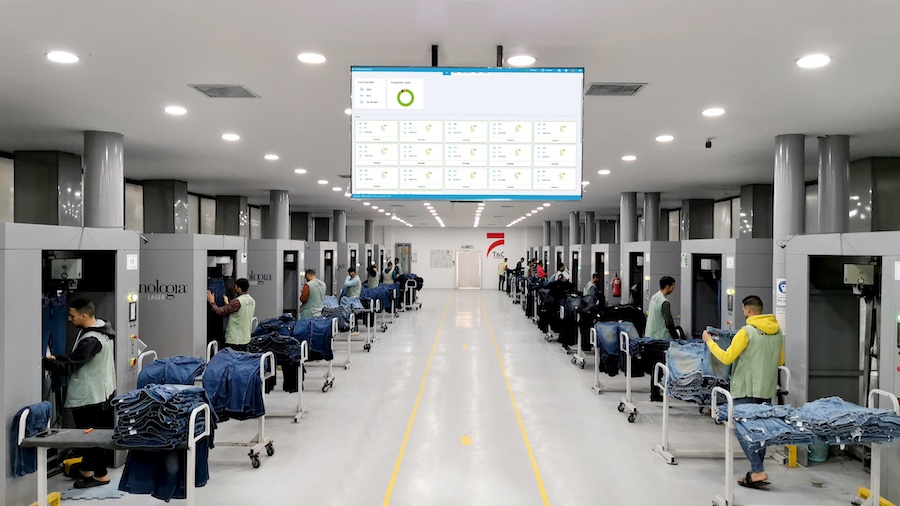
At ITMA Asia + CITME 2026 in Shanghai, Jeanologia showcased how the combination of digitalisation, laser technology and G2 Ozone can help China’s textile industry improve productivity, speed, quality and efficiency. With its Compact Super Flash laser system and integrated production concepts, the Spanish technology specialist demonstrated how connecting product development and industrial production can enable faster, more automated and sustainable manufacturing processes.

#Textile chemistry

Flame protection and OEKO-TEX® certification: Gulec Chemicals clears an important hurdle

Three halogen-free flame retardants from German specialist Gulec Chemicals have been included in the OEKO-TEX® list of accepted Active Chemical Products (ACP). The listing opens up additional opportunities for textile finishers, coaters and manufacturers of technical textiles seeking to combine demanding fire protection requirements with certification according to OEKO-TEX® STANDARD 100.

#Dyeing, Drying, Finishing

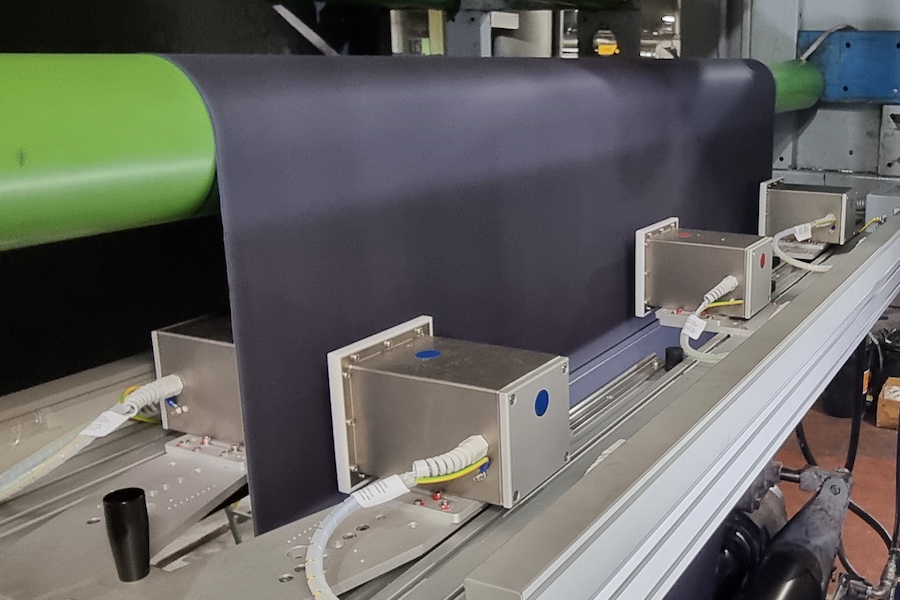
PLEVA improves dyeing consistency with inline microwave measurement of liquor pick-up

Consistent shades are essential in continuous textile dyeing. Yet variations in fabric absorbency or uneven padder pressure can go unnoticed until the end of the line. By then, hundreds of metres of fabric may already be affected and may become second-choice or rejected.

#Recycling / Circular Economy

DITF establishes CYCLOTEXUM recycling center to advance mechanical and solvent-based textile recycling

As part of the CYCLOTEXUM research project, the German Institutes of Textile and Fiber Research Denkendorf (DITF) established the CYCLOTEXUM recycling center. There, in collaboration with industry partners, the center develops application-oriented solutions for mechanical and solvent-based recycling processes. The technologies developed make a significant contribution along the textile value chain toward the efficient use of textile resources in the future and the transition of production in the German textile sector to a circular economy. The project was funded by the Ministry for the Environment, Climate and Energy Sector of the State of Baden-Württemberg.

TOP