[pageLogInLogOut]

#Techtextil 2019

Lenzing Innovation at Techtextil 2019: LENZING™ Lyocell fibers – plastic free for aquatic farming
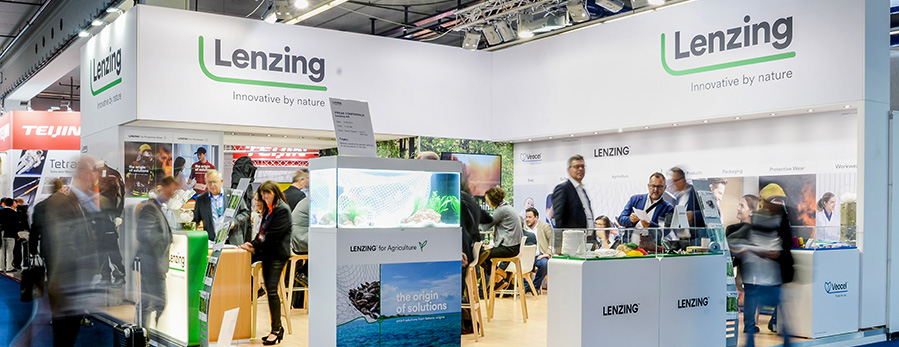
Lenzing booth (c) 2019 Lenzing
The Lenzing Group, world market leader in specialty fibers based on the renewable material wood, today introduced the botanic solution for marine application, in particular for aquatic farming, to the public at the Techtextil Frankurt Fair. The wood-based LENZINGTM branded lyocell fibers are used for the construction of ropes and nets in order to support the cultivation of marine cultures such as mollusks, mussels and edible seaweed to reduce plastic in the sea.

Plastic a serious problem for our marine environment

Annually, about 8 million metric tons of plastics end up in the ocean, resulting in an estimated 165 million tons of plastic debris, currently floating in the marine environment, threatening the health and safety of marine life. The loss of conventionally used synthetic fibers and plastics in the ocean accounts for 80 % of all marine pollution.1 This is not only dangerous for marine life but also for humans as we consume some of these micro plastics through our food. “The development of 100% wood based mussel nets with LENZING™ Lyocell fibers contribute to the reduction of the annual plastic quantity in marine environment”, says Marine Crnoja-Cosic, Head of Application Development New Business Areas.

LENZING™ Lyocell innovation for the marine industry

The Lenzing Group initiated a project in collaboration with two major partners, Sächsisches Textilforschungsinstitut e.V. (STFI) and FIUM GmbH & Co. KG – Institut für Fisch & Umwelt (FIUM) in order to develop a sustainable solution for the marine industry, which does not compromise mechanical performance. There are many different methods of using textile structures as a support for the growth of marine organisms. The important feature of the present invention is that the textile structure is made of wood-based cellulosic fibers. This gives the advantage that any of the textile structure which is released into the environment due to accident, storm damage, negligence or any other cause will degrade in a reasonable time and not leave non- degradable residues.
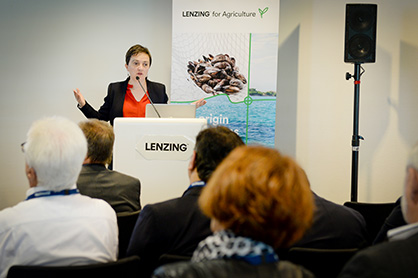
Press conference (c) 2019 Lenzing


Up to now, nylon and polypropylene are most commonly used for rope and net materials. Although these materials are durable and have a sufficient strength, they do not have a natural origin and are not marine biodegradable. They stay in the oceans for years. Nets and ropes consisting out of LENZING™ Lyocell fibers proved that they have sufficient strength to carry the weight of the growing cultures without breakage and have the big advantage of biodegradability in the oceans.


Proved by tests

The cooperation partner Sa?chsisches Textilforschungsinstitut e.V. constructed different prototypes and replicates out of LENZING™Lyocell fibers in March 2018. Thereafter, an initial underwater material test was started in the Baltic Sea. The prototypes were installed in 6 to 10 meters depth at an artificial reef platform in Rostock Nienhagen. The objective of the trial was to proof that marine applications produced out of LENZING™ Lyocell fibers can fulfill the key properties of conventional marine supports, which are sufficient strength to carry the weights of the growing cultures without breakage. Moreover, the trial should investigate if LENZING™ Lyocell fibers represent a pleasant environment for particular marine organisms and also proof the marine biodegradability after usage.
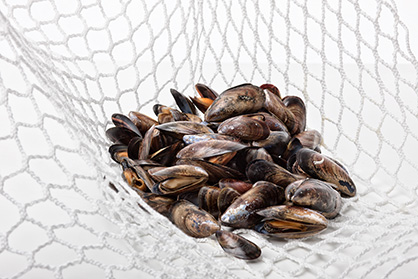
(c) 2019 Lenzing
(c) 2019 Lenzing


After four organized dives by our project partner FIUM, first test results were available. All LENZING™ Lyocell fibers represent an appealing growing material for marine organisms. Overall 14 different sea dwellers like blue mussels, crustaceans, echinoderms or snails adhered on the test material. First test results regarding performance and biodegradability were promising.2

Compostability and biodegradeability are key

Sustainability advantages in aquatic farming are particularly evident, given the fact that the material is being used directly in the oceanic eco system. LENZING™ Lyocell Standard fibers are certified as compostable and biodegradable under industrial, home, soil and also under marine conditions. If pieces of the nets break off, they will harmlessly decompose and have no influence on marine organisms. In order to close the sustainability loop, the nets can be composted after harvesting and processing.

Further developments

“This development brings sustainable solutions to aquatic farming encouraging Lenzing to assess and establish further steps towards commercialization, together with innovative value chain partners”, says Crnoja- Cosic. “Furthermore, future development will focus on optimizing the nets construction for more durable products broadening the scope of 100% Lyocell based marine nets in marine environment,” concludes Crnoja- Cosic. “.

More News from Lenzing

#Nonwovens

Lenzing Group highlights scalable, bio-based nonwovens solutions at leading global industry fairs

From CIDPEX in China to Techtextil in Frankfurt and INDEX in Geneva, the Lenzing Group showcases ready-for-market, bio-based nonwoven solutions and receives industry recognition for LENZING™ Nonwoven Technology.

#Yarn & Fiber

Lenzing AG appoints Georg Kasperkovitz as Chief Executive Officer

The Supervisory Board of Lenzing AG has appointed Georg Kasperkovitz, Member of the Management Board and Chief Operations Officer, as Chief Executive Officer (CEO) of Lenzing AG with effect from June 1, 2026.

#Denim

TENCEL™ Lyocell - HV100 achieves global denim availability in six months; Vol. 2 debuts at Kingpins Amsterdam

When TENCEL™ Lyocell - HV100 debuted at last year’s Kingpins Amsterdam in October, 17 mill partners across five countries presented fabrics featuring the new fiber. Just six months on, participation has more than doubled, evolving into a global network that spans nine countries and four continents, signaling both strong industry momentum and growing demand.

#Techtextil 2026

Lenzing unveils three-tier cellulosic fiber portfolio for next generation protective wear

The Lenzing Group, a leading supplier of regenerated cellulosic fibers for the textile and nonwovens industries, today introduces Lenzing Solutions for Protective Wear. This integrated three-tier portfolio is anchored by LENZING™ FR fibers at the highest protection tier for inherent flame resistance and brings together complementary solutions including TENCEL™ Lyocell fibers, both EU Ecolabel-certified² and derived from certified or controlled wood sources³, within a unified protective wear architecture for the first time. The launch marks the most significant expansion of Lenzing’s protective wear business since the company pioneered inherently flame-resistant cellulosic fiber in 1977, and comes as the global personal protective equipment (PPE) market accelerates toward an estimated USD 130 billion by 2033⁴.

More News on Techtextil 2019

Latest News

#Composites

JEC Forum Southeast Asia 2026 highlights Taiwan as a strategic hub for the global composites industry

The third edition of JEC Forum organized in Southeast Asia brought together 350+ participants from 22 countries for three active days of high-level Business Meetings, conferences, and networking, emphasizing Southeast Asia’s growing role in the global composites market. Held for the first time in Taipei from 23 to 24 June 2026, following the successful first editions in Bangkok, JEC Forum Southeast Asia 2026 confirmed its position as the region’s leading business platform dedicated to the composites industry.

#Recycling / Circular Economy

New skills for a circular textile economy

Based on the results of a comprehensive analysis, the Erasmus+ project Skills4Circularity is developing three practical training modules covering recycling technologies, eco-design for the circular economy and sustainable manufacturing. The content of the first module, Recycling Technologies, has now been developed and validated together with industry representatives. The module provides participants with knowledge of regulatory requirements, material sorting and the preparation of textile waste for recycling.

#Nonwovens

EDANA announces five new board members following 2026 Annual General Meeting

The EDANA Board of Governors is elected or re-elected at the Annual General Meeting by the member companies. The Governors are senior executives (business leaders) from member companies, based in different countries and representing different sectors of the nonwovens industry. The Board has central responsibility for guiding EDANA's overall strategy and approving its policies and priorities. It meets three times a year.

#Nonwoven machines

DiloGroup - Complete nonwoven needling line for hygiene materials in the United States

DiloGroup has received an order for a complete needling line designed for the production of hygiene materials in the United States. This project further strengthens our position in the American hygiene sector and reflects the continued demand for reliable, high-performance nonwoven equipment.

TOP