[pageLogInLogOut]

#Textiles & Apparel / Garment

2021 Integral Conversation held successfully, Esquel makes net zero pledge
© 2021 Esquel
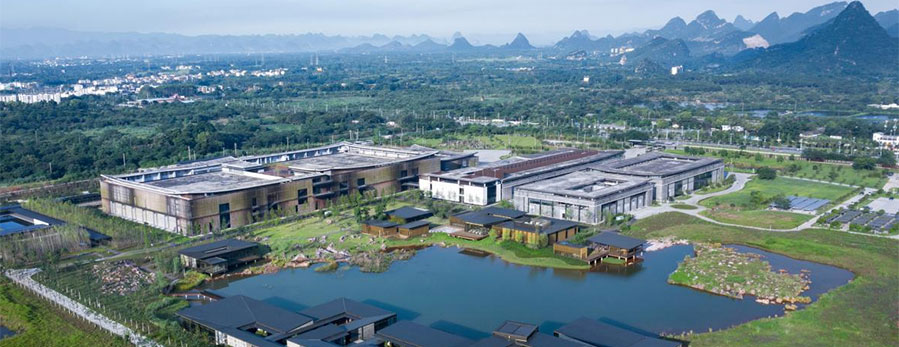
2021 Integral Conversation was held successfully on November 12. At the meeting, Esquel Group CEO Edgar Tung announced the Group’s net zero pledge to achieve net zero greenhouse emissions in 2050, and to cut emissions in half by 2035.

More than 14 distinguished speakers exchanged their insights in the 2021 Integral Conversation event, coming from different fields all over the world to discuss in-depth the risks and opportunities brought by the COVID-19 pandemic. The conference discussed the evolution of eco-tourism and cultural exchanges, obstacles and accelerators on the path to carbon neutrality, and how governments, enterprises and individuals can contribute to the steady recovery of the economy and a greener future along the long and rugged road to economic recovery. 

Esquel’s commitment to net zero emissions represents the determination of the Group’s top management, which is supervised and monitored by the Group’s Sustainability Council led by non-executive directors. 

Tung said that Esquel has been making significant progress in reducing emissions by optimizing operations and management, ensuring responsible material consumption, and prioritizing the use of clean energy. He added, “a Esquel, alongside governments and other multinational companies, we know that we have a role to play, or more precisely, a responsibility to shoulder when it comes to greenhouse gas emissions.” 


To learn more about Esquel’s pledge to net zero, please visit Esquel’s sustainability webpage:

https://www.esquel.com/sustainability

For the latest information about Integral Conversation, please visit the 2021 Integral Conversation website:

https://www.integral-conversation.com/?lang=en


More News from TEXDATA International

#Texprocess 2026

Texprocess 2026: Automation, digitalisation and AI redefine textile processing

Making investment decisions in textile processing has become significantly more demanding. Increasing energy costs, a shortage of skilled labour and ongoing geopolitical uncertainties are compelling companies to focus on technologies that deliver clear gains in efficiency and process reliability. This applies equally to apparel manufacturing and to the processing of technical textiles and high-performance materials. As a result, modernisation initiatives are assessed more carefully – even as the need to upgrade production systems continues to intensify.

#Techtextil 2026

Techtextil 2026: Between innovation pressure & market reality

From 21 to 24 April 2026, Techtextil in Frankfurt am Main will once again become the central meeting point for the international technical textiles and nonwovens industry. Running in parallel, Texprocess will focus on the industrial implementation of textile processing technologies as the leading platform in this field. Together, the two trade fairs form a closely integrated presentation and working platform along the entire textile value chain – from material development to finished applications.

#Techtextil 2026

Between geopolitical pressure and industrial resilience

In this interview, Dr. Janpeter Horn (VDMA) discusses the current challenges facing textile machinery manufacturers, shaped by geopolitical tensions, regulatory developments and subdued investment. He also outlines why innovation strength, integrated solutions and strategic positioning remain key to global competitiveness.

#Texprocess 2026

Between investment restraint and modernization pressure

Texprocess 2026 takes place in a complex market environment shaped by uncertainty and innovation pressure. In this interview, Elgar Straub (VDMA) explains why the trade fair is particularly relevant this year and which technologies are driving efficiency and competitiveness.

More News on Textiles & Apparel / Garment

#Textiles & Apparel / Garment

Texhibition Istanbul signals stability and global connectivity

From 4 to 6 March 2026, Texhibition Istanbul once again brought together the international textile industry at the Istanbul Expo Center. Organized by İTKİB Fuarcılık A.Ş. in cooperation with the Istanbul Textile Exporters Association (İTHİB), the fair confirmed its role as one of the most important international sourcing platforms for fabrics and textile innovation. With 500+ exhibitors across 5 halls on 42,850 sqm, the trade fair attracted 19,325 visitors. Among them, 5.565 international visitors represented Europe, Asia, the Middle East, North Africa, North America, and other regions, underlining the show’s expanding global reach.

#Textiles & Apparel / Garment

Val:ue Milan unveiled – a curated boutique business hub for high-end apparel textiles

Messe Frankfurt continues to expand its international textile network with the announcement of Val:ue Milan. Moving beyond the traditional trade fair model, Val:ue Milan debuts as a prestigious, boutique-style business hub exclusively dedicated to elected fabrics and accessories for apparel. Taking place from February 3 to 5, 2027, at The Mall in Porta Nuova, the event breaks away from conventional formats through a strictly curated environment designed for strategic networking. By bridging the gap between high-end international manufacturers and top-tier segment buyers, Val:ue Milan further strengthens the Group’s global portfolio with a unique, high-impact concept built around a refined and carefully selected offering.

#Recycling / Circular Economy

Solving the Feedstock Gap: Unlocking Post-consumer Feedstocks for Textile-to-Textile Recycling in Europe

Fashion for Good launches Project FAE (Feedstock Activation Europe) to develop the sorting and pre-processing infrastructure needed to channel non-rewearable post-consumer textiles into textile-to-textile (T2T) recycling at scale. The project is a practical response to one of the most pressing problems in textile circularity: making post-consumer waste a viable, commercially competitive raw material for recyclers.

#Sustainability

Practical toolkit to drive coordinated climate action launched

An open-access workshop toolkit enables brands, suppliers, policymakers and investors across the textile industry to apply the System Map in their own work, identifying leverage points to halve emissions and enable a just transition.

Latest News

TOP