[pageLogInLogOut]

#Textiles & Apparel / Garment

Offerings for consumers for the first time in B2C2B hall
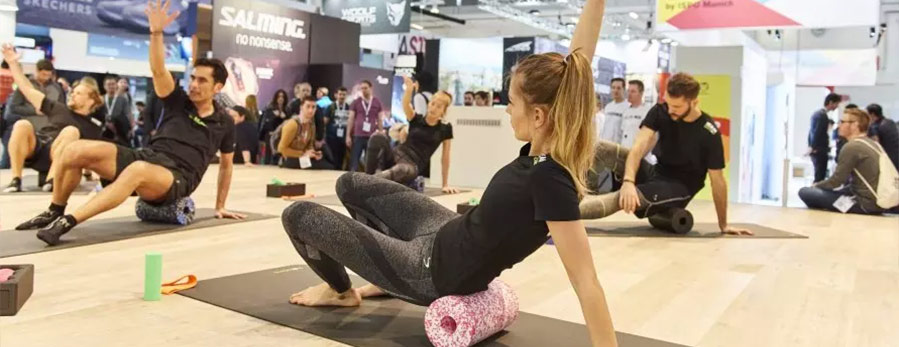
Health and Fitness are playing an important role in ISPO Munich / Image credit: ISPO.com
From January 23 to 26, 2022, ISPO Munich, the world’s biggest multi-segment trade fair in sports business, will be back at the Messe München exhibition grounds as an in-person event and with new additions to the concept. Alongside the new Experience Hall focusing on conference/learning, supplementary offerings for consumers will also be integrated for the first time in ISPO Munich’s history in a B2C2B hall.

Tobias Gröber, Executive Director Business Unit Consumer Goods, explains the background: “The coronavirus pandemic significantly further accelerated the change in the sports market that has already been emerging for a number of years. We are reflecting this trend in the best way possible with the new concepts and offerings, both in the traditional B2B area and in the new B2C area.”

That means the Experience Hall will be focusing on the megatrends in the sector, such as sustainability and digitalization, in the context of a conference stage and with exhibition areas. The emphasis here will be on conference/learning; the offering in this segment is aimed especially at the typical B2B target group of ISPO.

ISPO Munich2022 presents expanded concept / Image credit: ISPO.com


The new B2C2B hall is being set up under the name “Collaborators Zone” as a partly separate area of ISPO Munich for specifically activating and integrating consumers. Here, consumer experts and (micro-)influencers from the Collaborators Club of the ISPO Group – a further development of the ISPO Open Innovation platform – will encounter brands and customers with a strong B2C focus.


The Collaborators Zone isn’t designed as a classic trade fair hall, but focuses instead on interaction. Entertainment, infotainment, moving topics and test opportunities for trends and products provide the framework and ensure a lively exchange between brands and the influential consumers. The concept is not just interesting for sporting goods manufacturers, but is also ideal for all organizations related to sport and lifestyle, the outdoors and experiences, or fitness and health – from the retailer with a clearly defined area of expertise to the right food producer. Although the exhibitors in this area can present special editions for the first time or offer exclusive sales drops, direct selling of products will not be possible. “Here, we will encounter the kind of consumers who are shaping the sport of tomorrow and spreading it to the world,” says Gröber. “For our B2C-oriented customers, this hall offers an ideal presentation space for entering into dialog with the highly active consumers who act as experts for their field in the industry, and setting trends together.” Gröber stresses: “The new offerings are a logical strategic expansion of the concept. The classic, specialized B2B area at ISPO Munich, in which exhibitors present their products and innovations in the familiar halls to international retailers and experts from around the world, continues to account for the lion’s share of the event.”

More information on ISPO and the various participation opportunities for brands and exhibitors can be found at https://www.ispo.com/en/munich/exhibitors/application



More News from TEXDATA International

#Techtextil 2026

Performance Apparels: Functional textiles drive innovation at Techtextil 2026

From high-performance fibres and advanced membranes to smart textiles and sustainable material concepts – functional apparel is becoming one of the most dynamic innovation fields in technical textiles. At Techtextil 2026, exhibitors demonstrate how new materials, finishing technologies and digital functions are shaping the next generation of protective, workwear and outdoor systems.

#Texprocess 2026

Texprocess 2026: Automation, digitalisation and AI reshape textile processing

Investment decisions in textile processing have become increasingly complex. Rising energy prices, labour shortages and geopolitical uncertainties are forcing companies to prioritise technologies that deliver measurable improvements in efficiency and process stability. This applies not only to apparel production, but also to the processing of technical textiles and high-performance materials. Modernisation projects are therefore being evaluated more selectively – but the pressure to upgrade production systems continues to grow. Texprocess 2026 reflects this tension between cautious investment behaviour and increasing technological demand.

#Techtextil 2026

Textile Chemicals & Dyes: Innovation in Textile Chemistry moves into focus at Techtextil 2026

From PFAS-free finishes and water-saving dyeing technologies to advanced coatings and recycling-compatible formulations, innovation in textile chemistry is accelerating across the industry. Reflecting this development, Techtextil 2026 introduces Textile Chemicals & Dyes as a dedicated product segment, highlighting the growing role of chemical solutions in shaping the next generation of technical textiles.

#Recycling / Circular Economy

textile.4U publishes special edition “Top 100 Textile Recycling Companies 2025”

With a comprehensive 176-page special edition, textile.4U is dedicating its latest issue entirely to one of the most dynamic and influential topics in today’s textile industry: textile recycling. The new issue, published exclusively in high-quality print, presents the Top 100 textile recycling companies researched and selected by TexData – organizations that already play a key role in the transition to circular textiles or are expected to have a significant impact in the near future.

More News on Textiles & Apparel / Garment

#Sustainability

Practical toolkit to drive coordinated climate action launched

An open-access workshop toolkit enables brands, suppliers, policymakers and investors across the textile industry to apply the System Map in their own work, identifying leverage points to halve emissions and enable a just transition.

#Textiles & Apparel / Garment

YKK launches “YZiP® Light” aluminum alloy zipper for cotton pants

YKK Corporation (Headquarters: Chiyoda-ku, Tokyo; President: Koichi Matsushima; hereafter, YKK) has launched YZiP® Light, a lightweight aluminum alloy zipper for cotton pants, with sales beginning in late March. The introduction of YZiP® Light expands YKK’s zipper portfolio—led by the flagship YZiP® copper alloy zipper—providing customers with greater flexibility to meet diverse garment needs.

#Textiles & Apparel / Garment

Coats to showcase innovative reinforcement and filler materials for leather goods and accessories at APLF 2026

Coats, a world-class Tier 2 manufacturer and trusted partner for the apparel and footwear industries, will be promoting four advanced materials from its ‘Lifestyle Solutions’ portfolio at APLF 2026 in Hong Kong in March. Each innovation has been specifically engineered to help luxury and premium brands elevate the craft, durability, sustainability and creative expression required in the manufacturing of handbags, purses, and other high-end designer accessories.

#Textiles & Apparel / Garment

Design, innovation and sustainability propel VIATT 2026’s expanding role in ASEAN textile sourcing

At its third edition, the Vietnam International Trade Fair for Apparel, Textiles, and Textile Technologies (VIATT) further reinforced its role as a key sourcing and business platform for ASEAN’s textile industry. The three-day fair welcomed over 17,000 visits from 54 countries and regions, and featured over 460 exhibitors from 21 countries and regions across 18,000 sqm. The 2026 edition was marked by the introduction of new international pavilions and zones, broadening the fair’s sourcing scope across new geographies and product categories. The fringe programme, headlined by the debut Trend Forum, further distinguished VIATT as the region’s most integrated textile trade platform – uniquely spanning the entire value chain.

Latest News

#Composites

KARL MAYER strengthens partnerships in the composites industry at JEC World 2026

KARL MAYER further strengthened its role as a reliable and competent partner to the composites industry at JEC World 2026. The global market leader in textile machinery manufacturing used the trade show to meet key customers, establish numerous new contacts, and engage in in-depth technical discussions.

#Recycling / Circular Economy

ABB and Syre partner to explore technologies for industrial-scale textile recycling

ABB has signed a Memorandum of Understanding (MoU) with Swedish textile impact company Syre to jointly explore technologies to support the development of Syre’s first textile-to-textile recycling plant in Vietnam. The agreement establishes a framework for collaboration to investigate how ABB’s automation, electrification and digital technologies could contribute to safe, efficient and scalable operations. It will also explore how these capabilities could further optimize process and quality control performance as Syre advances its ambition to produce circular polyester at industrial scale.

#Techtextil 2026

From Nature Performance to Circular Economy: Techtextil 2026 focuses on the future market for technical textiles

Alternative materials and recycling technologies are one of the most important future segments and drivers of innovation in technical textiles. Sustainability goals and regulatory requirements increase their relevance, while advances in performance and economic viability enhance their market competitiveness. Taking place from 21 to 24 April 2026, Techtextil reflects this key industry trend with a growing number of specialised exhibitors. With the new “Nature Performance” label, the leading global trade fair bundles relevant market offerings and facilitates access to new solutions – from natural fibres and yarns to bio-based materials and circular approaches.

#Research & Development

Textile cascade filter for removing microplastics from wastewater

Microplastics are now found almost everywhere, even in remote regions of Antarctica. They enter the human body through the food chain. Studies indicate that microplastics may have negative effects on the human health.

TOP