[pageLogInLogOut]

#Textiles & Apparel / Garment

Columbia sportswear launches omni-heat black dot, an industry-first warming technology

Today Columbia Sportswear (Nasdaq: COLM), a leading innovator across apparel and footwear, is launching its new Omni-Heat Black Dot technology, the outdoor industry’s first external thermal shield built to protect from the cold. This new textile acts as a heat magnet, featuring thousands of multilayered black dots that capture solar heat and trap warmth to keep people warmer in cold weather.

Combined with Columbia’s Omni-Heat 3D thermal-reflective lining, the new collection of men’s and women’s Omni-Heat Black Dot jackets is Columbia’s most advanced solution for fighting the cold this winter. These cutting-edge jackets are available at https://www.columbia.com/tech-reflective/ and select retail locations. 

Known as a Heat Magnet, Latest Innovation Expands Columbia’s Technology Portfolio

The patent-pending Omni-Heat Black Dot technology features thousands of black dots on the exterior designed to help people warm smarter. Each multilayered dot is made of aluminum and covered with a black coating to enhance heat absorption from scattered or direct sunlight. Extensive laboratory and field testing shows that the jacket heats up quickly and holds that heat longer than jackets without this new technology. 

© 2020 Columbia Sportswear


Columbia’s Omni-Heat Black Dot material represents a culmination of warming innovations that began with the introduction of Omni-Heat Reflective lining, a revolutionary approach to lightweight insulation that is celebrating its 10-year anniversary. The reflective qualities of Omni-Heat aluminum dots bounce back the body’s radiant heat, similar to a breathable space blanket. In 2018, Columbia introduced its enhanced Omni-Heat 3D technology, which features small pods of vertically oriented fuzzy fibers on top of the reflective material to add more heat retention properties. Today’s launch of the Omni-Heat Black Dot technology is yet another technical leap forward and incorporates a new approach to fighting the cold.

“To maximize a shell fabric’s heat retention, we looked closely at low-emissivity windows that rely on a thin layer of metal on the glass,” said Haskell Beckham, PhD, Columbia’s Sr. Director of Apparel Innovation. “We’d never seen insulation placed on the outer layer of a jacket before, and we’ve been extremely impressed with the heat absorption and retention performance throughout our testing in the laboratory and in frigid climates around the world.”


In its inaugural season, Columbia is offering three cutting edge Omni-Heat Black Dot jacket styles, for a total of six models across men’s and women’s collections. Combined with Columbia’s award-winning Omni-Heat 3D lining and high performance insulation, these Omni-Heat Black Dot jackets represent Columbia’s most advanced system for cold weather:

Dawn Watch Black Dot Jacket – The Dawn Watch Black Dot Jacket has a trio of Columbia technologies designed for ultimate warmth, including an Omni-Heat Black Dot outer layer, advanced thermal-reflective Omni-Heat 3D lining, and Omni-Heat Stretch Insulation. It’s built for mother nature’s coldest days and retails for $350.

Barrett Spur Black Dot Parka – Columbia’s most luxe Black Dot style offers 700 fill-power responsibly sourced down and a plush faux fur trim. The Barrett Spur features a full suite of Columbia technologies including an Omni-Heat Black Dot, advanced thermal-reflective Omni-Heat 3D lining, and Omni-Heat Stretch Insulation. It’s a premium parka designed for maximum warmth and protection and retails for $600.

Three Forks Black Dot Jacket – The Three Forks Black Dot Jacket features a combination of cold-defeating technologies, including a heat-capturing Omni-Heat Black Dot exterior, advanced thermal-reflective Omni-Heat 3D lining, and the enhanced warmth and flexible comfort of Omni-Heat Stretch Insulation. Available later this fall, it will retail for $280.

For more information on Omni-Heat Black Dot technology, visit http://Columbia.com and join the conversation by following @columbia1938 on Twitter and Instagram, and @ColumbiaSportswear on Facebook.


© 2020 Columbia Sportswear


More News from TEXDATA International

#ITM 2026

ITM 2026: The new geography of textile production

New production hubs are emerging across North Africa and Central Asia, while Türkiye is accelerating its transformation toward higher-value, technology-driven and more sustainable textile manufacturing.

#Research & Development

“Production is a product”

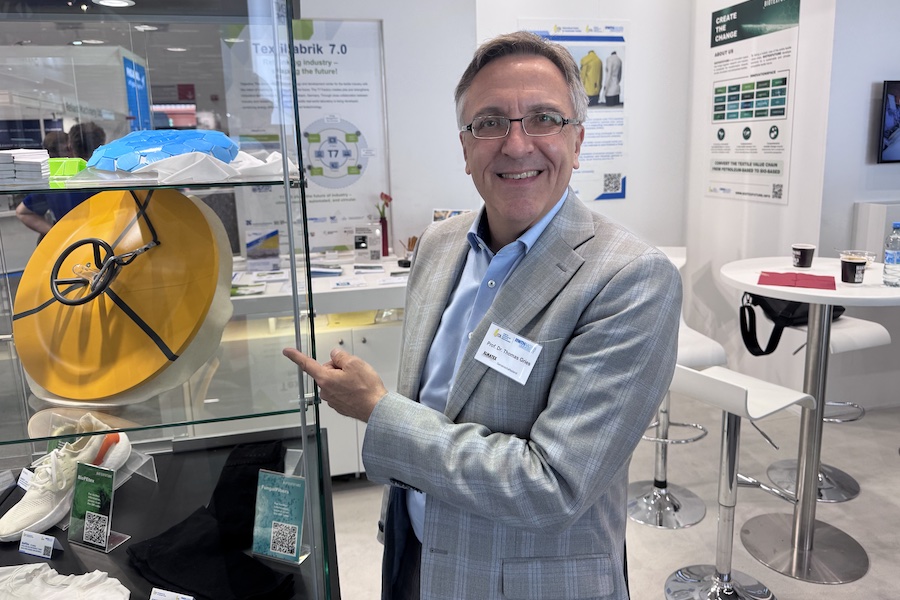
From technical textiles and AI-driven robotics to the limitations of textile circularity: Professor Dr Thomas Gries looks back on more than two decades of development at ITA Aachen. In the interview, he explains why production technology remains a decisive success factor, discusses international collaborations and innovation ecosystems, and shares his views on the transformation of production landscapes and the challenges facing an increasingly regulated industry.

#Knitting & Hosiery

“We need to move away from the price trap and return to a value-driven mindset.”

With its new Textile Innovation Center, KARL MAYER is sending a strong signal for innovation, collaboration, and the future of textile applications. In this interview, Karl Josef Mayer discusses new opportunities in warp knitting, the processing of staple fibres, recycling, the changing role of machinery manufacturers, and why the textile industry must once again focus more strongly on the value of textiles. by Oliver Schmidt

#Associations

“Innovation, resilience and international experience remain the great strengths of the Swiss textile machinery industry”

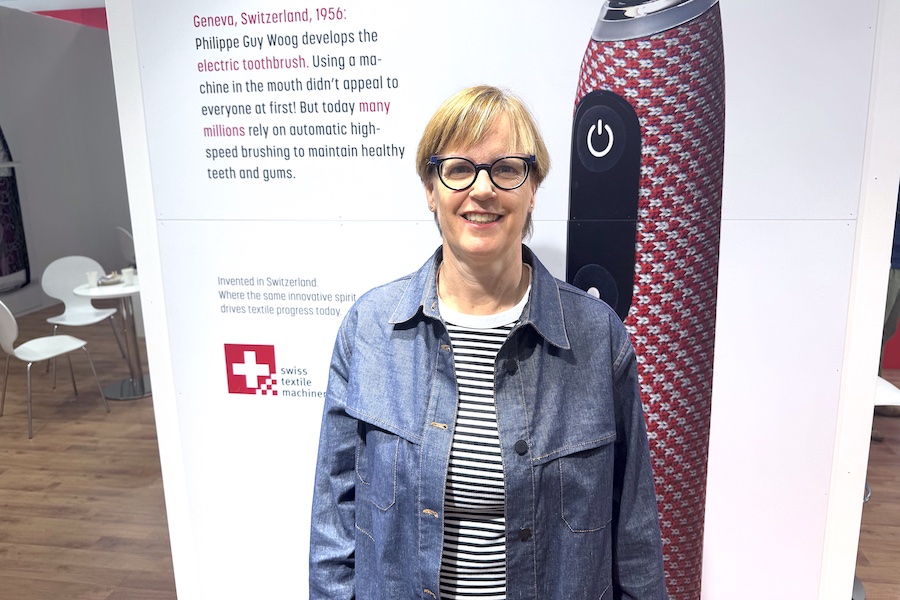
Geopolitical uncertainty, growing competitive pressure from China, new free trade agreements and the shift towards a circular economy are currently reshaping the global textile industry. In this interview, Cornelia Buchwalder discusses the current mood within the Swiss textile machinery sector, the industry’s distinctive innovative strength, new market opportunities in India and Asia, and the technological trends that could shape the upcoming trade fair cycle leading up to ITMA 2027.

More News on Textiles & Apparel / Garment

#Sustainability

Textile Exchange 2026: From sustainability commitments to industry-wide action

More than 1,300 participants and over 90 speakers gathered in Vancouver to discuss how the textile and apparel industry can move from planning to implementation, with a focus on resilient supply chains, circularity, regenerative agriculture and collaboration.

#Textiles & Apparel / Garment

Vietnam’s market evolution creates new sourcing opportunities at VIATT 2027

As Vietnam’s textile industry continues to upgrade and scale, new opportunities are emerging for suppliers of advanced raw materials, design-led fabrics, production technologies, and sustainability solutions. The Vietnam International Trade Fair for Apparel, Textiles and Textile Technologies (VIATT) will return 24 – 26 February 2027, presenting a cross-sector platform – spanning apparel, home and technical categories – for overseas companies to connect with manufacturers, brands, sourcing offices, retailers, and industry buyers from Vietnam, ASEAN, and beyond.

#Industry 4.0 / Digitalization

Jeanologia presents expanded EIM platform and COMMON GROUND collection at Kingpins Amsterdam

Jeanologia is presenting two approaches to textile product development at Kingpins Amsterdam on October 14–15: measuring the environmental impact of textile production and exploring new creative possibilities through garment finishing technologies.

#Recycling / Circular Economy

The Or Foundation, adidas, BESTSELLER, H&M Group, and Inditex launch Apparel Recovery Coalition, responding to impacts of post-consumer textile exports

adidas, BESTSELLER, H&M Group, Inditex and The Or Foundation, with support from Circle Economy, unveiled the Apparel Recovery Coalition (ARC). The coalition will explore how producer responsibility systems can support circular pathways such as reuse, upcycling, recycling, and responsible waste management in countries that receive large volumes of exported secondhand apparel.

Latest News

TOP