[pageLogInLogOut]

#Textiles & Apparel / Garment

Energiapura – a trailblazer in reusable, customised protective masks that are also fashion accessories
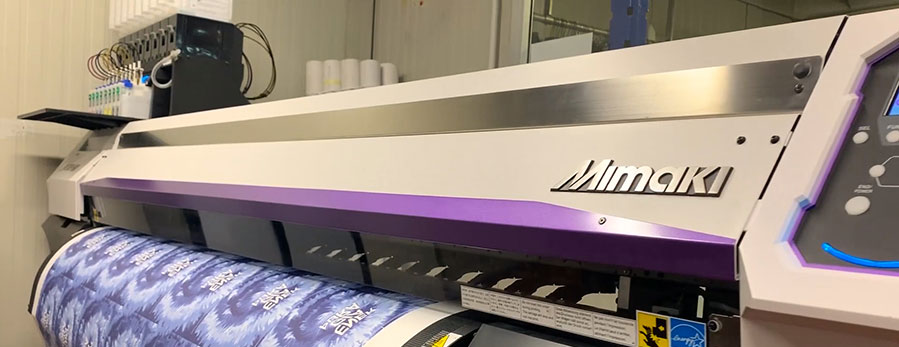
From functional sportswear to combatting the spread of the Coronavirus: Energiapura, an Italian manufacturer of clothing and accessories for ski racing and snowboarding, has leveraged its know-how and technology to conceive and develop – in a very short space of time – a protective mask that meets the Class I medical device requirements.
  • The Italian company, a specialist manufacturer of functional sportswear, conducted research and began producing masks in response to the COVID-19 crisis
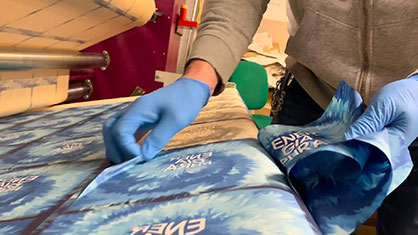
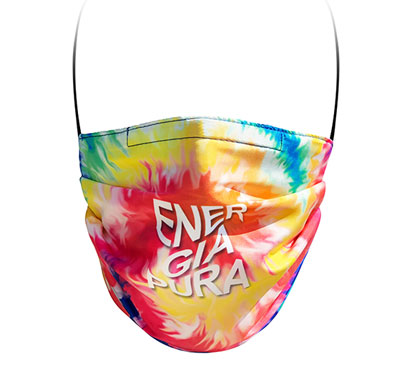
  • Using Mimaki sublimation printers, the masks can be customised, getting away from their connotation with hospitals and transforming them into a fashion accessory

The EP PA 2020 (Energiapura Pure Air) facial device, optimised for air filtering and breathability, provides many hours of protection while working, and can be reused. But Energiapura has gone even further, branding and customising the masks with sublimation printing. “Bold colouring has always distinguished the Energiapura brand, and we didn’t want to abandon this, not even in the midst of the crisis”, explains Alberto Olivetto, founder and CEO of Energiapura. “Sublimation printing allows us to give a brighter face to COVID-19. Our message is to add colour and a bit of optimism, precisely in these difficult times.”

The EP PA 2020 mask, compliant with 93/42 EEC Medical Devices – Class I washable, meets the essential requirements of UNI EN 14683:2019. Having redirected the manufacturing process, Energiapura is now stepping up production levels to meet the rising demand from hospitals, pharmacies, chemists, companies and even consumers.
(c) 2020 Mimaki
(c) 2020 Mimaki


A winning brand

In its headquarters at Tezze sul Brenta (Vicenza province), Energiapura employs 25 staff members. A further 80 employees work in Tunisia, where part of the production is managed.

Energiapura’s story began in 1990, when Alberto Olivetto set up his business in the heart of the Veneto textiles district at the junction of the provinces of Vicenza, Treviso and Montebelluna. Focusing from the outset on research and innovation, the company homed in on the niche market of functional sportswear. Initially a subcontractor, it moved from cycling to cross-country skiing, establishing itself as a manufacturer and direct exporter of the Norwegian brand Swix in Europe, the USA and Japan. 
(c) 2020 Mimaki
(c) 2020 Mimaki


In 1994, the company registered the Energiapura trademark, a fundamental step signalling the start of sportswear production in its own name. Schools and clubs for alpine and cross-country skiing were now their main target group. “We had clearly chosen the more difficult path in addressing this market. But then again, we knew we had something more to offer than the competition”, says Olivetto. “Thanks to our extensive use of colour, we were able to offer bespoke items for each specific situation, an added value that helped us get noticed.”


Colour and customisation thanks to sublimation printing, using Mimaki technology, have always been at the core of Energiapura’s manufacturing process. “Backed by years of research, development and testing, it was our expert use of sublimation that allowed us to make a difference. Breaking with the monochromatic tradition, we added colour to the alpine environment, which is dominated by white, and this simple idea has opened up incredible possibilities.” Combining this with research into top-performing fabrics, Energiapura quickly gained ground internationally as well.

As one of the leading suppliers in Europe, Russia, Japan and the USA, the company boasts partnerships with ski champions from around the globe: Marcel Hirscher (Austria), Tina Maze (Slovenia), from her début to her retirement, Peter Fill (Italy), Henrik Kristoffersen (Norway), Ilka Štuhec (Slovenia) and Alice Robinson (New Zealand), to name just a few. “In our field, they say that ‘Energiapura brings good luck’. Indeed, whoever wears our brand starts winning. But it’s not really a matter of luck. It’s all about the technical features and performance of our fabrics.”
(c) 2020 Mimaki
(c) 2020 Mimaki


Pure Air, Energiapura’s mask

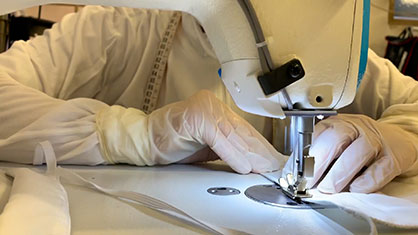
This is how Energiapura came to create EP PA 2020, an effective protective mask based on a functional concept. “It all started with the need to protect our own staff from the Coronavirus. Based on our usual modus operandi, we launched a study phase in our laboratories to identify the three main properties to impart to our devices: protection, breathability and reusability.” EP PA 2020 is made up of three layers of fabric: the first, the outer layer, is DWR-treated polyester, the second is TNT polyester, providing a filtering function, and the third, which comes into contact with the face, is polyester containing special fibres, such as coolmax and carbon. In this way, the mask not only guarantees the necessary protection but, being breathable, it can be worn for many hours while working. And it can be reused vianormal washing and steam ironing, which also sterilises it.”

Beyond the present crisis, the Energiapura project is also looking to the future. “We wanted to disassociate our masks from the hospital image. How? Through customisation, by decorating them with company branding and designs provided by customers.” This is where the Mimaki JV300 wide-format printer comes in. Highly productive and optimised for rapid job changes, it ensures the fast turnarounds required in times of increasing demand.

“Innovation is part of our DNA. EP PA 2000 is the fruit of a great deal of research conducted in our laboratories. More than ‘just a mask’, it is a fully fledged facial protective device. In conceiving this project, we thought a lot about the future because we believe that the post-Coronavirus world will be different and involve new ways of socialising. Facial protection will play a critical role in the months to come, so we wanted to create an item that is actually fun to wear – adding a personal touch and a little bit of cheerfulness. Much like a fashion accessory.”

“Last but not least, another main focus was the reusability of the mask, avoiding issues with disposal and working towards a culture of zero waste for the benefit of our environment”, Olivetto concludes.
More News from Mimaki Europe B.V.

#Digital Printing

Maximising print efficiency exploring ink saving features for modern print production

In today’s print industry, balancing quality, efficiency, and environmental responsibility is a growing priority. With increasing pressure on margins and sustainability, solutions that streamline production without sacrificing results are more relevant than ever.

#Digital Printing

Mimaki upgrades TS330 series for vibrant and seamless dye sublimation printing

The TS330 Series now provides users with an extended colour gamut, offering the flexibility to serve different markets profitably from one solution – from fashion to décor to signage – with improved colour vibrancy, fidelity and accuracy. Mimaki also introduces a larger solution to the TS330 Series, the TS330-1800, able to accommodate single-piece, wide textile fabrics, ideal for larger home décor applications.

#Heimtextil 2026

Mimaki demonstrates versatile, simple TRAPIS textile printing at Heimtextil 2026

Mimaki’s textile pigment transfer printing system, TRAPIS, is able to print on a diverse range of fabrics - unlike traditional processes - including natural fibres and synthetic fabrics. The full solution will be shown on Mimaki’s booth (Hall 3.0 Stand A97), as the company returns to Heimtextil to showcase its advancements in sustainable, high quality and efficient textile printing.

#Digital Printing

Mimaki introduces entry-level TS200-1600 dye sublimation printer for vibrant and versatile Results

Mimaki Europe, a leading manufacturer of industrial inkjet printers and cutting plotters, today announces the TS200-1600, its latest sublimation transfer inkjet printer, which will make its international debut at The Sign Show / The Print Show in Birmingham, UK (23–25 September 2025). Building on the success of the TS100, the new TS200-1600 delivers fast production speeds, high-quality and versatile applications at an affordable price point, making it an ideal solution for small shops, start-ups, and businesses looking to expand into customised goods and short-run textile production.

More News on Textiles & Apparel / Garment

#Textiles & Apparel / Garment

VIATT 2026 to debut German Pavilion, strengthening European participation alongside key Asian textile hubs

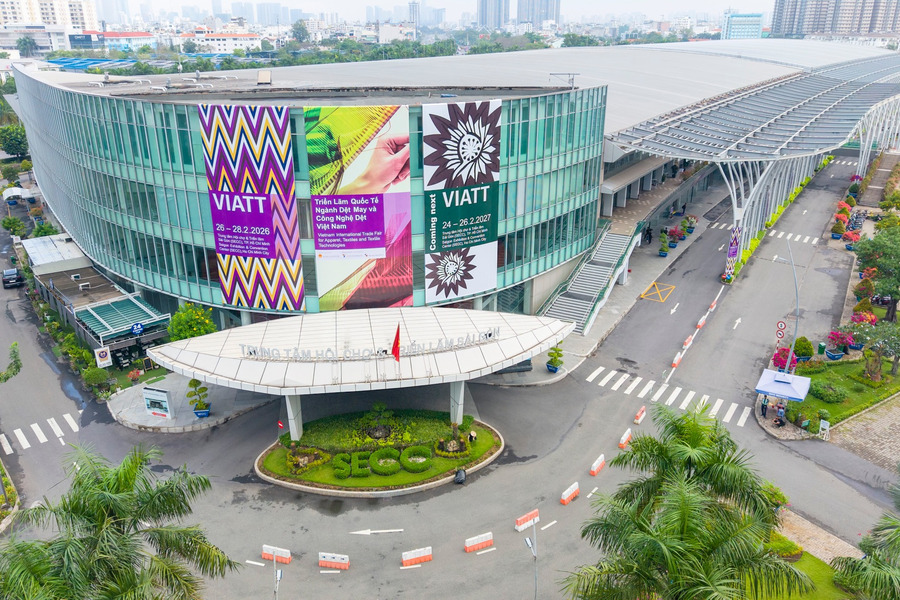
Vietnam’s textile and garment sector continues to be a major contributor to the country’s economic growth, with export revenues expected to reach USD 46 billion in 2025, a 5.6% increase from 2024 . From 26 – 28 February, the Vietnam International Trade Fair for Apparel, Textiles and Textile Technologies (VIATT) is set to contribute to economic growth opportunities by accelerating digital transformation and green transition across the entire textile value chain. The upcoming edition will respond to the rising demand for advanced technologies and sustainable materials with the introduction of the German Pavilion, alongside strong exhibitor participation from key Asian sectors, as well as several high-profile fringe events.

#Sustainability

Ying McGuire becomes new CEO of Cascale

Cascale today announced the appointment of Ying McGuire as Chief Executive Officer, effective June 1, 2026.

#Europe

Antwerp Declaration community urges EU leaders to deliver emergency measures as Europe’s competitiveness crisis deepens

EURATEX, representing the European textile and fashion industry, joins the Antwerp Declaration Community’s call on EU Heads of State and Government to adopt emergency measures that restore industrial competitiveness and deliver tangible results for Europe’s manufacturing base in 2026.

#Textiles & Apparel / Garment

Pets in fashion: functional and sustainable textiles find new market at Intertextile Apparel

China’s pet economy is booming, especially amongst younger generations, and pet apparel – from designer outfits to functional garments – was a RMB 3.5 billion (over USD 500 million) market in 2024, growing more than 20% annually¹. To help exhibitors harness this trend, Intertextile Shanghai Apparel Fabrics – Spring Edition 2026 will launch the Pet Boutique, presenting a range of innovative, sustainable materials that prioritise both functionality and comfort for pets.

Latest News

#Recycling / Circular Economy

Circulose restarts commercial-scale production at Ortviken plant in Sundsvall

Circulose today announced the restart of its commercial-scale production plant at Ortviken in Sundsvall, Sweden, marking a significant step in scaling next-generation materials for the global fashion industry. The company plans to resume production of CIRCULOSE®, a recycled pulp made entirely from discarded cotton textiles, in the fourth quarter of 2026.

#Technical Textiles

Sustainable, lightweight, and sound absorbing: Polyester-based front trunk solution for BEVs

As car manufacturers look to further reduce their carbon footprint, Autoneum has developed an innovative front trunk solution for battery electric vehicles (BEVs), made entirely from polyester-based textile. The Ultra-Silent Frunk offers significant weight reduction, improved acoustic and thermal insulation, and uses up to 70 percent recycled material, supporting sustainable and efficient vehicle design. Autoneum, global technology leader in acoustic and thermal management for vehicles, has already received orders for the new frunk from three major OEMs in Asia and Europe to be built in three BEV models. Series production for two BEVs has been underway in China and Germany since last year.

#Raw Materials

Modern testing methods for raw cotton

The 38th International Cotton Conference Bremen will take place from 25 to 27 March 2026 at the Bremen Parliament. This conference has traditionally stood for in-depth expertise and international exchange. The program will focus on technical innovations, market trends, and regulatory frameworks across the entire value chain – from agriculture to the circular economy. With high-profile speakers, the conference is regarded as the key meeting point for the global cotton industry. Today’s focus: Cotton quality and testing methods.

#Spinning

Rieter responds to higher raw material prices

Global political and economic developments have been leading to rising raw material and energy costs for some time. The textile machinery industry is also affected by this trend. Rieter machines and components consist to a large extent of steel, copper, aluminum and electronics. These materials in particular have seen higher demand and higher prices in recent months.

TOP