[pageLogInLogOut]

#Textile processing

Tajima DG16 now integrates Coloreel tools for efficient design creation
© 2023 Coloreel
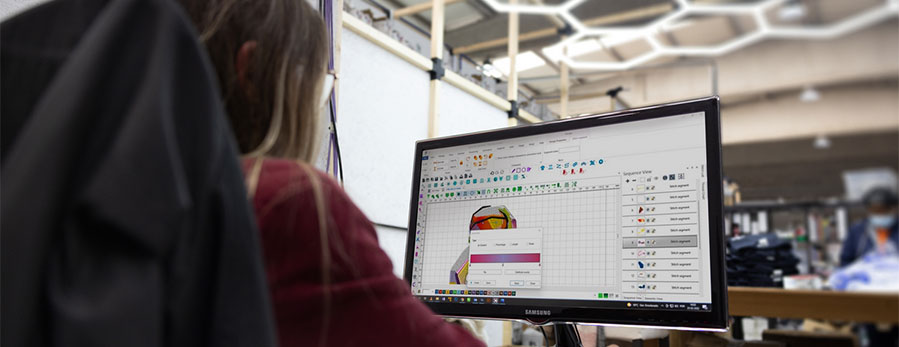
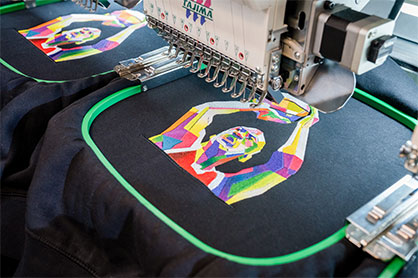
Tajima Software Solutions Inc, with its leading embroidery design software DG16, is the first to incorporate the Coloreel coloring system. This integration now makes it easy to assign any Coloreel color and effect directly in the design creation workflow.

With the new integration of Coloreel features into DG16, users no longer need to use a separate program to colorize their embroidery designs for Coloreel. This means that everything can be done within one software program, which allows for faster design creation and easier modification of existing designs. Additionally, there is a reduced risk of mixing up stitching and coloring files. With all stitch and color data now contained in one file, it is also more convenient to create multi-thread embroideries by combining Coloreel thread and traditional pre-colored embroidery threads.

The integrated Coloreel option is now available for all Tajima DG16 users.

"The Coloreel option provides a more efficient and convenient way for customers to create high-quality embroidered designs. We believe that this integrated solution will further enhance the creativity and productivity of our customers." said Mattias Nordin, SVP Product Management and Business Development of Coloreel.


"We are proud to work with Coloreel to introduce this integrated solution to our customers. We believe that it will help our customers create more innovative and high-quality designs." Said Claude Vlandis, SVP Business Development, Tajima Software Solutions.

© 2023 Coloreel
© 2023 Coloreel


More News from TEXDATA International

#ITM 2026

ITM 2026: The new geography of textile production

New production hubs are emerging across North Africa and Central Asia, while Türkiye is accelerating its transformation toward higher-value, technology-driven and more sustainable textile manufacturing.

#Research & Development

“Production is a product”

From technical textiles and AI-driven robotics to the limitations of textile circularity: Professor Dr Thomas Gries looks back on more than two decades of development at ITA Aachen. In the interview, he explains why production technology remains a decisive success factor, discusses international collaborations and innovation ecosystems, and shares his views on the transformation of production landscapes and the challenges facing an increasingly regulated industry.

#Knitting & Hosiery

“We need to move away from the price trap and return to a value-driven mindset.”

With its new Textile Innovation Center, KARL MAYER is sending a strong signal for innovation, collaboration, and the future of textile applications. In this interview, Karl Josef Mayer discusses new opportunities in warp knitting, the processing of staple fibres, recycling, the changing role of machinery manufacturers, and why the textile industry must once again focus more strongly on the value of textiles. by Oliver Schmidt

#Associations

“Innovation, resilience and international experience remain the great strengths of the Swiss textile machinery industry”

Geopolitical uncertainty, growing competitive pressure from China, new free trade agreements and the shift towards a circular economy are currently reshaping the global textile industry. In this interview, Cornelia Buchwalder discusses the current mood within the Swiss textile machinery sector, the industry’s distinctive innovative strength, new market opportunities in India and Asia, and the technological trends that could shape the upcoming trade fair cycle leading up to ITMA 2027.

More News on Textile processing

#Sustainability

Jeanologia Sustainability Report highlights environmental impact of textile technologies

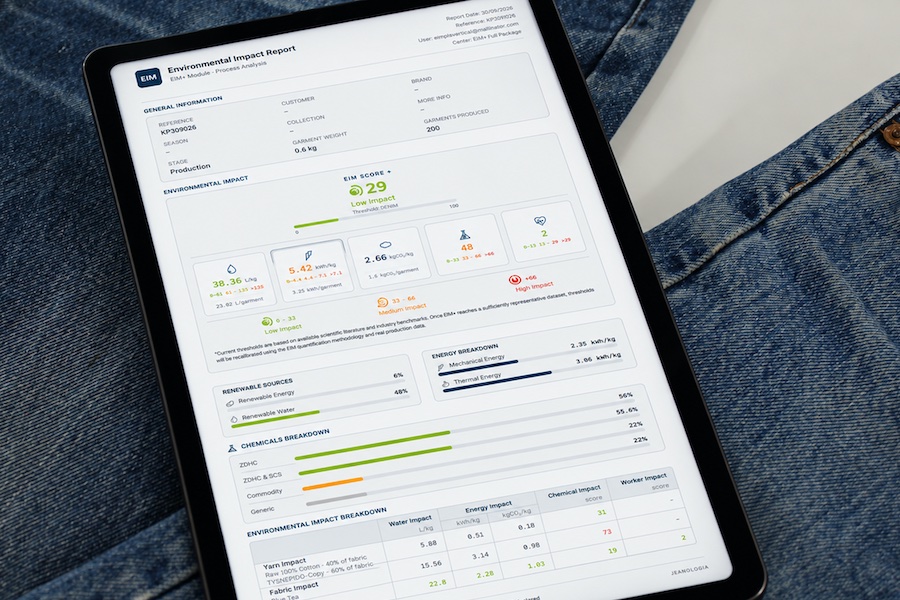
Jeanologia has published its Sustainability Report 2025, reporting a 13.64% reduction in its own carbon footprint and quantifying the environmental impact associated with the use of its technologies across the global textile industry. According to the company’s calculations, their use avoided the pollution of 21.52 million m³ of water and emissions of approximately 103,530 tonnes of CO₂ compared with conventional textile finishing processes.

#Associations

Automation, digitalization and new business models are shaping the future of footwear and leather technology

The European footwear and leather machinery industry is facing profound transformations. Global competitive dynamics, technological innovation, automation and digitalization are fundamentally reshaping markets, production processes and business models. This is one of the key findings of the new study “Threads of the Future – Footwear and Leather Technology Edition”, which was presented today by VDMA Textile Care, Fabric and Leather Technologies (VDMA TFL) during a press conference at SIMAC Tanning Tech in Milan.

#Textile processing

Lectra strengthens its partnership with Caron Technology

Lectra announces the strengthening of its industrial alliance with Caron Technology, an Italian company founded in 1993 and specializing in preparation systems operating before the cutting process. This new milestone reflects the strength of a trusted relationship that has grown between the two companies over nearly two decades.

#Textile processing

YKK launches no. 3 size of QuickFree® click-TRAK® magnetic zipper globally

YKK Corporation (Headquarters: Chiyoda-ku, Tokyo; President: Koichi Matsushima; hereafter, YKK) has begun the global rollout of the No. 3 size of its QuickFree® click-TRAK® Magnetic zipper, expanding availability beyond China for the first time. While maintaining the same functionality and ease of operation, the No. 3 size is approximately 60% the size of the No. 5 size *1. This enables applications in lightweight garments, sportswear, hooded apparel, and other similar uses.

Latest News

#Research & Development

180 years of TESTEX: From Zurich silk testing to global certification

For 180 years, TESTEX has developed alongside the textile industry while maintaining the same underlying purpose: creating trust through independent and reliable measurement. Founded in Zurich in 1846 as the Zurich Silk Conditioning Institute, TESTEX has grown from a local institution serving the silk trade into an international Swiss testing and certification institute for textiles and leather.

#Recycling / Circular Economy

Moving Advanced Recycling from Innovation to Implementation

The Advanced Recycling Conference 2026 explores technologies, markets, financing and scale-up of innovative recycling solutions for waste streams including mixed plastic waste, textiles and PVC. Europe’s chemical and materials sector faces growing pressure to close carbon loops, strengthen raw-material safety and resilience and meet increasingly ambitious EU recycling targets. Against this backdrop, the Advanced Recycling Conference (ARC) will bring together industry leaders, technology providers, researchers, innovators and policy-makers on 17–18 November 2026 in Cologne, Germany.

#Associations

German textile industry and retailers form alliance to shape textile EPR system

Germany’s textile and fashion industry and retail sector have joined forces to establish the “Alliance for Textile Circularity” (Allianz für textile Kreisläufe). Initiated by the German Textile and Fashion Industry Association (Gesamtverband textil+mode) and the German Retail Federation (HDE), the alliance aims to contribute industry expertise to the development of Germany’s future Extended Producer Responsibility (EPR) system for textiles and footwear.

#Sustainability

Cascale launches member-led process to shape 2030 strategy

Cascale has launched a member-led process to define the industry alliance’s strategic direction for the next decade. At the Cascale Annual Meeting 2026 in Athens, CEO Ying McGuire announced that members will contribute to an industry system map that will inform Cascale’s 10-year vision, its 2030 strategy and priorities for 2027. The new strategy is scheduled to be finalized in December.

TOP