[pageLogInLogOut]

#Textile chemistry

Covestro and Lanxess cooperate to produce more sustainable raw materials with reduced CO2 footprint
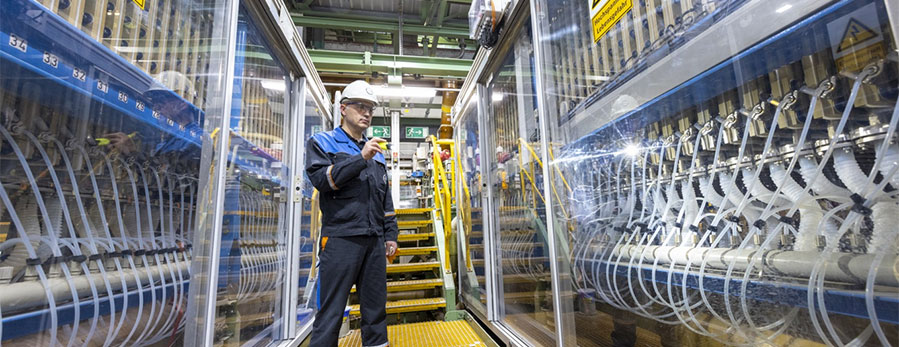
View of Covestro's chlorine electrolysis plant in Leverkusen. With immediate effect, the company is manufacturing around one-third of the product volume supplied to LANXESS using energy from hydropower based on guarantees of origin. © Covestro
Chemical companies Covestro and LANXESS are cooperating in the energy-intensive production of basic chemicals at their Lower Rhine sites in Germany and make them more climate friendly. LANXESS procures chlorine, caustic soda and hydrogen from the ISCC PLUS-certified sites of Covestro in Leverkusen and Krefeld-Uerdingen. With immediate effect, Covestro is manufacturing around one-third of the volume of products it supplies to LANXESS using energy from hydropower based on guarantees of origin.
  • Companies agree production of key basic chemicals
  • Covestro uses electricity with certificates of origin from hydropower for electrolysis in North Rhine-Westphalia
  • Cooperation reduces CO? emissions by up to 120,000 tons per year


Chemical companies Covestro and LANXESS are cooperating in the energy-intensive production of basic chemicals at their Lower Rhine sites in Germany and make them more climate friendly. LANXESS procures chlorine, caustic soda and hydrogen from the ISCC PLUS-certified sites of Covestro in Leverkusen and Krefeld-Uerdingen. With immediate effect, Covestro is manufacturing around one-third of the volume of products it supplies to LANXESS using energy from hydropower based on guarantees of origin.

"Covestro is pursuing the goal of completely converting its production to electricity from renewable sources on its path to operational climate neutrality in 2035," says Dr. Klaus Schäfer, Chief Technology Officer of Covestro. "A particular focus is on the energy-intensive production of basic raw materials. In cooperation with LANXESS, we use energy in our electrolysis plants in North Rhine-Westphalia on a pro-rata basis, which enables us to reduce our reported emissions by up to 120,000 metric tons of CO2 per year."

"The joint project with Covestro is an important building block in making our entire value chain climate-neutral. By sourcing raw materials for these products with a significantly reduced carbon footprint, we will be able to reduce our reported indirect emissions by up to 120,000 metric tons of CO2 equivalents per year," says Dr. Hubert Fink, member of the LANXESS Board of Management. With its Net Zero Value Chain Initiative, the specialty chemicals group plans to eliminate Scope 3 emissions within its upstream and downstream supply chain by 2050. This includes indirect emissions, particularly from purchased raw materials, but also in logistics or disposal. For Scope 1 and 2 emissions, the company aims to be climate neutral as early as 2040. "With this program, we are taking the next step towards a climate-neutral product portfolio and also supporting our customers, who are increasingly looking for sustainable solutions," says Fink.

Chlorine, caustic soda and hydrogen are basic building blocks for many products in the chemical industry. However, their production is very energy-intensive. LANXESS uses the raw materials supplied by Covestro, for example, for products that are then used in the food and agricultural industries. Covestro produces the three basic raw materials at its North Rhine-Westphalian sites in Leverkusen, Krefeld-Uerdingen and Dormagen. Both the former have already been certified to the internationally recognized ISCC PLUS standard for the production of the strategic raw material chlorine, while this is also planned for Dormagen in the near future. The correct allocation of the electricity to the products is ensured via this certification and the use of the renewable energy is proven by the invalidation of certificates of origin at the Federal Environment Agency.


Covestro is also actively involved in various projects to build a hydrogen economy that uses mainly or exclusively green hydrogen as an energy carrier. Among other things, the company is supporting, in cooperation with Hydrogenious LOHC Technologies, to build the world's largest plant for storing renewable hydrogen in liquid organic carriers in Dormagen, Germany. 
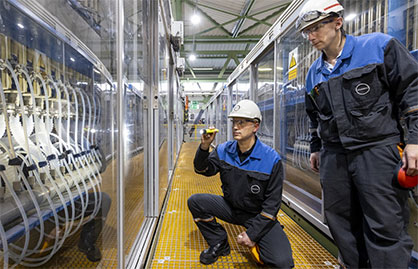
Teamwork during production monitoring in the electrolysis hall. © Covestro


With regard to its energy supply, Covestro focuses on power purchase agreements (PPAs) for renewable energy or high-level certificates. Only recently, the company signed PPAs with Chinese supplier CGN New Energy on wind and solar power that will cover around 30 percent of the electricity needs of its important production site in Shanghai. Under another, utility Ørsted will supply offshore wind energy starting in 2025, which is expected to meet 10 percent of the electricity needs of Covestro's sites in Germany. ENGIE, Belgium's largest renewable energy producer, will provide onshore wind energy to meet 45 percent of the electricity demand of Covestro's Antwerp production site in Belgium.


More News from Covestro AG

#Smart Textiles

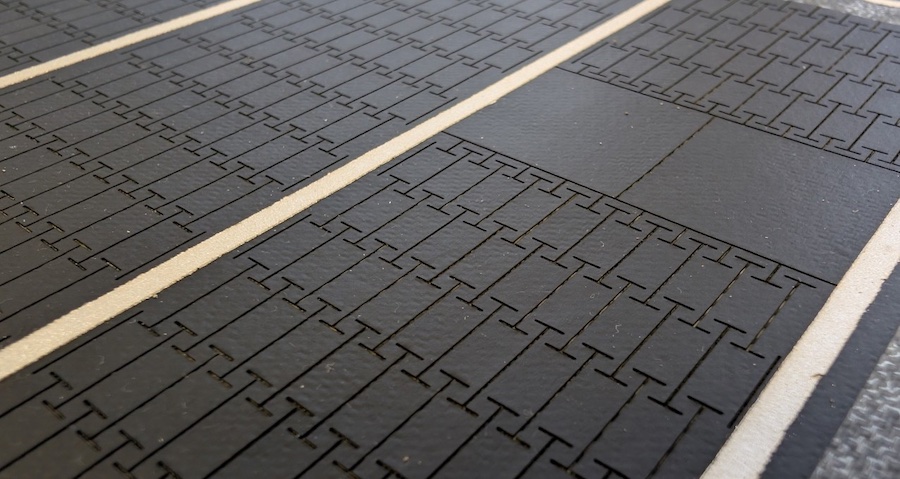
Covestro, FILK Freiberg, and OUT e.V. develop flexible, conductive polymer smart textile system

As the smart textiles market continues to grow across healthcare, personal protection, sportswear, and automotive applications, developers are seeking new ways to integrate electronic functionality directly into textiles, without the rigidity and complexity of conventional wiring. To address this challenge, FILK Freiberg Institute, an independent research institution with expertise in polymer coatings for textile applications, collaborated with Optotransmitter-Umweltschutz-Technologie (OUT) e.V. The joint project, funded under the German Industrielle Gemeinschaftsforschung (IGF) program of the Bundesministerium für Wirtschaft und Energie (BMWE), focused on developing flexible, conductive polymer surfaces for next-generation smart textiles.

#Techtextil 2026

Covestro to exhibit solutions for a more sustainable and productive textile industry at Techtextil 2026

Covestro will present a broad portfolio of material innovations for textile coatings, adhesive films and thermoplastic polyurethanes (TPUs) at Techtextil 2026 (Hall 11.0, Booth C79). The exhibits will demonstrate how advanced solutions can enhance durability, recyclability and manufacturing efficiency across applications such as automotive, infrastructure, protective apparel and sportswear. A particular focus will be on more sustainable coating technologies, including antimicrobial systems based on INSQIN® in combination with AGXX from Heraeus Precious Metals, as well as the integration of Pontacol® thermoplastic adhesive films into Covestro’s offering.

#Technical Textiles

Covestro showcases monomaterial concept in autonomous SUE People Mover

UE | STUDIOS has unveiled the fully autonomous electric minibus “Self-driving Urban E-Shuttle” (SUE), placing strong emphasis on sustainable material design. Developed within a project funded by the Federal Ministry for Economic Affairs and Energy (BMWE) and the European Union, the vehicle will begin public road testing this year. At the core of the concept is the consistent use of recyclable monomaterials to improve circularity at end of life.

#Textile chemistry

Covestro and Heraeus Precious Metals collaborate to enable safer, more sustainable antimicrobial textile coatings

Laboratory tests reveal that AGXX antimicrobial surface technology from Heraeus Precious Metals is fully compatible with Impranil® PU dispersions which are part of the waterborne INSQIN® textile coating technology from Covestro, paving the way for more sustainable antimicrobial textile coatings. This discovery comes at a key moment for the textile coatings industry. As the sharing economy continues to grow, more people are coming into regular contact with high-use surfaces, creating ideal conditions for bacteria, viruses, and other microorganisms to thrive.

More News on Textile chemistry

Latest News

#Associations

Keeping products moving with Swedish automation at FILTECH 2026

At FILTECH 2026, taking place in Cologne from June 30th to July 2nd, members of TMAS – the Swedish textile machinery association – will highlight how the country’s engineering expertise is enabling filtration manufacturers to increase productivity, improve traceability and reduce dependence on labour-intensive manual processes.

#ITM 2026

Global Mmeeting of textile technologies, ITM 2026, attracts great interest

ITM 2026, one of the world's most prestigious organizations in the field of textile technologies, opened its doors with the participation of over 1,000 companies and company representatives from 59 countries, as well as thousands of professional visitors from nearly 100 country. Attracting thousands of international visitors on its first day, ITM 2026 once again demonstrated its status as a global meeting point for the textile industry with its advanced technologies on display, newly established business connections, and record-breaking international participation.

#Recycling / Circular Economy

Countdown to Textiles Recycling Expo 2026: Brussels prepares for Europe’s textile recycling gathering

With only two weeks remaining until the start of the second edition of the Textiles Recycling Expo 2026, preparations are entering the final phase. The exhibition and conference, dedicated exclusively to textile recycling and circularity, will take place on 24–25 June 2026 at Brussels Expo and is expected to attract stakeholders from across the textile recycling value chain.

#Recycled Fibers

Indorama Ventures enables brands to scale circular textiles through proven, traceable supply chains

Indorama Ventures, a global leader in recycled polyester staple fibers and filament yarns, will exhibit at Textiles Recycling Expo in Brussels on June 24–25. At the event, the company will show how brands and textile manufacturers can build traceable, circular textile supply chains by working with proven partners who deliver recycled materials on an industrial scale.

TOP