[pageLogInLogOut]

#Textile chemistry

DyStar releases integrated Sustainability Report 2019 – 2020

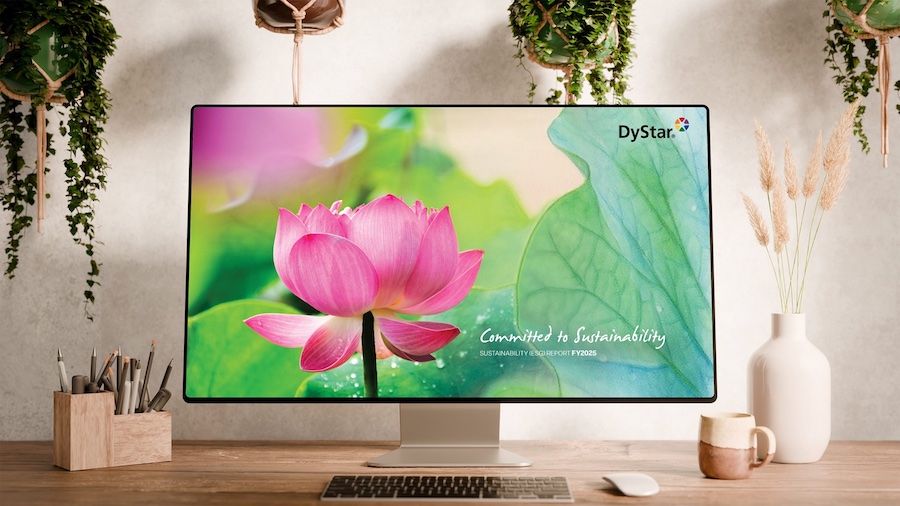
DyStar, a leading specialty chemical company with a heritage of more than a century in product development and innovation is pleased to announce the release of DyStar’s Integrated Sustainability Report for 2019 – 20. In this report, DyStar has adopted an Integrated Reporting framework which enables the organization to better communicate essential values across multiple stakeholders through meaningful assessments based on the six major capitals, namely financial capital, manufactured capital, intellectual capital, human capital, social and relationship capital, and natural capital.

Mr. Eric Hopmann, CEO of DyStar Group said, “Amid the worrying COVID-19 situation, as DyStar shared its Tenth Sustainability Report, DyStar has continued to demonstrate the unwavering commitment to sustainability by gathering and presenting improved quality information to support integrated thinking, decision-making and actions that focus on value creation over time. This information clearly illustrates the organization’s ability in creating value across multiple stakeholders.”

Whilst the DyStar Integrated Sustainability Report for 2019 – 20 adopts a new reporting approach, it is still based on the fundamentals of GRI Standards: Core option. The integration of the framework refers to the company’s sustainability performance adopting the IR’s value creation model, alignment of short, mid to long term strategy, and evaluated based on the concept of multiple capitals, which have been adopted by the International Integrated Reporting Council (IIRC) since 2013.


In order to drive DyStar towards an integrated value creation model, DyStar’s management agreed on established commitments and goals for each capital and assigned a responsible department to lead these specific initiatives on a global basis. The report also presents DyStar’s 2025 Sustainability Master Plan, which was earlier presented to the management, outlining clear objectives, goals, roadmap, and specific outcomes for each capital stock. The overall plan is aligned with and supported by DyStar’s Global Sustainability vision to be the environmental and innovative global leader in its chosen industries.

As part of our commitment to environmental sustainability, only e-magazine and PDF version will be made available for download from https://www.dystar.com/sustainability-reports/
More News from DyStar Singapore Pte Ltd

More News on Textile chemistry

Latest News

#Technical Textiles

Fifteen years of Autoneum – From spin off to global technology leader

What started as a strategic carve‑out has since become the success story of a global technology leader in acoustic and thermal management solutions for vehicles. Headquartered in Winterthur, Switzerland, Autoneum supplies leading automobile manufacturers worldwide with innovative, lightweight and increasingly sustainable solutions.

#Nonwoven machines

Kruger, Canada, orders first nonwovens line for sustainable wipes from ANDRITZ

International technology group ANDRITZ has received an order from newly established Kruger Nonwovens to deliver a complete WetlaceTM hybrid line for the Wayagamack mill in Trois-Rivières, Quebec, Canada. With this investment, pulp and paper producer Kruger is preparing to enter the nonwovens market with a new generation of plastic-free, chemical-free materials for sustainable wipes. The line is the first of its kind in Canada and is scheduled to start production in 2028.

#ITM 2026

Picanol to present its leading weaving technology at ITM 2026

Picanol is pleased to announce it will be participating in ITM 2026 in Istanbul. This is a key event for industry professionals to engage with the Turkish textile industry as well as the extensive international audience attending the fair. During the event, Picanol will present its latest innovations to the visitors in Hall 8, booth 802.

#Man-Made Fibers

The updated poster on biodegradable Polymers in various environments has been released

As part of the PerPlacsBio project, nova-Institute has updated its popular poster on the biodegradability of polymers in different environments. The updated version reflects current standards, certifications and the latest scientific findings. The poster can be used to assess biodegradable alternatives for use in agriculture and forestry, and it is now available in German for the first time.

TOP