[pageLogInLogOut]

#Textile chemistry

Shima Seiki selects Archroma’s ‘Color Atlas’ library system for their new design software

(c) 2020 Shima Seiki
Archroma, a global leader in color and specialty chemicals towards sustainable solutions, today announced that the 4,320 color references of its Color Atlas library have been selected by Shima Seiki and integrated into their ‘SDS-ONE APEX’ series of software for the design, planning and virtual sampling of textile and apparel.

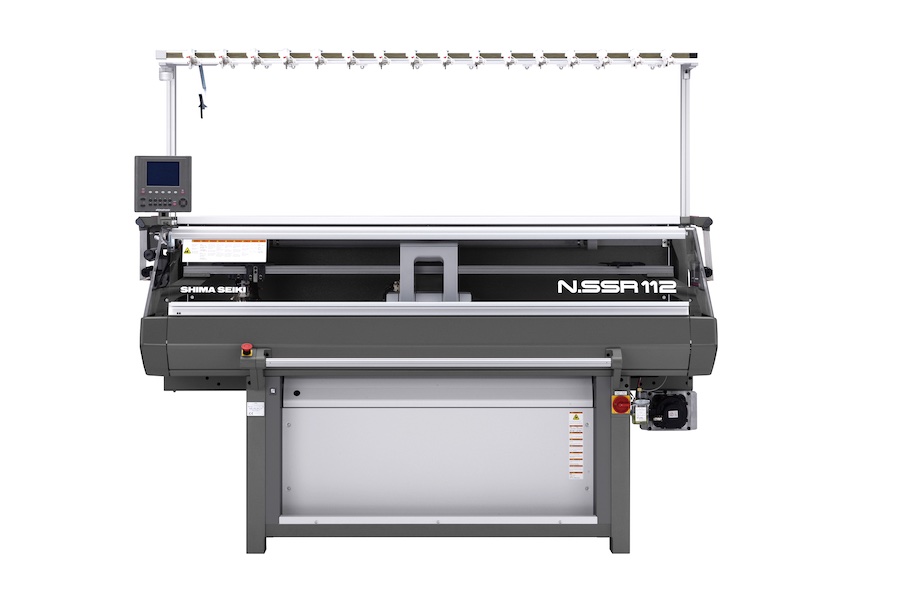
Shima Seiki is a leading provider of digitally optimized solutions for the fashion industry, who combines its on-demand ‘WHOLEGARMENT’ knitting machine with realistic virtual sampling. Based on actual yarn data, fabric simulations generated on the SDS-ONE APEX-series are unparalleled in quality and realism. Design and simulation are available for knits and various other textile applications, and smooth transition to machine programming is possible for quick and accurate design-to-manufacture interface.
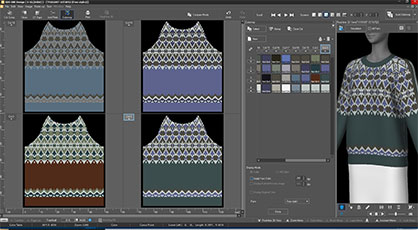
Shima Seiki’s new SDS-ONE APEX design software now features the 4,320 color references of Archroma’s Color Atlas library.<br />
(Photo: Shima Seiki)
Shima Seiki’s new SDS-ONE APEX design software now features the 4,320 color references of Archroma’s Color Atlas library. (Photo: Shima Seiki)


That is where the Color Atlas by Archroma® will considerably benefit to the users of Shima Seiki’s solutions.

The Color Atlas was launched in 2016 to provide fashion designers and stylists with off-the-shelf color inspiration that can be implemented in production with just a few clicks.

The Color Atlas continues to evolve in line with Archroma’s commitment to sustainability through innovation. The company describes it as “The Archroma Way to a sustainable world: safe, efficient, enhanced, it’s our nature”. All color references available in the Color Atlas have been formulated with products that comply with leading international eco-standards, and can be selected based on the desired sustainability profile.
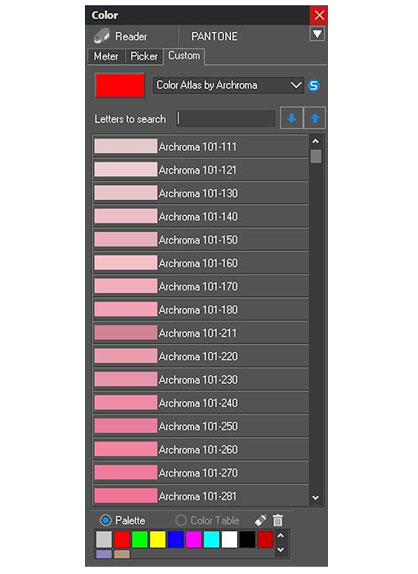
Shima Seiki’s new SDS-ONE APEX design software now features the 4,320 color references of Archroma’s Color Atlas library.<br />
(Photo: Shima Seiki)
Shima Seiki’s new SDS-ONE APEX design software now features the 4,320 color references of Archroma’s Color Atlas library. (Photo: Shima Seiki)


Today, the Color Atlas contains 4,320 colors applicable on cotton poplin, almost the double compared to similar tools available to textile and fashion specialists. Technical support is available to designer, manufacturers, as well as brands and retailers, through Archroma’s global offices - for every single color from its selection to its implementation in production. Engineered color standards empowered by NFC technology are also available for all colors and reproducible in production.


With this new collaboration, the users of the SDS-ONE APEX design software of Shima Seiki will have at their disposal 4320 colors that they can visualize, evaluate and implement, in a considerably accelerated process from the first creative idea to the production to the final outlet, whether online or in brick-and-mortar shops.

“Accurate color evaluation and communication are very important issues for design work”, explains Hideya Ohtani, General Manager, Graphic System Development Division, at Shima Seiki. “We have high expectations for Archroma's Color Atlas to help our APEX series users develop their products in an even more smooth and accurate manner. “

“We are proud to bring our Color Atlas library to the users of Shima Seiki’s extremely advanced design software,” says Chris Hipps, Head of Color Management Services, at the Archroma Brand Studio. “Designers and users of the software will have at their disposal not only color options they never had before but also colors that they can trust will be implementable right away. That’s what we strive to do at Archroma: create a new way of working: safe, efficient and enhanced. It’s our nature!”


Shima Seiki’s new SDS-ONE APEX design software now features the 4,320 color references of Archroma’s Color Atlas library.<br />
(Photo: Shima Seiki)
Shima Seiki’s new SDS-ONE APEX design software now features the 4,320 color references of Archroma’s Color Atlas library. (Photo: Shima Seiki)


More News from Archroma Textile Specialties

#Textile chemistry

Orta and Archroma launch denim collection dyed with wool waste

Archroma, a global leader in specialty chemicals, and Orta Anadolu, the premium Türkiye-based denim manufacturer behind the ORTA brand, today announced a collaboration to bring circular dye chemistry into commercial denim production.

#Denim

Archroma expands denim possibilities at Kingpins Amsterdam

Archroma, a global leader in specialty chemicals, will present a portfolio of six sustainable denim innovations at Kingpins Amsterdam from April 15-16, 2026. Under the theme “Creating Possibilities in Denim”, the showcase reflects Archroma’s commitment to giving brands and mills solutions that are as commercially compelling as they are environmentally responsible.

#Textile chemistry

Archroma brings high-impact textile innovations to Colombiatex 2026

Archroma, a global leader in specialty chemicals towards sustainable solutions, is proud to announce its participation in Colombiatex 2026, one of the most influential textile and apparel industry events in the Americas. The event will take place in Medellín, Colombia, from January 27 to 29, where Archroma will welcome visitors at Booth PC006.

#Textile chemistry

Archroma and HeiQ partner to bring revolutionary antimicrobial and odor-control solutions to textile industry

Archroma, a global leader in specialty chemicals towards sustainable solutions, and HeiQ, a Swiss deeptech materials innovator active in functional textiles and sustainable fibers, have entered into a co-marketing agreement that combines their complementary strengths to deliver advanced, planet-conscious anti-odor and antimicrobial technologies to brands, retailers, and textile mills worldwide.

More News on Textile chemistry

#Techtextil 2026

Covestro to exhibit solutions for a more sustainable and productive textile industry at Techtextil 2026

Covestro will present a broad portfolio of material innovations for textile coatings, adhesive films and thermoplastic polyurethanes (TPUs) at Techtextil 2026 (Hall 11.0, Booth C79). The exhibits will demonstrate how advanced solutions can enhance durability, recyclability and manufacturing efficiency across applications such as automotive, infrastructure, protective apparel and sportswear. A particular focus will be on more sustainable coating technologies, including antimicrobial systems based on INSQIN® in combination with AGXX from Heraeus Precious Metals, as well as the integration of Pontacol® thermoplastic adhesive films into Covestro’s offering.

#Techtextil 2026

TANATEX to spotlight compliance-driven innovation at Techtextil 2026

At Techtextil 2026, TANATEX Chemicals will present a focused innovation story built around a clear market need: helping textile manufacturers meet increasingly demanding sustainability and compliance requirements without compromising critical performance.

#Textile chemistry

A flagship for chemical production: BASF inaugurates world-scale Verbund site in China

BASF today (March 26, 2026) celebrated the official inauguration of its newly built, world-scale Verbund site in Zhanjiang, Guangdong Province in southern China. Covering an area of around four square kilometers, it is more than a major BASF project in the chemical growth market of China. “Zhanjiang shows what the future of chemistry looks like: efficient, digital and sustainable by design. The site showcases a smart integrated Verbund structure on an industrial scale,” said Dr. Markus Kamieth, CEO of BASF, at the ceremony attended by representatives from government, customers, business partners and employees.

#Research & Development

Hof University develops sustainable textile coating for the fashion of tomorrow from mushrooms

Clothing is often treated as disposable: T-shirts for events, general merchandise, or short-term campaigns frequently end up in the trash after only a few uses. This is particularly problematic given that their production still largely relies on fossil-based materials. This is precisely where a new research project at Hof University of Applied Sciences comes in.

Latest News

#Techtextil 2026

AI, Start-ups, Research: Techtextil and Texprocess bring together players in the textile industry

From start-ups to universities and research institutes: at Techtextil and Texprocess, the world’s leading innovation trade fairs in Frankfurt am Main, exhibitors present future-oriented concepts for the global textile industry. With the international Campus & Research area, a strong participation from start-ups and the latest AI applications for textile processing, both trade fairs showcase current developments in the textile industry. By bringing together innovation, research and application, they enable new partnerships across the textile value chain.

#Techtextil 2026

IVGT joint stand brings innovation and networking to Techtextil 2026

At Techtextil 2026 and the parallel Texprocess 2026, key transformation topics such as artificial intelligence, digitalisation, sustainability, recycling and the circular economy will be reflected across the show. Against this backdrop, the IVGT, together with 16 member companies, will present its joint stand in Hall 12.1 (Stand D62) as a platform for exchange and networking.

#Man-Made Fibers

Indorama Ventures supports Southeast Asia’s textile customers with reliable regional supply and global innovative portfolio

Indorama Ventures, one of the leading global polyester fiber and filament yarn suppliers globally, will participate in Indo Intertex 2026 in Jakarta this April, making its diverse global portfolio available to apparel, home textile, and hygiene customers across Southeast Asia.

#Raw Materials

New study shows low environmental impact by Cotton made in Africa Organic Cotton from Tanzania

Today, the Aid by Trade Foundation (AbTF) is announcing the results of a comprehensive life-cycle analysis (LCA) for cotton produced in Tanzania under the Cotton made in Africa Organic (CmiA Organic) standard. The study emphasises the small ecological footprint of CmiA Organic verified cotton. This can largely be traced back to the absence of synthetic pesticides, artificial fertilisers, and artificial irrigation. Consequently, CmiA Organic cotton can help the textile industry meet regulatory requirements as well as science-based targets. The results also show that the consequences of climate change threaten the livelihoods of these cotton farmers, even though the type of agriculture they practise barely contributes to climate change.

TOP