[pageLogInLogOut]

#Textile chemistry

Devan offers antiviral solutions for textiles to support and protect professional workers
(c) 2020 Devan Chemicals
Textile innovator and specialty chemical producer Devan answers questions regarding anti-viral textile finish solutions following the growing spread of the COVID-19 outbreak.

Over the past few weeks, Devan has received a lot of questions regarding an antiviral solution for textiles against Sars-COV-2, the virus that causes COVID-19. “Not a big surprise since we put BI-OME AV forward 3 years ago. Testing has been done in cooperation with Institut Pasteur de Lille”, says Devan CEO Sven Ghyselinck.

Devan studied enveloped viruses (e.g. H1N1, Corona-types etc.) as well as naked viruses (e.g. Rotavirus). For both virus families BI-OME AV showed strong to excellent activity in wet state.

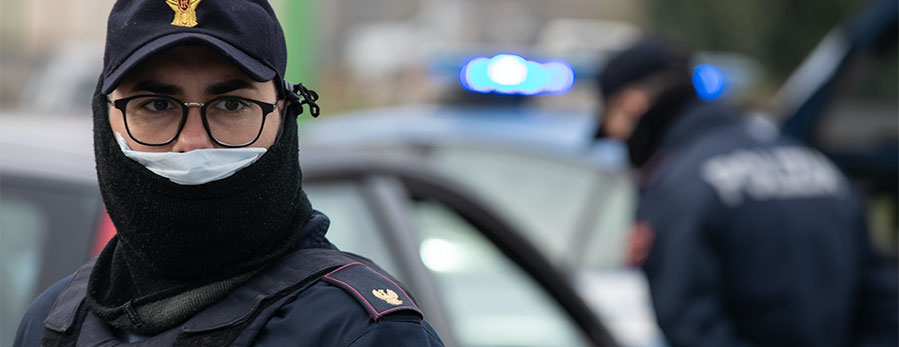
In the first instance, the company wants to focus on professionals who need to stay working such as policemen, logistics workers, shop employees, day-care workers, … A common complication of respiratory viral disease can be a secondary bacterial infection. Professionals could be helped with either an anti-bacterial on their facemask to reduce the chance for these secondary bacterial infections, for better hygiene and less odour build-up. On workwear, a combination of a virus spread reducing and antibacterial solution could help as these garments are typically used during long hours, are non-disposable and most likely will be washed at home.

“Furthermore, normal consumers are increasingly making their own facemasks”, says Sven Ghyselinck. “For face masks, the first line of viral protection is the pore size of the fabric or non-woven (physical barrier).

Typical for these home-made facemasks is that the pore size of these masks are often not sufficient to block viruses from penetration. To reduce the risk of secondary contamination an anti-bacterial treatment could provide an extra line of protection.”

Devan has solutions which withstand washing while keeping its performance. BI-OME as a liquid product is EU BPR, Turkish BPR and US EPA registered. Depending on the rash region, commercialising treated articles be subject to additional local registration procedures.

“We are available for producers, brands and retailers for more in-depth discussions”, Sven adds. “We also have +30 ton of chemicals ready to ship throughout the world. Moreover, most of our distributors have local inventory standing for immediate use.”

“With these products we can improve the performance of millions of meters of fabric, thereby giving better protection to security workers, employees in the food supply chain, home care nurses, school & day-care supports and any other civilians that need it badly to prevent the world and the economy from coming to a halt. Together we can overcome this!”

More News from Devan Chemicals

More News on Textile chemistry

#Sustainability

Indovinya advances sustainable solutions with agreement for the supply of renewable Oxygen from Air Liquide

Indovinya, the specialty chemicals and surfactants division of Indorama Ventures, has entered into an agreement with Air Liquide — a world leader in gases, technologies, and services for industry and healthcare — for the supply of renewable oxygen. The agreement represents a strategic advancement in Indovinya’s commitment to sustainability, as it increases the share of renewable raw materials in the production of ethylene oxide, one of its key products.

#Textile chemistry

DyStar releases FY2025 sustainability report, marking a new milestone towards its 2030 targets

DyStar, a leading specialty chemicals company with more than a century of expertise in product development and innovation, today announced the release of its FY2025 Sustainability Report, marking a significant milestone in its sustainability journey and reinforcing its commitment to long-term value creation.

#Textile chemistry

CHT Group introduces ARRISTAN 7220 for durable soft finishes on coloured and white textiles

The CHT Group has expanded its portfolio of textile finishing solutions with the introduction of ARRISTAN 7220, a non-ionic silicone microemulsion designed to deliver an exceptionally soft handle while maintaining high durability and process reliability.

#Textile chemistry

The CHT Group GmbH awarded Best Managed Company 2026

The CHT Group GmbH has been honored as Best Managed Company 2026. The seal of approval recognizes excellently managed medium-sized companies and is awarded as part of a program by Deloitte Private, UBS, the Frankfurter Allgemeine Zeitung, and the Federation of German Industries (BDI).

Latest News

#Associations

IVGT membership: expertise that pays off

For energy-intensive textile companies, government compensation mechanisms are an important economic factor. The IVGT successfully supports its member companies in applying for state aid and thereby regularly contributes to significant financial relief.

#Research & Development

Networking Day 2026: Industry stakeholders unite around textile recycling

In 2026, the Industry Research Group (IRG) Polymer Recycling once again brought together some of the key stakeholders in textile recycling for its annual Networking Day. This year, the event took place at EREMA’s premises in Ansfelden, Austria. It brought together key players from across the textile recycling value chain for a day of structured exchange and in-depth discussions.

#Knitting & Hosiery

The new RDJ 7/3 defines the design footprint of modern athletic shoes

Stylish, functional, and efficient to produce – spacer fabrics are the all-arounders among textile materials. These versatile fabrics are particularly in demand in the sports and casual footwear sector, as they combine comfort, breathability, and design freedom. At the same time, this industry is trend-driven, dynamic, and price-sensitive like few others. Innovations are therefore a decisive factor for success. With the RDJ 7/3, KARL MAYER offers a solution specifically tailored to these requirements. The particular strength of the new double raschel machine: its exceptional flexibility, thanks to its three jacquard bars.

#Research & Development

Smart textiles reversibly change shape in an energy-efficient manner in response to ambient temperature

Self-actuating textile structures are used in a wide range of applications, such as medical technology, automation, architecture, agriculture, and the apparel industry. An example is the use of shading nets in greenhouses, which can be deployed and retracted depending on the sunlight intensity. The German Institutes of Textile and Fiber Research Denkendorf (DITF) are developing textiles based on shape-memory polymers with reversibly controllable geometry.

TOP