[pageLogInLogOut]

#Textile chemistry

BASF closes acquisition of polyamide business from Solvay
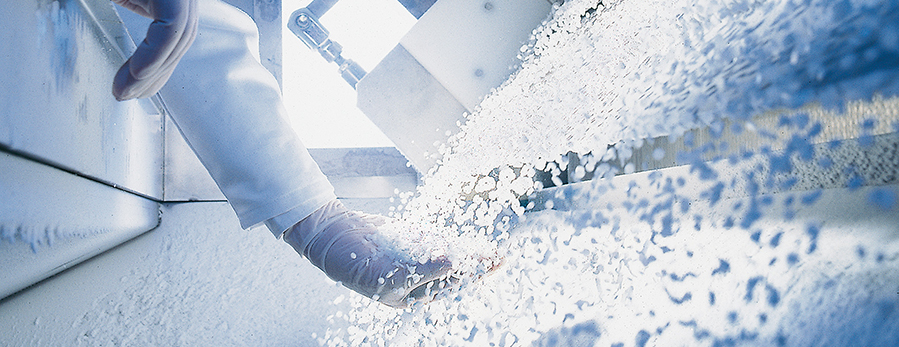
(c) 2020 BASF
Through the backward integration into the key raw material adiponitrile (ADN), BASF will now be present along the entire value chain for polyamide 6.6 and improve its supply reliability.

The purchase price for the polyamide business acquired by BASF on a cash and debt-free basis amounts to €1.3 billion; sales generated in 2018 were about €1.0 billion. The business will be integrated into the Performance Materials and Monomers divisions of BASF.

  • Broadened engineering plastics’ capabilities for innovative solutions
  • Enhanced access to regional growth markets in Asia and the Americas
  • Strengthened backward integration covering the entire polyamide 6.6 value chain with direct access to ADN

“With a broader portfolio, a stronger regional presence and improved supply reliability BASF will deliver significant benefits to our customers,” said Wayne T. Smith, member of the Board of Executive Directors of BASF SE. “The acquisition stands for our strong commitment to the polyamide business globally.”


The transaction between Solvay and BASF includes eight production sites in Germany, France, China, India, South Korea, Brazil and Mexico as well as research and development centers and technical consultation centers in Asia, North and South America. In addition, it encompasses shares in two joint ventures (JV) in France: Solvay’s 50% share in the Butachimie JV with Invista to produce ADN and hexamethylenediamine (HMD) and a 51% share in the new Alsachimie JV between BASF and DOMO Chemicals to produce adipic acid.

At closing, approximately 700 Solvay employees join BASF. The Alsachimie JV between BASF and DOMO Chemicals in France employs approximately 650 employees, the Butachimie JV between BASF and Invista has approximately 400 employees.

In September 2017, BASF signed an agreement with Solvay on the acquisition of Solvay’s global polyamide business, subject to the approval of the relevant antitrust authorities. The E.U. Commission approved the acquisition of the polyamide business, subject to certain conditions, on January 18, 2019. These conditions required the sale of parts of the original transaction scope to a third party, specifically Solvay’s production plants and innovation competencies in the engineering plastics field in Europe. DOMO Chemicals, Leuna, Germany, was approved by the E.U. Commission as the buyer. The transaction between Solvay and DOMO Chemicals also closed on January 31, 2020.
More News from BASF Aktiengesellschaft
Performance Chemicals for Textiles Europe

#Recycled Fibers

Lindex and BASF partner to bring textile-­to­-textile recycled polyamide to lingerie sector

Lindex has partnered with BASF’s loopamid® to accelerate textile-­to-­textile recycling and advance the shift towards more circular material solutions in the fashion industry. Together they introduce loopamid to the lingerie sector.

#Textile processing

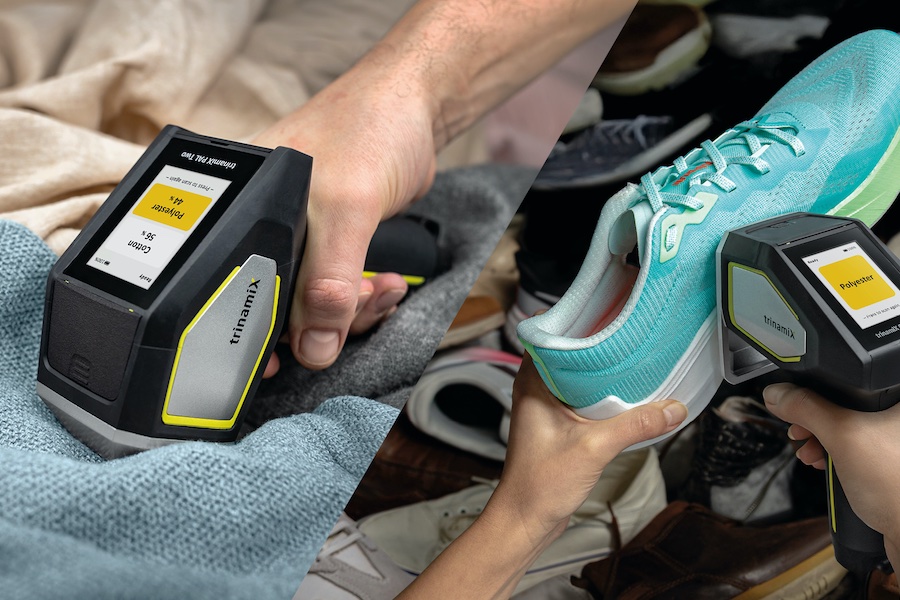
trinamiX mobile NIR spectroscopy: New applications for the footwear and textile industry

trinamiX GmbH expands its solution portfolio for the circular economy, now enabling the identification of materials used in the footwear and textile industries. With its mobile near-infrared (NIR) spectroscopy solutions, trinamiX supports manufacturers, sorters, recyclers, and brand owners in reliably identifying materials and improving transparency across increasingly complex value chains.

#Techtextil 2026

BASF at Techtextil 2026: Helping to shape the future of the textile industry with tangible solutions

At the leading international trade fair for technical textiles and nonwovens from April 21 to 24, 2026 at the Messe Frankfurt, BASF will present numerous solutions and new projects in the textile sector to customers and partners at booth B 68 in hall 11.0. The focus is on product innovations and future-oriented technologies.

#Textile chemistry

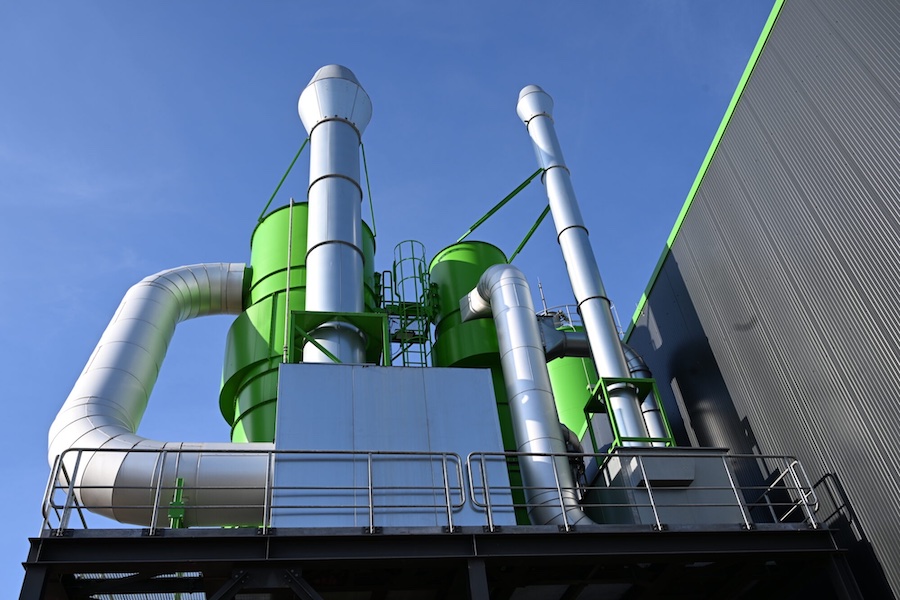
A flagship for chemical production: BASF inaugurates world-scale Verbund site in China

BASF today (March 26, 2026) celebrated the official inauguration of its newly built, world-scale Verbund site in Zhanjiang, Guangdong Province in southern China. Covering an area of around four square kilometers, it is more than a major BASF project in the chemical growth market of China. “Zhanjiang shows what the future of chemistry looks like: efficient, digital and sustainable by design. The site showcases a smart integrated Verbund structure on an industrial scale,” said Dr. Markus Kamieth, CEO of BASF, at the ceremony attended by representatives from government, customers, business partners and employees.

More News on Textile chemistry

Latest News

#Technical Textiles

Fifteen years of Autoneum – From spin off to global technology leader

What started as a strategic carve‑out has since become the success story of a global technology leader in acoustic and thermal management solutions for vehicles. Headquartered in Winterthur, Switzerland, Autoneum supplies leading automobile manufacturers worldwide with innovative, lightweight and increasingly sustainable solutions.

#Nonwoven machines

Kruger, Canada, orders first nonwovens line for sustainable wipes from ANDRITZ

International technology group ANDRITZ has received an order from newly established Kruger Nonwovens to deliver a complete WetlaceTM hybrid line for the Wayagamack mill in Trois-Rivières, Quebec, Canada. With this investment, pulp and paper producer Kruger is preparing to enter the nonwovens market with a new generation of plastic-free, chemical-free materials for sustainable wipes. The line is the first of its kind in Canada and is scheduled to start production in 2028.

#ITM 2026

Picanol to present its leading weaving technology at ITM 2026

Picanol is pleased to announce it will be participating in ITM 2026 in Istanbul. This is a key event for industry professionals to engage with the Turkish textile industry as well as the extensive international audience attending the fair. During the event, Picanol will present its latest innovations to the visitors in Hall 8, booth 802.

#Man-Made Fibers

The updated poster on biodegradable Polymers in various environments has been released

As part of the PerPlacsBio project, nova-Institute has updated its popular poster on the biodegradability of polymers in different environments. The updated version reflects current standards, certifications and the latest scientific findings. The poster can be used to assess biodegradable alternatives for use in agriculture and forestry, and it is now available in German for the first time.

TOP