[pageLogInLogOut]

#Textile chemistry

Solar Impulse Foundation supports clean and profitable developments
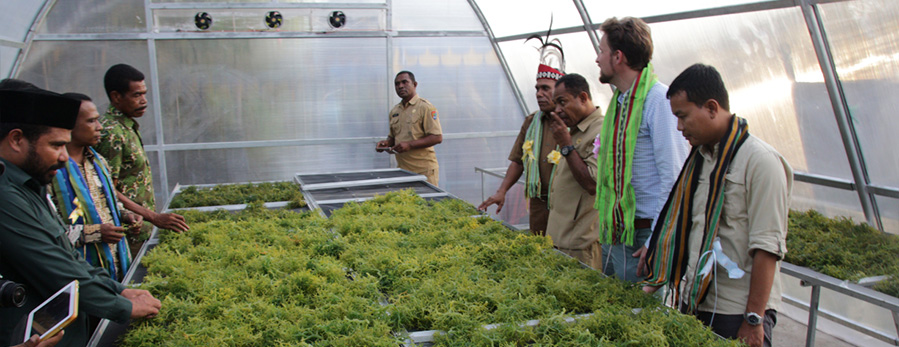
Covestro recently received the Solar Impulse Efficient Solutions Label for two technologies that have proven to be economically viable and environmentally friendly solutions. One of them are solar-powered greenhouses for drying food to make it more durable. (c) 2020 Covestro
Covestro has recently been granted the Solar Impulse Efficient Solutions Label for two projects, which have been proven as economically profitable as well as environmentally protective solutions: solar-powered greenhouses for drying food to preserve it, and a waterborne technology called INSQIN® for sustainable textile coating. This Label from the Solar Impulse Foundation serves as a new and credible symbol and as a guarantee of quality to those looking to implement clean solutions.

Solar greenhouse dryers for food preservation / Waterborne INSQIN® technology for sustainable textile coating

“With our Solar Impulse Efficient Solution label we want to acknowledge and publicise developments like these Covestro technologies – developments, which can boost economic growth while preserving the environment,” explains Bertrand Piccard, Swiss pioneer and founder of the Solar Impulse Foundation. “By selecting a thousand Efficient Solutions, we want to support and speed up the implementation of clean and profitable solutions in the industry.”

Dr. Christian Haessler, Head of Sustainability at Covestro, welcomes the new labeling: “This is an excellent confirmation by independent experts that our company is much committed to truly sustainable developments, which are beneficial for society, create value and reduce the environmental impact. This includes above all the fulfillment of the UN Sustainable Development Goals.”

Ideas that bear fruit

The solar greenhouse dryer is an efficient, decentralized, cost-effective and sustainable solution for reduction of post-harvest losses in agricultural products. The high efficiency of the dryer is achieved through the use of polycarbonate for construction of a parabolically shaped greenhouse. The material is transparent to visible and in particular infrared light and shows good thermal insulating properties, allowing the dryer to heat up quickly.

The installation of solar dryers for food preservation is part of Covestro´s “inclusive business” approach, with which the company wants to strengthen local economic development, alleviate poverty and support social progress by integrating low-income communities in the value chain. So far Covestro has provided the materials for the installation of more than 1,500 solar dryers in different sizes in India and different ASEAN countries, by that significantly increasing the income of regional farmers.


Sustainable manufacture of coated textiles

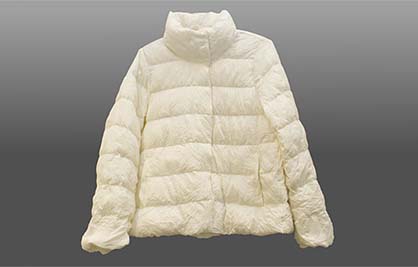
With its INSQIN® technology, Covestro significantly increases the sustainability of textile coating. The technology is based on waterborne polyurethane coatings, making textile production more eco-friendly and easier to handle. Using INSQIN®, the production of coated fabrics also requires up to 95 percent less water and 50 percent less energy.
(c) 2020 Covestro
(c) 2020 Covestro


For implementation of the technology, Covestro is working directly together with brand owners in the apparel and footwear industries as well as with textile manufacturers. Only recently, the company also introduced the technology in the automotive industry, where INSQIN® enables more sustainable, flexible and durable coatings in the car interior – with a premium look and feel.

The World Alliance for Efficient Solutions, founded under the auspices of the Solar Impulse Foundation, collaborates with start-ups, companies, institutions, NGOs and investors to create synergies, share knowledge and build relationships for speeding up the implementation of clean and profitable solutions.


More News from Covestro AG

#Technical Textiles

Covestro showcases monomaterial concept in autonomous SUE People Mover

UE | STUDIOS has unveiled the fully autonomous electric minibus “Self-driving Urban E-Shuttle” (SUE), placing strong emphasis on sustainable material design. Developed within a project funded by the Federal Ministry for Economic Affairs and Energy (BMWE) and the European Union, the vehicle will begin public road testing this year. At the core of the concept is the consistent use of recyclable monomaterials to improve circularity at end of life.

#Textile chemistry

Covestro and Heraeus Precious Metals collaborate to enable safer, more sustainable antimicrobial textile coatings

Laboratory tests reveal that AGXX antimicrobial surface technology from Heraeus Precious Metals is fully compatible with Impranil® PU dispersions which are part of the waterborne INSQIN® textile coating technology from Covestro, paving the way for more sustainable antimicrobial textile coatings. This discovery comes at a key moment for the textile coatings industry. As the sharing economy continues to grow, more people are coming into regular contact with high-use surfaces, creating ideal conditions for bacteria, viruses, and other microorganisms to thrive.

#Textile chemistry

Covestro celebrates decade of innovation and sustainable growth

Covestro celebrates its 10-year anniversary today. Since its carve-out from Bayer in 2015, the company has developed into a global leader in high-performance polymer materials and a pioneer in circular economy solutions. With a strong focus on innovation and sustainability, Covestro’s materials are now embedded in countless applications worldwide – from mobility and construction to electronics, healthcare, and consumer goods.

#Textile chemistry

Covestro extends contract with CTO Dr. Thorsten Dreier ahead of schedule until 2031

Dr. Thorsten Dreier will remain Chief Technology Officer of Covestro for a further five years. The Supervisory Board has extended his contract, which runs until June 2026, ahead of schedule from July 1, 2026 to June 30, 2031.

More News on Textile chemistry

#Textile chemistry

A flagship for chemical production: BASF inaugurates world-scale Verbund site in China

BASF today (March 26, 2026) celebrated the official inauguration of its newly built, world-scale Verbund site in Zhanjiang, Guangdong Province in southern China. Covering an area of around four square kilometers, it is more than a major BASF project in the chemical growth market of China. “Zhanjiang shows what the future of chemistry looks like: efficient, digital and sustainable by design. The site showcases a smart integrated Verbund structure on an industrial scale,” said Dr. Markus Kamieth, CEO of BASF, at the ceremony attended by representatives from government, customers, business partners and employees.

#Research & Development

Hof University develops sustainable textile coating for the fashion of tomorrow from mushrooms

Clothing is often treated as disposable: T-shirts for events, general merchandise, or short-term campaigns frequently end up in the trash after only a few uses. This is particularly problematic given that their production still largely relies on fossil-based materials. This is precisely where a new research project at Hof University of Applied Sciences comes in.

#Textile chemistry

DyStar Group announces Board transition to drive innovation

DyStar, a leading specialty chemical company with a heritage of more than a century in product development and innovation, announced today the appointment of Ruan Cunfan to its Board of Directors, effective 20 February 2026.

#Textile chemistry

Jeanologia urges industry to accelerate PP Spray phase-out following ZDHC Watchlist update

Potassium permanganate has officially entered the Chemical Watchlist of the ZDHC Foundation, signaling increased scrutiny and potential phase-out of one of the most hazardous chemicals still used in denim finishing. The inclusion confirms an industry shift that Jeanologia anticipated more than a decade ago.

Latest News

#Research & Development

Textile cascade filter for removing microplastics from wastewater

Microplastics are now found almost everywhere, even in remote regions of Antarctica. They enter the human body through the food chain. Studies indicate that microplastics may have negative effects on the human health.

#Textile processing

Jeanologia showcases the future of product development

Jeanologia is showcasing how software is transforming product development in the fashion industry at PI Apparel Europe: The Fashion Technology Show, taking place on March 30–31 in London.

#Techtextil 2026

Groz-Beckert showcases cross-segment innovations for technical textiles in Frankfurt

From April 21 to 24, 2026, Groz-Beckert will present its latest innovations and solutions across the product areas of knitting, weaving, nonwovens and sewing at Techtextil 2026 in Frankfurt (Hall 12, Booth B90).

#Techtextil 2026

VANDEWIELE Group at Techtextil 2026 – Textile innovations together

The VANDEWIELEGroup will showcase its latest technologies for technical textiles at Techtextil 2026 in Frankfurt from April 21–24 (Hall 12.0, Stand C21). As a global leader in textile machinery, the group brings together specialised brands to support the evolving demands of high-performance textile applications. Visitors will discover solutions in laboratory testing, yarn joining, yarn feeding and thread tension monitoring, designed to create measurable value across the textile value chain.

TOP