[pageLogInLogOut]

#Techtextil 2022

Filidea Technical Yarns moving towards new products and markets under the banner of sustainable evolution
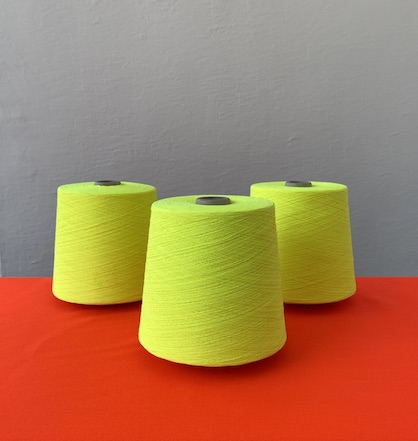
Filidea Technical Yarns, the Filidea section specialised in the development and production of technological, performant yarns in blends of natural and man-made fibres, presents at Techtextil the projects on which its R&D department has been working for the last three years.
Filidea yarn for technical textile (c) 2022 Filidea


Filidea is a European company with a strong vocation regarding innovation, involving a highly-specialised team at its R&D department in Biella, Italy. It is active in five main applications of technical yarns: workwear, protective wear, automotive, industrial sewing threads and yarns with safety standards for the contract furnishing sector.

New yarns for the contract furnishing world, for industrial sewing threads  and the challenge of biodegradable polyester

At the product level, big impulse has been given to the range of industrial sewing threads for various uses, with new references both in the polyester + polyester compositions as well as in cotton + polyester. The industrial threads, marketed as raw material, allow the company to consolidate its position on some strategic markets, such as in Germany.

As a result of the partnership with Trevira® for the spinning of the flame-retardant Trevira®CS fibre, Filidea Technical Yarns reinforces its offer of non-dyed performant yarns aimed at the world of contract furnishings. The sector of hospitality, of furnishings for public and work spaces, fairs and areas for social-cultural gatherings will find a comprehensive answer to its demands in the Trevira®CS-based yarns: with regard to fireproof standards, versatility, resistance to wear and tear, excellent colour rendering, and last but not least, the component of fibre sustainability, an essential value for the design of spaces for collective use.

Sustainable innovation in terms of the product and the process has always been one of the founding pillars of Filidea Technical Yarns. In reply to the demands, also in the field of technical textiles, to reduce the impact that non-biodegradable textiles have at the end of their life-cycle, the company is now at an advanced stage of the journey towards the development of biodegradable polyester. This important project is in partnership with CiCLO, the company which has fine-tuned the additive able to make polyester and nylon fibres similar to natural fibres during biodegradation. At the Filidea Technical Yarns stand at Techtextil, it will be possible to make an appointment to look at this topic in depth.


Sustainable innovation: traceable blockchains and the MagnoLab network of enterprises

Continuing in the development of sustainable production across the sector, the company has undertaken two important initiatives with other actors in the textile supply chain.

Filidea participates in Trick, the European blockchain project – part of the European Horizon 2020 programme – involving 29 partners from six different nations to reinforce the circular economy thanks to the development of a digital platform which is complete, traceable and available to operators in the textile sector.

More specifically, as a result of its decades-long know-how in the production of yarns, Filidea contributes to increasing knowledge of the supply chain and the circular economy.

MagnoLab, the network of enterprises in the textile supply chain, and of which Filidea is one of the founding members, gives the ultimate impulse to constant R&D activities. MagnoLab was established in 2022 in order to develop tangible solutions for the sector, to create values and to collaborate with regard to current and future demands. 

MagnoLab brings together textile companies which are active at various stages of and with complementary roles in the supply chain, and which work in synergy and share objectives, resourcefulness and long-sightedness, with the aim of developing innovation in a structured way. MagnoLab is also open to welcome new partners.

One of its strong points is the availability of a physical network of pilot facilities, installed in a unique plant in Cerrione (Biella), where it is possible to develop innovative products and processes using rapid, lean test cycles.

This unique situation allows companies to concentrate prototyping activities to present to future customers and to experiment with solutions in terms of product and process to then transfer directly to the plants of the partners, and proceed to production at scale.

MagnoLab is also a representation of the main links in the textile supply chain, from preparation of the fibres for spinning, to weaving, dyeing and finishing. The various steps in a single structure generate unique high added value and cross-fertilisation context.

The aim of building relationships with educational institutes in the textile and fashion sectors both in Italy and abroad creates an additional stimulating environment where teaching, research and development, and innovation are merged.

More News from TEXDATA International

#ITM 2026

ITM 2026: The new geography of textile production

New production hubs are emerging across North Africa and Central Asia, while Türkiye is accelerating its transformation toward higher-value, technology-driven and more sustainable textile manufacturing.

#Research & Development

“Production is a product”

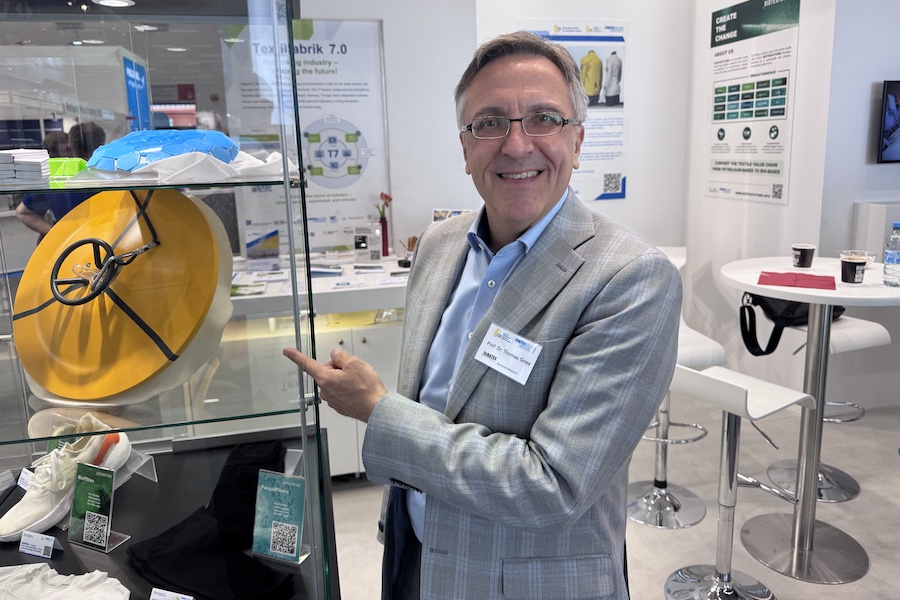
From technical textiles and AI-driven robotics to the limitations of textile circularity: Professor Dr Thomas Gries looks back on more than two decades of development at ITA Aachen. In the interview, he explains why production technology remains a decisive success factor, discusses international collaborations and innovation ecosystems, and shares his views on the transformation of production landscapes and the challenges facing an increasingly regulated industry.

#Knitting & Hosiery

“We need to move away from the price trap and return to a value-driven mindset.”

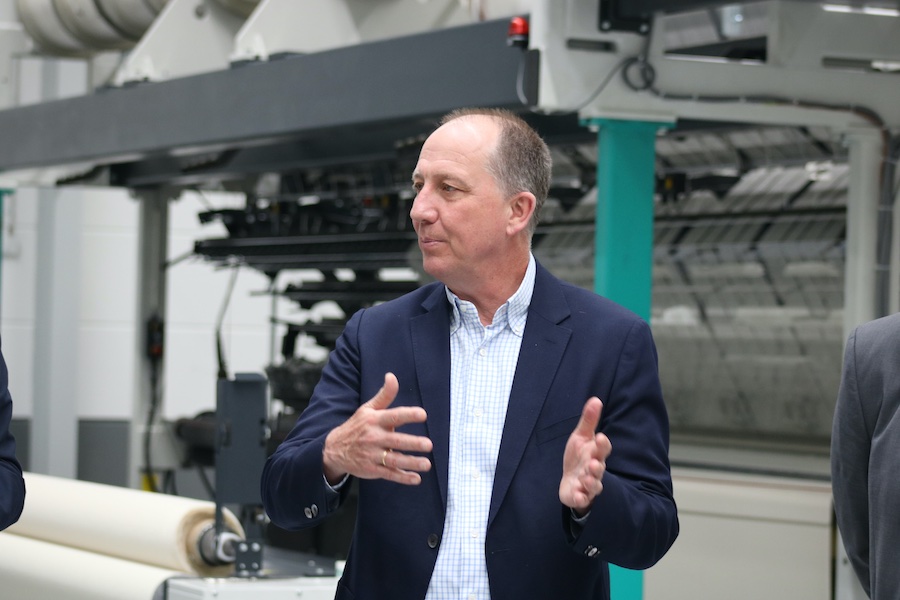
With its new Textile Innovation Center, KARL MAYER is sending a strong signal for innovation, collaboration, and the future of textile applications. In this interview, Karl Josef Mayer discusses new opportunities in warp knitting, the processing of staple fibres, recycling, the changing role of machinery manufacturers, and why the textile industry must once again focus more strongly on the value of textiles. by Oliver Schmidt

#Associations

“Innovation, resilience and international experience remain the great strengths of the Swiss textile machinery industry”

Geopolitical uncertainty, growing competitive pressure from China, new free trade agreements and the shift towards a circular economy are currently reshaping the global textile industry. In this interview, Cornelia Buchwalder discusses the current mood within the Swiss textile machinery sector, the industry’s distinctive innovative strength, new market opportunities in India and Asia, and the technological trends that could shape the upcoming trade fair cycle leading up to ITMA 2027.

More News on Techtextil 2022

Latest News

#

Towards pragmatic and harmonised labelling in the EU

EDANA, alongside 14 European associations, urges the European Commission and Member States to adopt a pragmatic approach for the future harmonised packaging labels, in line with the EU’s agenda for the EU Single Market, simplification and competitiveness. The system should rely on text-free pictograms, available in achromatic or monochromatic versions matching the packaging palette, with the possibility of using digital labelling as a core element. Our associations represent manufacturers of consumer goods across Europe.

#Spinning

"We will become a recycling powerhouse"

The textile industry is now in its fourth consecutive year of crisis, while automation, artificial intelligence and recycling are reshaping the rules of the game. In this interview, Rieter CEO Thomas Oetterli discusses the first signs of a market recovery, reflects on his first three years at the helm of the company, explains the integration of Barmag, outlines Rieter’s vision of the fully automated spinning mill and highlights the strategic importance of recycling. In doing so, he explains why the new Rieter Group aims to play a leading role in transforming the textile value chain into a circular economy.

#Sustainability

Textile Exchange unveils agenda for 2026 conference in Vancouver

Textile Exchange has released the agenda for its 2026 Conference, which will take place from October 12–16 in Vancouver, Canada. Under the theme “The Implementation Era,” the event will focus on translating sustainability commitments into practical action and scaling solutions across businesses, supply systems, and landscapes.

#Associations

Textile PRO Forum calls for greater harmonisation of textile EPR systems across Europe

The Textile PRO Forum has published a new analysis highlighting the need for greater harmonisation of textile Extended Producer Responsibility systems across Europe. The document, Toward harmonised Textile EPR Systems in Europe: analysis and recommendations, presents the results of work carried out by Workstream 1 of the Textile PRO Forum, led by Dr. Eng. Viola Corbellini, Strategic Development and Innovation Expert at Erion Textiles, and Eng. Luca Campadello, General Director at Erion Textiles. The workstream focused on reducing administrative burden for textile producers by identifying areas where procedures could be better aligned across countries.

TOP


