#Sustainability
Textile Exchange announces the winners of the 2024 Climate and Nature Impact Awards.
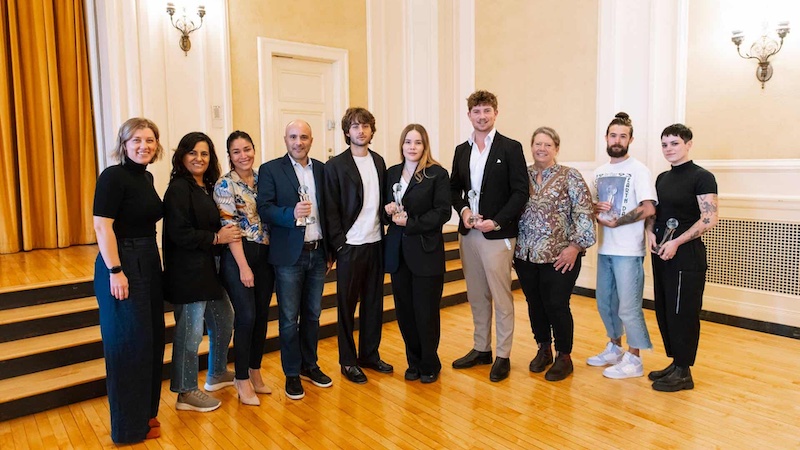
This year’s award recipients join a distinguished community of climate-focused innovators and will receive a one-year membership at the Friend or Supporter level for their organization, along with a complimentary ticket to next year’s conference.
Ryan Young Climate Leader
In memory of Ryan Young, Textile Exchange’s late COO and the visionary behind our Climate+ initiative, the Ryan Young Climate Leader Award celebrates individuals who demonstrate outstanding commitment, leadership, and tangible action in reducing emissions across fiber and raw material production in the fashion, textile, and apparel industries.
This year, the award honors Natural Intelligence Farming, led by Ian and Di Haggerty. Over the past 30 years, their work has embodied a profound respect for natural systems, highlighting the intricate connections between soil microbes, plants, animals, and humans. Through these regenerative practices, they’ve achieved remarkable outcomes in food, fiber, and human health at both depth and scale.
In addition to this individual award, we’ve introduced new categories, including the Project of the Year awards, to recognize innovative initiatives making significant impacts across the industry.
“I feel immense gratitude to all at Textile Exchange for their ongoing efforts to raise awareness of how we can collectively work towards better business and a better future for our precious planet. I also feel great humility and appreciation of the opportunity this award brings to showcase how our natural world, in partnership with dedicated and skilled participants, can create the most exquisite, luxurious fibers in a manner that supports the ecological regeneration of our planet.”?
Nature’s lesson is in reciprocity. For all to benefit and facilitate life we must give back more than we take. So, I also feel a deep sense of possibility in this growing recognition of the foundational work land stewards play in nurturing nature’s magnificence – the integrity of our work underpins the entire textile realm. To this end, I feel grateful for the opportunity to be part of growing strong, trusted and respectful relationships with reciprocity front and center and the nurturing of life at their core. Our beautiful planet demands no less.” – Di Haggerty, Co-Owner of Prospect Pastoral and Co-Founder of Natural Intelligence Farming
Climate: Recognizes projects effective in reducing emissions associated with raw material extraction and initial processing, while also considering the ecosystems, landscapes, and communities where fibers are produced.
Winner: Manteco – MWool® and ReviWool®, reduced impact wools by Manteco®
Established in 1941 with the goal of ensuring recycled wool fabrics are as beautiful and durable as virgin wool, Manteco works to create premium quality textiles made from recycled post-consumer wool garments and pre-consumer scraps. It maintains a focus on circularity and is recognized for its creativity, research, investments, and scientific approach to innovative textile solutions and sustainability.
“We are honored to receive this prestigious award by Textile Exchange. It is an important recognition of our circularity and the scientific assessment work that we have carried out as a part of our strategy for sustainable development.” – Marco Mantellassi, Co-CEO of Manteco S.p.A.
Nature: Honors projects using regenerative agriculture best practices, contributing to beneficial impacts on biodiversity, and responsibly using water, ensuring it is safely returned to our systems.
Winner: Bergman Rivera – The White Cotton Project
Bergman Rivera’s mission is to empower farmers to be economically sustainable by giving them the tools to grow crops that are profitable and bringing them out of poverty. It has created custom projects for different brands like Veja, Patagonia, Outerknown and Hanna Andersson so that brands can identify the farmers that are part of their project, know their exact farm locations, get to know them and their families, and have full traceability of the cotton they receive.
Bergman Rivera’s work to further the transition of conventional cotton farming to organic and regenerative, while creating more stability and equity across supply chains, is a great example of how we can take care of people and planet when we come together.
“This is a recognition of the silent work that farmers have been doing for years, preserving ancient traditions, the environment and their biodiversity. We accept this award on their behalf.” – Orlando Rivera, CEO of Bergman Rivera
Innovation: Celebrates projects demonstrating unconventional thinking in creating alternatives to new virgin synthetics and scaling preferred synthetics, such as textile-to-textile recycling, biosynthetics, and carbon capture technologies.
Winner: Keel Labs – Kelsun™ fiber
Keel Labs is a female-founded, next-generation material company harnessing the power of the ocean to create textile solutions. They have created a 100% bio-based fiber, made from an abundant biopolymer found in seaweed called Kelsun. Keel Labs continues to explore new applications for Kelsun, while building out its current partnerships in the fashion industry, which includes Stella McCartney, Mr. Bailey of Concept Kicks, and Interesting Times Gang. Kelsun is a promising example that material innovations can be scalable and is primed for an impactful future.
“Being awarded the Innovation Project of the Year by Textile Exchange is a profound honor, especially given the organization’s renowned industry standing and insight. It is inspiring and validating to know that the hard work we’ve put in for years to scale our technology is resonating and that its necessity is understood. For the industry, it represents an important moment in time, where critical solutions like Kelsun are on the rise within the market to resolve the challenges textile supply chains have faced to date.” – Tessa Callaghan, CEO of Keel Labs
Collaboration in Action: Highlights projects that reduce environmental impacts through partnerships and engagement with other organizations, inspiring others to accelerate industry action in achieving climate reduction targets and nature goals.
Winner: Materra – Materra Regenerative Cotton
Materra builds solutions to grow and source more climate-resilient, transparent, and equitable cotton. Working with and for farmers, it designs and implements custom cotton farming and sourcing programs – including regenerative cotton – for fashion and textile brands. Critical impact data needs to come directly from the source; Materra’s own digital technology complements their programs and raw fiber so brands and customers know what went into making their cotton.
A core part of the work focuses on building sustainable partnerships with fashion brands through multi-year regenerative cotton offtake agreements between brands and 5000+ farmers in India. Binding agreements like these ensure much-needed support and risk-sharing for farmers.
“We are delighted that our work in forging strong partnerships between brands and the 4000+ smallholder farmers we work with, has been recognized by Textile Exchange. Our mission is to help fashion set the template for radical supply chain transparency and verifiable impact and we hope others will join us on this journey.” – Edward Brial, CEO and Co-Founder of Materra