[pageLogInLogOut]

#Sustainability

Webinar Series: Europe’s green transition in the textile sector

The Partnership for Sustainable Textile and the Green Button launch joint webinar series on upcoming legislation under the EU Textile Strategie.

Join the Partnership for Sustainable Textiles and the Green Button on 21st of September 2023 for the kick-off of its upcoming six-month webinar series to learn more about the EU’s Green Deal and how it will affect the textile and garment sector. Hear from experts and stakeholders about what’s coming and how to be best prepared.

In late 2019, the European Commission published its European Green Deal, the EU’s new growth strategy to make the EU climate neutral by 2050 and to transform the EU into a modern, resource-efficient, and competitive economy. In March 2022, the publication of the Strategy for Sustainable and Circular Textiles followed, setting out a vision to ensure that: “By 2030 textile products placed on the EU market are long lived and recyclable, to a great extent made of recycled fibres, free of hazardous substances and produced in respect of social rights and the environment.”

Under these strategies, the EU Commission has put forward several far-reaching legislative initiatives, many of them are expected to enter into force from 2025 and 2026 onwards. Introducing far-reaching new design requirements, greenwashing regulation, rules to prevent overproduction and overconsumption, and rules to handle textile waste more responsibly, these initiatives will completely overhaul the rules for production, consumption, sale, and disposal of textiles in the EU.


Six-months webinar series is launching now

You want to know more about the legislative framework under the EU Green Deal and how it could initiate change and affect your business? Join us for a series of six webinars on upcoming legislation under the EU Green Deal and the EU Textile Strategy!

The webinar series will provide you with:

• an introduction to the wider EU policy landscape and how upcoming legislations relate to international obligations

• a deep dive into specific legislative initiatives that will transform the textile and apparel sector in the coming years

• a better understanding of how these initiatives will likely impact companies and global supply chains.

Please click here for more information on the series.

https://www.gruener-knopf.de/media/951/download


21st of September 2023 10am – 12pm

Kick-off and deep dive into the Corporate Sustainability Due Diligence Directive

This kick-off session will set the scene for the upcoming webinars, provide an overview of the policy landscape, and dive into one of the initiatives at the heart of the Green Transition: The Corporate Sustainability Due Diligence Directive (CSDDD). We will look into the details of the CSDDD proposal and its likely implications for the textile sector, both for brands and retailers as well as for suppliers. We will focus on critical issues, the different positions of stakeholders, and learn about where the policy process stands.

Registration information will follow shortly.


More News from TEXDATA International

#ITM 2026

ITM 2026: The new geography of textile production

New production hubs are emerging across North Africa and Central Asia, while Türkiye is accelerating its transformation toward higher-value, technology-driven and more sustainable textile manufacturing.

#Research & Development

“Production is a product”

From technical textiles and AI-driven robotics to the limitations of textile circularity: Professor Dr Thomas Gries looks back on more than two decades of development at ITA Aachen. In the interview, he explains why production technology remains a decisive success factor, discusses international collaborations and innovation ecosystems, and shares his views on the transformation of production landscapes and the challenges facing an increasingly regulated industry.

#Knitting & Hosiery

“We need to move away from the price trap and return to a value-driven mindset.”

With its new Textile Innovation Center, KARL MAYER is sending a strong signal for innovation, collaboration, and the future of textile applications. In this interview, Karl Josef Mayer discusses new opportunities in warp knitting, the processing of staple fibres, recycling, the changing role of machinery manufacturers, and why the textile industry must once again focus more strongly on the value of textiles. by Oliver Schmidt

#Associations

“Innovation, resilience and international experience remain the great strengths of the Swiss textile machinery industry”

Geopolitical uncertainty, growing competitive pressure from China, new free trade agreements and the shift towards a circular economy are currently reshaping the global textile industry. In this interview, Cornelia Buchwalder discusses the current mood within the Swiss textile machinery sector, the industry’s distinctive innovative strength, new market opportunities in India and Asia, and the technological trends that could shape the upcoming trade fair cycle leading up to ITMA 2027.

More News on Sustainability

#Sustainability

Closing the Footwear Loop reveals challenges and opportunities for circular footwear

The footwear industry faces one of the most complex circularity challenges in the fashion sector. A new Phase 1 report from the Fashion for Good initiative Closing the Footwear Loop, developed together with Circle Economy, provides new insights into the composition, condition and recycling potential of post-consumer footwear waste.

#Man-Made Fibers

The updated poster on biodegradable Polymers in various environments has been released

As part of the PerPlacsBio project, nova-Institute has updated its popular poster on the biodegradability of polymers in different environments. The updated version reflects current standards, certifications and the latest scientific findings. The poster can be used to assess biodegradable alternatives for use in agriculture and forestry, and it is now available in German for the first time.

#Sustainability

A new standard to combat plastic waste in forests

With DIN SPEC 35808 “Tree Shelter for Forestry Applications,” the testing and research service provider Hohenstein, in collaboration with Rottenburg University of Forestry, as well as forestry authorities and industry partners, has established a clear framework for bio-based and fully biodegradable tree shelters. The pre-standard defines requirements and practical testing methods designed to reduce plastic waste in forests and strengthen the long-term protection of soil and the environment.

#Denim

Denim moves towards sustainability

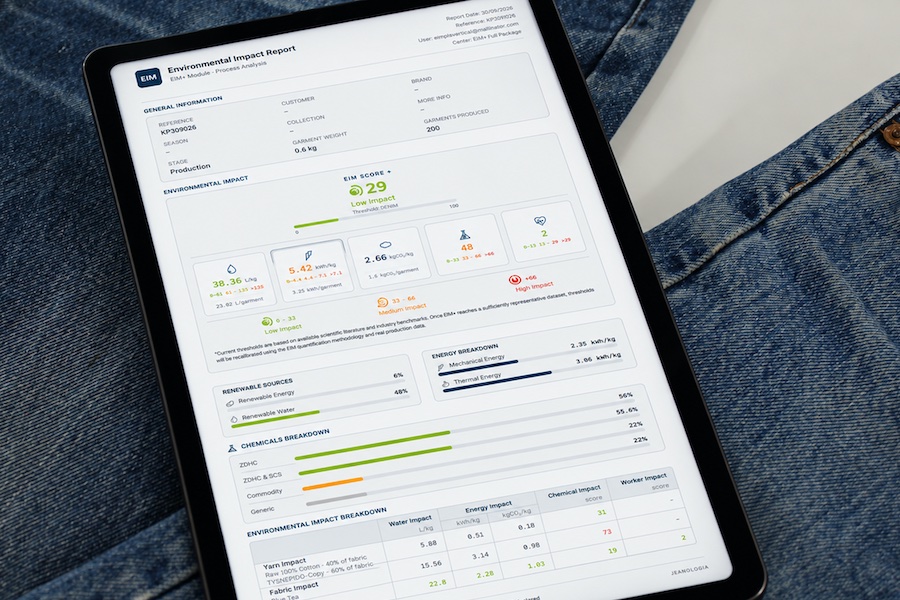
EIM (Environmental Impact Measurement), the global reference platform for measuring the environmental impact of garment finishing, presents the second edition of its annual report Denim Industry Progress & Insights 2025. The study analyses over 100,000 real denim finishing processes, providing an accurate and up-to-date view of the industry’s evolution towards more sustainable models.

Latest News

#Recycled Fibers

Indorama Ventures enables brands to scale circular textiles through proven, traceable supply chains

Indorama Ventures, a global leader in recycled polyester staple fibers and filament yarns, will exhibit at Textiles Recycling Expo in Brussels on June 24–25. At the event, the company will show how brands and textile manufacturers can build traceable, circular textile supply chains by working with proven partners who deliver recycled materials on an industrial scale.

#Recycled Fibers

RECOVER™ launches Recover™ Yarns to accelerate recycled cotton uptake

Recover™, a leading materials science company and one of the world’s largest producers of recycled cotton fiber, today announces the launch of Recover™ Yarns, a curated portfolio of ready-to-use yarn solutions designed to accelerate the adoption of recycled cotton across the apparel supply chain.

#Spinning

Barmag and Hitech Automation enter into partnership for an auto-doff system for texturing machines

Barmag (Suzhou) Technology Co., Ltd. and Hitech Automation Solutions PVT LTD. of Surat, India, have agreed to an exclusive partnership to jointly market Hitech’s Doffmatic automation solution for Barmag’s proven manual eFK texturing machines. In many texturing facilities, manual doffing processes remain heavily operator-dependent – resulting in issues such as increased scrap, inconsistent quality, and limited productivity.

#ITM 2026

Uster’s new Recycling Opening Index guides spinners to the perfect blend

Uster AFIS 6 now offers the key data for better decisions when blending recycled fibers. Process control is decisive in determining the quality and economic outcome. The new R Recycling Module of AFIS 6 introduces the Recycling Opening Index (ROI), so spinners can optimize their circularity credentials. It was officially launched at ITM 2026 in Istanbul, Türkiye.

TOP