[pageLogInLogOut]

#Sustainability

Autoneum joins the United Nations Global Compact initiative

© 2023 autoneum
Autoneum has joined the worldwide United Nations (UN) Global Compact initiative for corporate sustainability. The Group is thus committed to acting responsibly in accordance with the principles of the UN Global Compact in the areas of human rights, labor, environmental protection and anti-corruption.

Corporate sustainability and social responsibility have a long tradition at Autoneum. The Group is committed to becoming the benchmark for corporate responsibility within its industry. This commitment is underlined by Autoneum’s Advance Sustainability strategy, which includes a set of ambitious environmental, social and ethical targets. Autoneum’s science-based targets to reduce CO2 emissions in the near term have been validated through the Science Based Targets initiative (SBTi) and are in line with the Paris Agreement goals to limit global warming to well below 2°C. Autoneum is also continuously improving the environmental performance of its products in accordance with increasing customer demand for sustainable technologies. Furthermore, Autoneum is constantly strengthening its Group-wide governance, risk and compliance framework and expanding its positive impact on global communities, for example through regular screenings of its Compliance Management System or the implementation of social engagement projects in cooperation with local stakeholders at Autoneum locations across the globe.

By joining the world’s largest initiative for sustainable business – the UN Global Compact sponsored by the United Nations –, Autoneum is strengthening its commitment to sustainable corporate development at its sites worldwide. Launched in 2000, the UN Global Compact brings together more than 13 000 members in 162 countries.


In addition, Autoneum discloses its environmental performance data to its main stakeholders through the Carbon Disclosure Project (CDP) platform. In the 2022 EcoVadis sustainability rating, Autoneum performed above average and received a silver medal.

More News from TEXDATA International

#Digital Printing

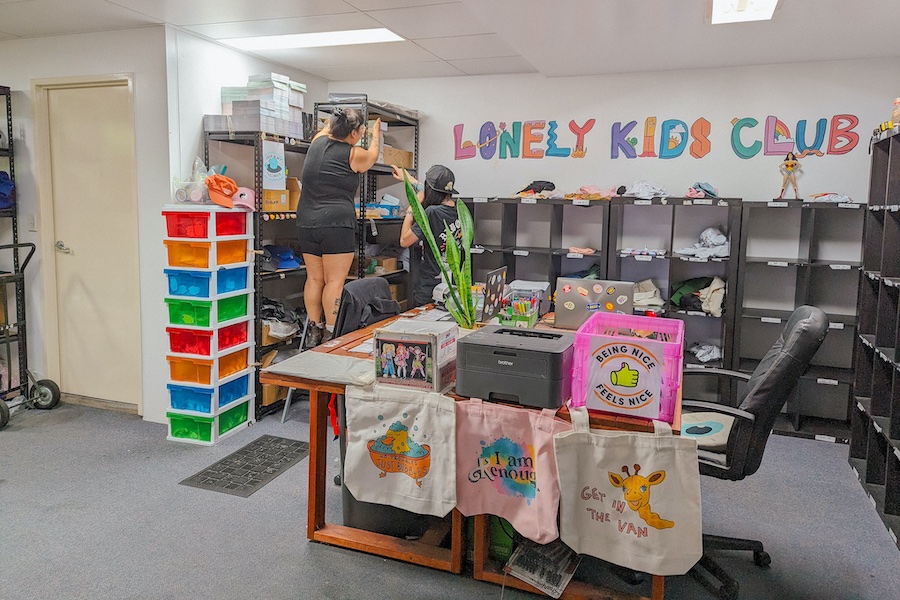
From a bedroom startup to 3,000 designs: How Lonely Kids Club built its business with DTG printing

Founded in Sydney in 2011, independent clothing label Lonely Kids Club has grown from a bedroom startup into a business offering around 3,000 graphic T-shirt designs. With its own production studio, direct-to-garment printing and a demand-driven manufacturing model, the company demonstrates how smaller apparel brands can combine creative independence with flexible production – while navigating the everyday challenges of quality control, workflow efficiency and sustainability.

#India ITME 2026

India’s textile industry: Current position, growth targets and industrial development

With ambitious export targets, major investments in manufacturing infrastructure and new international trade agreements, India is pursuing a comprehensive development strategy for its textile and apparel industry. An overview of the industry’s current position, government initiatives, progress achieved and challenges ahead.

#Weaving

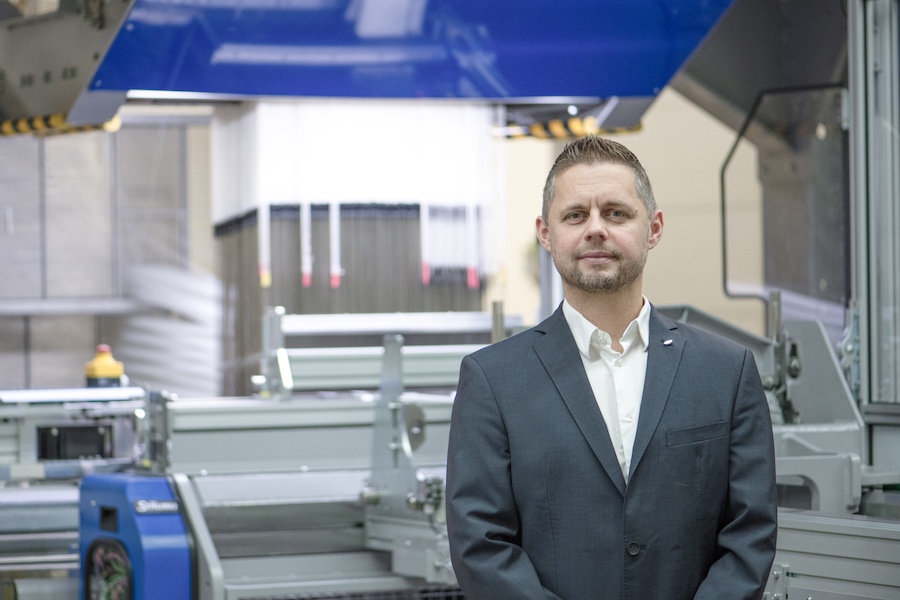
“A complex design is only useful if the machine can reproduce it consistently”

Andreas Schnabel, Head of R&D for Technical Weaving Systems at Stäubli, discusses how 3D weaving can create textile reinforcements tailored to the loads within a composite component, where near-net-shape weaving can reduce processing steps and material waste, and what it takes to produce complex structures reliably and economically. He also explains how manufacturers can adapt Stäubli’s modular TF weaving platforms to new applications and how the company’s centre of excellence in Bayreuth supports the transition from research to industrial production.

#India ITME 2026

India ITME 2026: Textile technology meets India's investment ambitions

With ambitious growth targets, government incentive programmes and industrial development initiatives already underway, India is preparing for the next stage of its textile transformation. Against this backdrop, the 12th India ITME, taking place in Greater Noida from 4 to 9 December 2026, arrives at a particularly important moment for machinery manufacturers and textile producers alike.

More News on Sustainability

#Sustainability

Cascale adds more than 20 material options to the Higg MSI

Cascale announced version 3.13 of the Higg Material Sustainability Index (Higg MSI) on 12 November 2026. The update adds more than 20 material options from 10 data contributors and revises more than 20 existing datasets. It has been available on the Worldly platform since 11 November.

#Sustainability

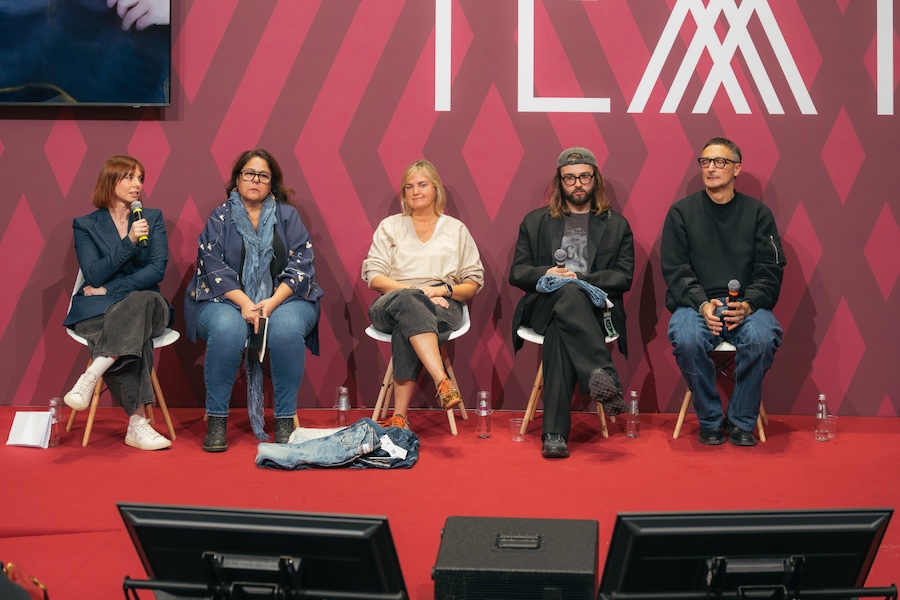
Inside the Making at Ecomondo 2026: Textile supply chain calls for transparency and measurable sustainability

Transparency, verifiable environmental claims and closer cooperation across the textile value chain were the central themes of the “Inside the Making: The Power of the Process” panel at Ecomondo 2026 in Rimini. Representatives from denim and sportswear manufacturing, textile finishing, digital printing and branding discussed how technological innovation and supply chain collaboration can help companies meet new European regulatory requirements while making sustainability economically viable.

#Recycling / Circular Economy

H&M Foundation highlights economic barriers to scaling circular textile systems

Discussions at Textile Exchange 2026 underline the need for coordinated investment, reliable material flows and a fair distribution of costs and risks across the textile recycling value chain.

#Recycled Fibers

C&A and Zalando join Altag® Fiber Club to accelerate adoption of agricultural waste-based fibres

Fashion for Good and AltMat announced today that C&A and Zalando have joined the Altag® Fiber Club as its first brand signatories, marking a critical commercial milestone in the journey to mainstream adoption of next-generation fibres derived from agricultural waste.

Latest News

#Textile processing

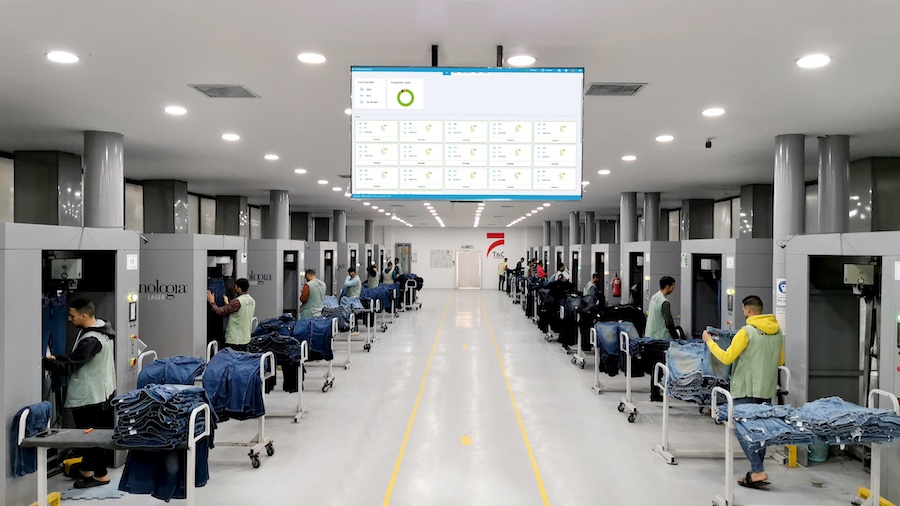
Jeanologia combines digitalisation, laser and ozone technology to strengthen China’s textile competitiveness

At ITMA Asia + CITME 2026 in Shanghai, Jeanologia showcased how the combination of digitalisation, laser technology and G2 Ozone can help China’s textile industry improve productivity, speed, quality and efficiency. With its Compact Super Flash laser system and integrated production concepts, the Spanish technology specialist demonstrated how connecting product development and industrial production can enable faster, more automated and sustainable manufacturing processes.

#Textile chemistry

Flame protection and OEKO-TEX® certification: Gulec Chemicals clears an important hurdle

Three halogen-free flame retardants from German specialist Gulec Chemicals have been included in the OEKO-TEX® list of accepted Active Chemical Products (ACP). The listing opens up additional opportunities for textile finishers, coaters and manufacturers of technical textiles seeking to combine demanding fire protection requirements with certification according to OEKO-TEX® STANDARD 100.

#Dyeing, Drying, Finishing

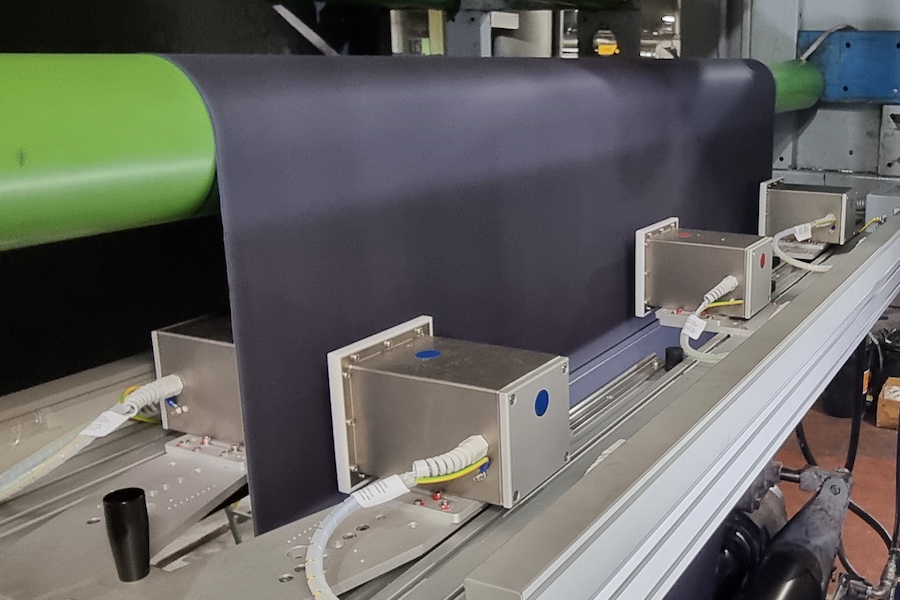
PLEVA improves dyeing consistency with inline microwave measurement of liquor pick-up

Consistent shades are essential in continuous textile dyeing. Yet variations in fabric absorbency or uneven padder pressure can go unnoticed until the end of the line. By then, hundreds of metres of fabric may already be affected and may become second-choice or rejected.

#Recycling / Circular Economy

DITF establishes CYCLOTEXUM recycling center to advance mechanical and solvent-based textile recycling

As part of the CYCLOTEXUM research project, the German Institutes of Textile and Fiber Research Denkendorf (DITF) established the CYCLOTEXUM recycling center. There, in collaboration with industry partners, the center develops application-oriented solutions for mechanical and solvent-based recycling processes. The technologies developed make a significant contribution along the textile value chain toward the efficient use of textile resources in the future and the transition of production in the German textile sector to a circular economy. The project was funded by the Ministry for the Environment, Climate and Energy Sector of the State of Baden-Württemberg.

TOP