[pageLogInLogOut]

#Sustainability

Inditex renews its support for Caritas’ clothing reuse and workplace inclusion drive in Spain, pledging €8.5 million

Inditex’s CEO, Óscar García Maceiras, and the president of Caritas in Spain, Manuel Bretón Romero, officially extended the two organisations’ collaboration until 2025 this morning in Madrid © 2023 Inditex
Inditex will contribute €8.5 million to Caritas during the next three years to reinforce its clothing collection and reuse initiative, known as Moda Re-, and continue to fund upskilling, training and inclusion projects for people in need in Spain. Óscar García Maceiras, CEO of Inditex, and Manuel Bretón Romero, president of Caritas in Spain, signed a new agreement this morning in Madrid, extending the collaboration between the two entities, which dates back to 2007, until 2025.

The Moda Re- programme, to which Inditex will earmark €3.5 million out of the €8.5 million pledged under the agreement, is Caritas’ community project devoted to the full-cycle management (collection, reuse via donation or charitable sale and recycling) of using clothing, an activity that has enabled the NGO to create 1,200 jobs, half of which inclusion-driven.

Between 2023 and 2025, the money donated by Inditex to the Moda Re- scheme will mainly go to reinforcing clothing collection capacity and the related traceability systems and expanding its 129-store chain of charity shops with new openings. In order to give new life to any products collected that cannot be reused, Moda Re- will continue to innovate at its textile processing facilities in Bilbao, Barcelona and Valencia, where it extracts fibres and raw materials of value for the industry.


Caritas’ employment and training programme, meanwhile, will receive €5 million of funding to continue to carry out projects that provide labour skills to vulnerable people at risk of social exclusion and those left behind in order to increase their chances of inclusion. With that money, Caritas will also roll out social economy and selfemployment initiatives.

Since 2007, the year it began to work with Caritas, Inditex has donated over €32 million to the NGO’s humanitarian aid and emergency, international cooperation and community work projects in Spain. During today’s signing ceremony, Manuel Bretón, Caritas’ president in Spain, underscored that “Inditex’s support will allow us to articulate proposals for social transformation that shape a society based on respect for human rights, dignity, cooperation and justice, all framed by care for our planet”.




More News from TEXDATA International

#ITM 2026

ITM 2026: The new geography of textile production

New production hubs are emerging across North Africa and Central Asia, while Türkiye is accelerating its transformation toward higher-value, technology-driven and more sustainable textile manufacturing.

#Research & Development

“Production is a product”

From technical textiles and AI-driven robotics to the limitations of textile circularity: Professor Dr Thomas Gries looks back on more than two decades of development at ITA Aachen. In the interview, he explains why production technology remains a decisive success factor, discusses international collaborations and innovation ecosystems, and shares his views on the transformation of production landscapes and the challenges facing an increasingly regulated industry.

#Knitting & Hosiery

“We need to move away from the price trap and return to a value-driven mindset.”

With its new Textile Innovation Center, KARL MAYER is sending a strong signal for innovation, collaboration, and the future of textile applications. In this interview, Karl Josef Mayer discusses new opportunities in warp knitting, the processing of staple fibres, recycling, the changing role of machinery manufacturers, and why the textile industry must once again focus more strongly on the value of textiles. by Oliver Schmidt

#Associations

“Innovation, resilience and international experience remain the great strengths of the Swiss textile machinery industry”

Geopolitical uncertainty, growing competitive pressure from China, new free trade agreements and the shift towards a circular economy are currently reshaping the global textile industry. In this interview, Cornelia Buchwalder discusses the current mood within the Swiss textile machinery sector, the industry’s distinctive innovative strength, new market opportunities in India and Asia, and the technological trends that could shape the upcoming trade fair cycle leading up to ITMA 2027.

More News on Sustainability

#Sustainability

Closing the Footwear Loop reveals challenges and opportunities for circular footwear

The footwear industry faces one of the most complex circularity challenges in the fashion sector. A new Phase 1 report from the Fashion for Good initiative Closing the Footwear Loop, developed together with Circle Economy, provides new insights into the composition, condition and recycling potential of post-consumer footwear waste.

#Man-Made Fibers

The updated poster on biodegradable Polymers in various environments has been released

As part of the PerPlacsBio project, nova-Institute has updated its popular poster on the biodegradability of polymers in different environments. The updated version reflects current standards, certifications and the latest scientific findings. The poster can be used to assess biodegradable alternatives for use in agriculture and forestry, and it is now available in German for the first time.

#Sustainability

A new standard to combat plastic waste in forests

With DIN SPEC 35808 “Tree Shelter for Forestry Applications,” the testing and research service provider Hohenstein, in collaboration with Rottenburg University of Forestry, as well as forestry authorities and industry partners, has established a clear framework for bio-based and fully biodegradable tree shelters. The pre-standard defines requirements and practical testing methods designed to reduce plastic waste in forests and strengthen the long-term protection of soil and the environment.

#Denim

Denim moves towards sustainability

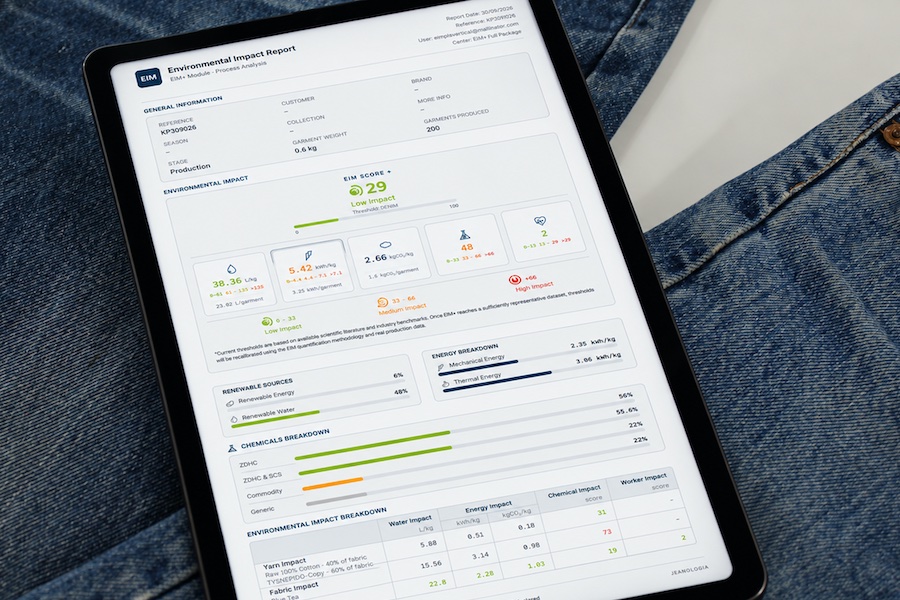
EIM (Environmental Impact Measurement), the global reference platform for measuring the environmental impact of garment finishing, presents the second edition of its annual report Denim Industry Progress & Insights 2025. The study analyses over 100,000 real denim finishing processes, providing an accurate and up-to-date view of the industry’s evolution towards more sustainable models.

Latest News

TOP