[pageLogInLogOut]

#Sustainability

Content Claim Standard 3.0 launched

Following a standard revision involving an International Working Group, Textile Exchange launched Version 3.0 of the Content Claim Standard (CCS) on June 29, 2021,with an effective date of July 1, 2021 and a mandatory date of July 1, 2022.

The Content Claim Standard is the foundation of all Textile Exchange standards. It is a chain of custody standard that provides companies with a tool to verify that one or more specific input materials are in a final product. Certification to the CCS verifies the chain of custody principles are followed in each stage of production. The CCS also tracks the flow of raw material from source to the final product by addressing product flow, documentation, volume reconciliation, and segregation of materials and products. The CCS is based on scope and transaction certificates for the highest level of verification and traceability.

One of the key updates to the standard is the adjustment of the scope of chain of custody. Under CCS 2.0, on-product claims were only allowed if the entire supply chain up to the seller in the final business-to-business transaction was certified. In the new CCS 3.0, on- product claims may only be made if chain of custody is in place up to the brand, regardless of the brand’s distribution model. This means brands will be required to be certified by July 1, 2022, to make on-product claims. There is a transition period of one year (see our Transition Policy) where audits to either CCS 2.0 or CCS 3.0 will be allowed. For a seamless continuity of claims, we recommend seeking certification sooner rather than later.

The new requirement makes on-product labeling more accessible for brands and allows retailers to pass along the claims without breaking chain of custody at brand level.

Additionally, Textile Exchange will be piloting options for supply chain group certification to improve access for small companies, and for auditing on a sampling basis in multi-site certification to reduce the auditing burden in low and medium risk cases.


Additional changes to the CCS can be reviewed in detail here:

https://textileexchange.org/documents/ccs-3-0-summary-of-key-changes/

All the Textile Exchange standards are voluntary. If you are not able to have a complete chain of custody up to the brand level, there are still ways to communicate about our standards. Please see more information about Commitment Claims and Informational Statements in our Standards Claim Policy.

You can learn more about our CCS and its associated documents at https://textileexchange.org/standards/content-claim-standard/ and find additional documents in our Document Library here:

https://textileexchange.org/standards/document-library/

On July 29th, 2021, the Standards team hosted the webinar “CCS 3.0 Launch” The recording and presentation slides are available for those who were not in attendance.


More News from Textile Exchange

#Raw Materials

Textile Exchange publishes cotton Life Cycle Assessment study to strengthen impact data

Textile Exchange has published the first in a series of seven Life Cycle Assessment (LCA) studies designed to improve the quality and robustness of environmental impact data for raw material production across the fashion, textile, and apparel industry. The first LCA study focuses on cotton and addresses critical data gaps and methodology variability through new high-quality data across key producing countries. The study includes organic, regenerative, recycled, and country averages for conventional cotton production systems, providing a clearer picture of the associated environmental impact.

#Sustainability

Textile Exchange unveils commitment-based pathway for members to accelerate responsible raw material production

Textile Exchange has unveiled further details about its new membership structure, designed to guide the fashion, textile, and apparel industry in a collective course of action toward preferred production systems for raw materials and fibers.

#Yarns

Textile Exchange publishes the final criteria for its new Materials Matter Standard, marking a pivotal shift in connecting certification to impact

Textile Exchange has published the final criteria for its Materials Matter Standard—a major milestone in the organization’s multi-year transition toward a unified, impact-driven standards system for raw material production and primary processing. 

#Sustainability

Textile Exchange evolves its membership structure to unlock the next stage of collective action for climate and nature

Textile Exchange is excited to announce that it is evolving its membership structure to a more action-oriented, impact-driven model designed to provide clearly defined pathways that help organizations respond to the climate and nature crisis.

More News on Sustainability

#Sustainability

A new standard to combat plastic waste in forests

With DIN SPEC 35808 “Tree Shelter for Forestry Applications,” the testing and research service provider Hohenstein, in collaboration with Rottenburg University of Forestry, as well as forestry authorities and industry partners, has established a clear framework for bio-based and fully biodegradable tree shelters. The pre-standard defines requirements and practical testing methods designed to reduce plastic waste in forests and strengthen the long-term protection of soil and the environment.

#Denim

Denim moves towards sustainability

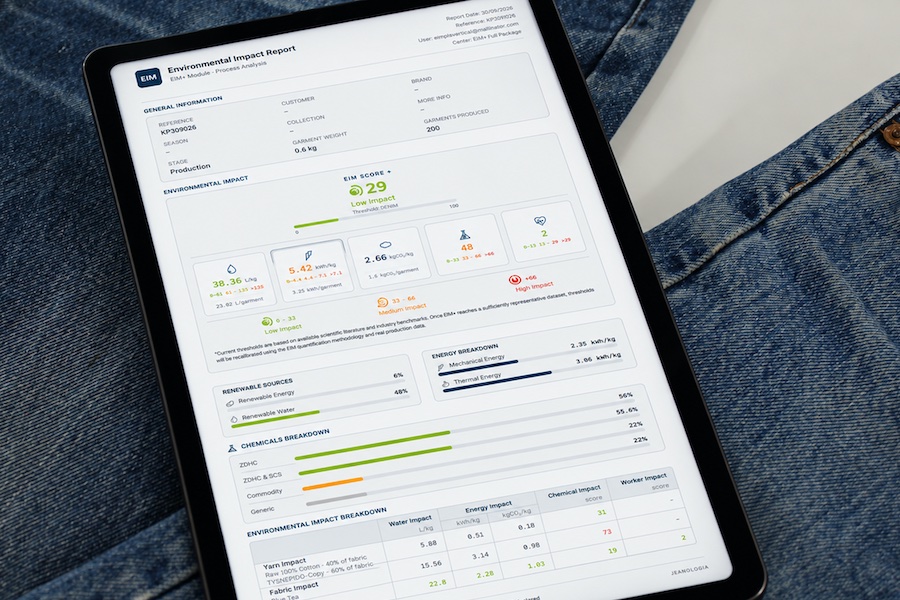
EIM (Environmental Impact Measurement), the global reference platform for measuring the environmental impact of garment finishing, presents the second edition of its annual report Denim Industry Progress & Insights 2025. The study analyses over 100,000 real denim finishing processes, providing an accurate and up-to-date view of the industry’s evolution towards more sustainable models.

#Recycling / Circular Economy

Europe’s textile future at a turning point: New 2030 Circularity Blueprint aims to scale recycling and unlock investment opportunities

The EU textile system is at a critical crossroads. Today, less than 1% of discarded garments are recycled into new garments, despite EU-wide obligations for separate collection. In response, Global Fashion Agenda (GFA) is launching the 2030 Circularity Blueprint, in partnership with ReHubs. This ambitious initiative is designed to support the transformation of the EU textile ecosystem to advance textile-to-textile recycling and drive the transition to a circular economy.

#Sustainability

Number of GOTS-certified facilities grow 15% globally as demand for credible sustainability standards continues to strengthen

Global Organic Textile Standard (GOTS) certification continued to grow in 2025, with nearly 18,000 certified facilities worldwide, despite ongoing geopolitical uncertainty and rapidly evolving regulatory requirements across global textile supply chains.

Latest News

#INDEX 2026

STFI highlights textile circular economy and alternative fibres at INDEX™ 2026

From 19 to 22 May 2026, INDEX will invite visitors to Lake Geneva for the world's leading nonwovens trade fair. The Centre of Excellence in Nonwovens at the Sächsisches Textilforschung- sinstitut e.V. (STFI) will be in attendance to present the latest developments in nonwovens research. In the field of the textile circular economy, the STFI will present acoustically effective nonwovens made from chemical recycling residues. The range also includes innovations aimed at replacing conventional raw materials, such as the biobased and biodegradable polymer polybutylene succinate (PBS) and Kendyr as an alternative to cotton.

#Associations

Italian textile machinery sector faces weak start to 2026 despite domestic growth

In the first quarter of 2026, order intake for Italian textile machinery manufacturers recorded a decrease of 5% compared to the same period in 2025, reflecting a still challenging start to the year. The decline affected foreign markets (-7%), while the domestic market showed growth (+21%).

#Nonwovens

Temafa Maschinenfabrik GmbH supplies a complete decortication plant for processing hemp straw to Hanffaser Geiseltal eG

Temafa Maschinenfabrik GmbH, a leading supplier of machinery and plants for fibre processing, has successfully secured an order to supply a complete plant for processing hemp straw to Hanffaser Geiseltal eG, based in Mücheln.

#Techtextil 2026

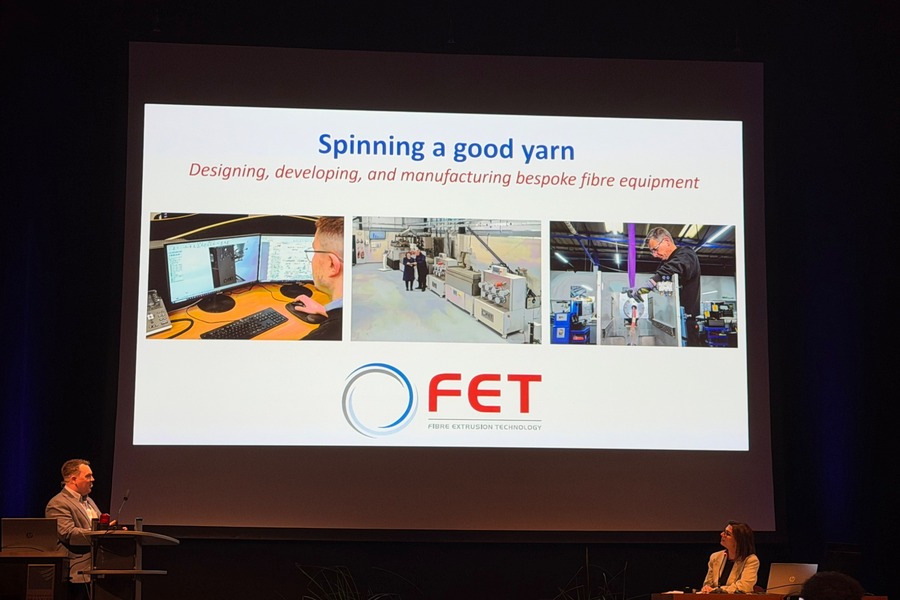
FET’s revolutionary gel spinning system wins Techtextil Innovation Award

FET has received the prestigious Techtextil Innovation Award 2026 in the New Production Technology category. The Techtextil Innovation Award honours outstanding ideas in textile technology, sustainability, AI and the creation of technical textiles, selected by an international jury of experts. Ranging from new materials to new production technologies, this award recognises progressive ideas that are driving forces for numerous industries, such as automotive, medical and construction.

TOP